7 Facts About Preliminary Reporting Every Imaging Director Should Know
Preliminary reporting explained: 7 facts hospital and imaging center leaders need before adding overnight or overflow radiology coverage.
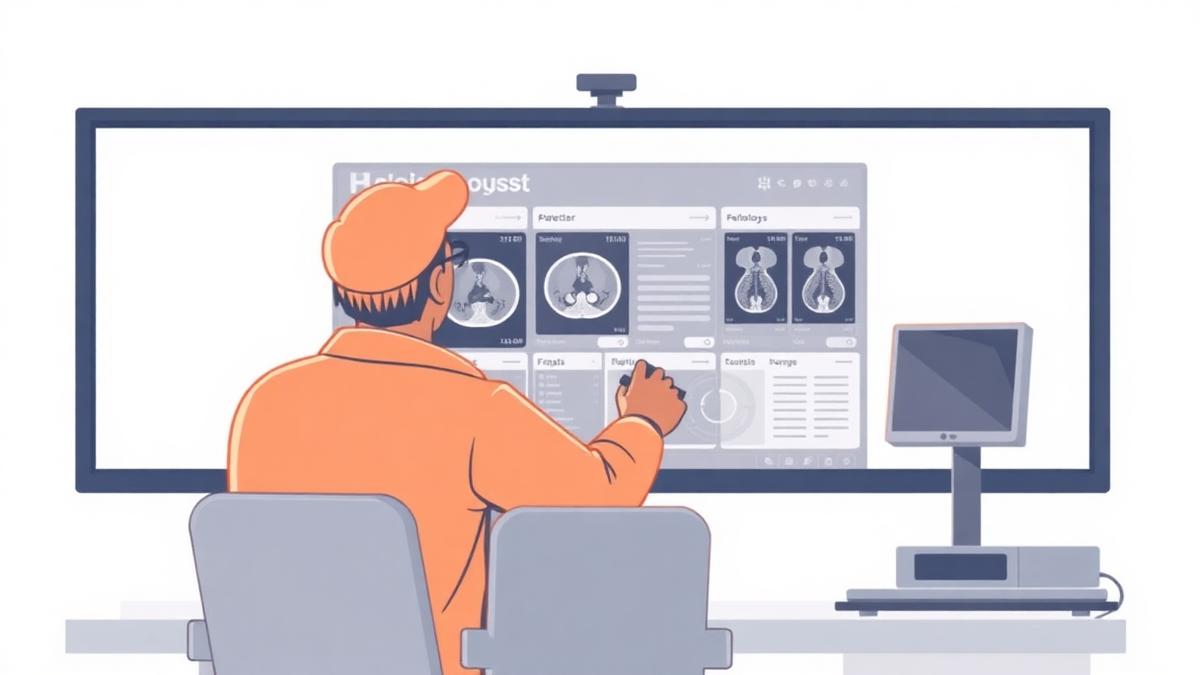
Preliminary reporting is one of the most frequently discussed and least precisely understood arrangements in imaging operations. Most imaging directors first meet it as a solution to a single problem — the overnight rota — and never revisit the definition afterwards. That is a costly simplification, because the same mechanism governs surge capacity, vacancy cover, turnaround measurement and a compliance boundary that has nothing to do with the hour of the day. Here are seven facts about preliminary reporting worth having straight before you evaluate a partner or renew an arrangement.
⚠️ Important scope note — please read before continuing
RAD365 provides offshore preliminary reads for human patients in the USA only. We do not provide final reads — your facility's own licensed radiologist completes every final interpretation.
For veterinary and pet imaging there are no preliminary reads; veterinary studies are read as complete final reports by specialist veterinary radiology groups.
By Trisha Seal · August 25, 2026 · Written from RAD365's operational experience running offshore preliminary-read workflows integrated directly into hospital PACS and worklist environments for USA facilities.
projected growth in the US radiologist workforce, 2023–2055, with flat residency positions (JACR)
projected growth in imaging utilization by 2055, by modality (JACR companion study)
increase in radiologist attrition from 2020 versus pre-pandemic levels (Neiman Health Policy Institute)
higher likelihood of subspecialty radiologists exiting the workforce vs. generalists (ACR Bulletin, 2026)
1. Preliminary reporting is a capacity structure, not a night shift
The most common framing error is treating preliminary reporting as a synonym for overnight coverage. Overnight is simply the most visible instance of a general pattern: a period during which imaging is being acquired faster than it can be interpreted by the people on site. That period can be 2 AM on a Sunday, or 4 PM on a Tuesday when a trauma cluster arrives, or the six weeks a radiologist is on leave.
Directors who define the category by its most familiar use case buy it narrowly and get narrow value. Directors who define it by the underlying condition — acquisition capacity exceeding interpretation capacity in a given window — deploy the same contract against overnight cover, weekend gaps, seasonal surges and vacancies, and get considerably more from it. The scope, tiers and integration model behind that broader deployment are set out on our preliminary reads service page.
2. The boundary between preliminary and final is fixed, not negotiable
For human patients at USA facilities the structure is set by three overlapping frameworks — state medical licensure, hospital credentialing and privileging, and facility billing rules. The signing radiologist must hold a license in the state where the patient is located and be credentialed at the facility. That is why RAD365 provides preliminary interpretations only and never issues final reads for human patients: your own licensed radiologist completes and signs every final interpretation.
This matters commercially as well as legally. When a proposal is vague about who signs, the vagueness is not generosity of scope — it is an unresolved governance problem being handed to your department. Ask for the boundary in the contract, in plain language, before anything else is discussed. It is the single fastest way to sort serious partners from unserious ones.
3. The workforce numbers explain why the category keeps growing
Preliminary reporting is not a procurement fashion; it is a structural response to a supply curve. The Journal of the American College of Radiology's "Projected US Radiologist Supply, 2025 to 2055" study projects the US radiologist workforce growing only 25.7% between 2023 and 2055 if residency positions stay flat. Its companion imaging-utilization study projects demand rising 16.9% to 26.9% by 2055 depending on modality. Demand is outpacing supply growth, and the gap compounds.
The exit side is moving too. The Harvey L. Neiman Health Policy Institute found post-COVID radiologist attrition rose roughly 50% starting in 2020 compared with pre-pandemic levels, and ACR Bulletin's 2026 workforce update reports radiologists are now leaving practice entirely at more than twice the rate they were less than ten years ago — with subspecialty radiologists 37% more likely to exit than general radiologists. None of this is a reason to outsource interpretation wholesale. It is a reason to stop assuming the overnight rota can be permanently staffed from a shrinking relative pool.
4. It changes the shape of the radiologist's day, not the size of it
A frequent objection is that preliminary reporting removes work radiologists are paid to do. In practice it does not remove much study volume at all — the facility radiologist still reviews the imaging and still produces the signed report. What it removes is the interruption structure: the 3 AM cold start, the call-back on a study with no context, the morning list where urgent findings have to be discovered rather than surfaced.
That distinction is worth being honest about in internal discussions, because overselling a volume reduction that will not materialise erodes trust in the arrangement within a month. The correct promise is a better-shaped day and a survivable rota, delivered alongside the wider human radiology services workflow the department already runs — not fewer studies read.
5. Turnaround and time-to-answer are two different metrics
Most departments report a single turnaround figure and quietly average away the thing referring clinicians actually experience. Report turnaround measures acquisition to signed report. Time-to-answer measures acquisition to an interpretation a clinician can act on. In a department with no overnight coverage these two numbers can differ by ten hours on the same study, and only one of them determines whether an ED disposition stalls.
Split the metrics before you evaluate any coverage arrangement. Departments that do so frequently discover their turnaround problem was never a reporting-speed problem — it was a coverage-gap problem wearing a turnaround label, and the intervention required was completely different from the one being planned.
Preliminary reporting vs. final reporting: what actually differs
| Attribute | Preliminary reporting | Final report (facility radiologist) |
|---|---|---|
| Primary purpose | Support the decision being made now | Permanent diagnostic record |
| Who issues it | Remote reading radiologist | Facility's own licensed radiologist |
| Signature of record | No — labeled preliminary | Yes |
| Billable interpretation | No | Yes |
| Typical timing | Minutes to same shift, tiered by urgency | Next reporting cycle |
| Diagnostic responsibility | Retained by the facility | Retained by the facility |
| Typical use | Overnight, weekend, surge and overflow volume | All studies, without exception |
| RAD365 scope (human, USA) | In scope | Never in scope |
6. Discrepancy tracking is the only meaningful quality signal
Every preliminary interpretation should be compared against the corresponding signed final report, with differences logged and classified by clinical significance. The number worth asking about is the actionable discrepancy rate — differences that would have changed patient management — not the raw discrepancy rate, which is always higher because it counts descriptive and wording variation that changes nothing at all.
Ask a prospective partner three things: what their measured actionable rate is, what methodology produced it, and what happens to an individual reader after a flagged case. A partner that can answer all three has a quality system. One that offers only a headline accuracy claim has marketing. This is the same discipline hospitals already apply through their own peer review and QA programs, and the two should be designed to fit together rather than run in parallel.
7. Integration decides adoption, and adoption decides value
The most common way a technically sound preliminary reporting arrangement fails is not clinical. It is workflow friction. If technologists must manually export studies, or radiologists must check a separate portal for returned interpretations, adherence decays within weeks — quietly, without anyone reporting a fault — and the contracted capacity goes unused while the invoice keeps arriving.
Working integration means studies route automatically over existing DICOM connectivity with rules that set urgency and destination by modality and order priority, and preliminary interpretations return into the existing worklist and record. Test that during procurement, not after go-live. A three-week parallel run will tell you more about a partner than any reference call. The integration model we use for offshore preliminary read coverage is built around this constraint: studies route automatically and interpretations return where staff already look.
Putting the seven together
- It is a capacity structure, applicable well beyond the overnight window.
- The preliminary/final boundary is fixed by licensure, credentialing and billing rules.
- Workforce supply and demand curves explain why the category keeps growing.
- It reshapes the radiologist's day rather than shrinking the reading list.
- Turnaround and time-to-answer must be measured separately.
- Actionable discrepancy rate is the quality metric that matters.
- Integration quality determines adoption, and adoption determines whether any of it pays off.
Preliminary reporting: frequently asked questions
Understanding Preliminary Reporting
What does "preliminary reporting" mean in a radiology department's day-to-day workflow, beyond just the overnight shift?
Preliminary reporting is the practice of producing a documented, time-stamped, attributed initial interpretation that a treating clinician can act on before the report of record is signed. Most departments first encounter it overnight, but in day-to-day operation it functions as a general pressure-release valve: it absorbs an unexpected trauma cluster on a Tuesday afternoon, keeps an outpatient CT list moving when one of three radiologists is on leave, and stops an ED backlog compounding when volume spikes for two hours. The defining feature is not the hour of the day — it is that clinical decision-making and the signed diagnostic record are deliberately decoupled in time, so the first does not have to wait on the second.
How does preliminary reporting differ from a formal, final radiology report?
They differ in purpose, authority and permanence. A preliminary report answers the question in front of the clinician right now — is there a bleed, a pneumothorax, an obstruction, something requiring action in the next hour — and it is explicitly labeled as preliminary. The final report is the permanent diagnostic record: it is produced and signed by the facility's own licensed, credentialed radiologist, it carries the full clinical narrative and comparison to priors, it is the document that gets billed, and it is the version that stands in the medical record. Preliminary reporting never replaces that. It runs in front of it.
What role does preliminary reporting play in reducing turnaround time for referring physicians?
The metric referring physicians actually experience is not report turnaround — it is time to a usable answer. Those two numbers can diverge by many hours in a department where studies acquired after 8 PM sit until the morning list. A preliminary reporting layer collapses the second number without changing the reporting rhythm of the first: the ED physician gets a documented impression in minutes, disposition decisions stop stalling, and the radiologist still reviews the study in a considered morning workflow. Departments that measure both numbers separately usually discover the perceived turnaround problem was really a coverage-gap problem.
Is preliminary reporting used only in emergencies, or also for routine daily volume?
Both, and the routine use is growing faster. Emergency use is the obvious case — overnight CT, weekend trauma, holiday cover. The quieter and increasingly common case is routine overflow: scheduled outpatient volume that exceeds what the on-site roster can clear the same day, screening backlogs, and volume during vacancies or extended leave. Used this way, preliminary reporting is a capacity mechanism rather than an emergency mechanism. What stays constant in both cases is the boundary — the facility's radiologist reviews the imaging and issues the signed final report either way.
Workflow & Staffing Impact
How does adding a preliminary reporting layer change a radiologist's daily workload?
It changes the shape of the workload more than the total volume. The radiologist still reviews the imaging and still issues the final report, so study count does not drop dramatically. What does change is the interruption profile: fewer overnight call-backs, fewer cold starts on unfamiliar studies at 3 AM, and a morning list where urgent findings have already been flagged and communicated rather than discovered mid-queue. Most radiologists describe the effect as reading the same volume under materially less time pressure, with triage decisions already made and the genuinely urgent cases surfaced at the top.
What happens to preliminary reporting volume during seasonal ER surges like flu season?
It rises sharply, and that variability is precisely why a contracted layer suits the problem better than headcount. Respiratory season, holiday trauma peaks and regional weather events can lift emergency imaging volume well above baseline for weeks at a time, then return to normal. Hiring against a peak leaves you overstaffed for ten months; staffing against the average leaves you underwater during the surge. Contracted preliminary capacity flexes with the curve, which is why surge behavior — how quickly additional reading capacity can be added, and on what notice — belongs in the contract rather than in the sales conversation.
Can preliminary reporting help address the radiologist shortage without adding headcount?
It addresses the hardest part of it, which is coverage of the hours nobody wants to staff permanently. The Journal of the American College of Radiology's "Projected US Radiologist Supply, 2025 to 2055" study projects the US radiologist workforce will grow only 25.7% between 2023 and 2055 if residency positions stay flat, while its companion utilization study projects imaging demand rising 16.9% to 26.9% by 2055 depending on modality. No single facility can recruit its way around a national supply constraint on that trajectory. Preliminary reporting does not create radiologists; it lets the ones you already employ spend their hours on final interpretation rather than on an unsustainable rota.
How do imaging directors decide how much volume should route through preliminary reporting versus in-house reads?
The workable method is a gap map rather than a percentage target. Plot study volume by hour, day and modality against radiologist availability for the same slots, and the uncovered blocks appear immediately — usually the overnight window, weekend afternoons, holiday cover and one or two predictable weekday peaks. Route those, measure for a quarter, then adjust. Directors who instead pick a headline figure — "outsource 20%" — tend to route the wrong studies and conclude the model does not work, when what failed was the selection rule. Start with the gaps you can name.
Compliance, Accuracy & Oversight
How is accuracy tracked between a preliminary report and the eventual final report?
Through systematic discrepancy tracking: every preliminary interpretation is compared against the corresponding signed final report, differences are logged, and each difference is classified by clinical significance — typically as no material difference, minor difference with no change to management, or actionable discrepancy that would have altered patient care. The actionable rate is the number that matters; overall discrepancy rates always look higher because they include wording and descriptive variation that changes nothing. Ask any partner for their measured actionable rate, the methodology behind it, and the feedback loop that follows a flagged case. Structured comparison of this kind sits naturally alongside a department's existing peer review and QA program.
What oversight structures should a hospital require from a preliminary reporting partner?
Require four things in writing. First, credentialing evidence for every reading physician, kept current and auditable. Second, a documented discrepancy review process with defined escalation for actionable findings and evidence that outcomes feed back to the individual reader. Third, a defined critical-findings communication pathway with time targets and a record of each communication. Fourth, regular performance reporting the hospital receives rather than requests — turnaround against tier, discrepancy rates, volume, and any SLA breaches. A partner that treats its own quality data as internal-only is not offering oversight, only assurance.
Does using preliminary reporting change who is legally responsible for the diagnosis?
No. The diagnostic responsibility of record stays with the facility's own licensed radiologist, who reviews the imaging independently and signs the final report. That structure is fixed by state licensure, hospital credentialing and privileging, and facility billing rules — it is not a contractual preference that can be negotiated away. A preliminary interpretation is a documented professional opinion supporting an immediate clinical decision, and the reading physician is accountable for the quality of that opinion, but it does not transfer or dilute the facility's diagnostic authority. Any provider suggesting otherwise for human patients in the USA is describing something RAD365 does not do.
What documentation should a preliminary reporting vendor provide for compliance audits?
At minimum: a signed BAA; audited, individual-level access logs showing who viewed which study and when; credentialing and licensure records for every reading physician; time-stamped preliminary reports with clear attribution and unambiguous preliminary labeling; the critical-findings communication log; discrepancy tracking data with classification methodology; SLA performance reports across the audit period; and evidence of security controls including encryption in transit and at rest. If any of those can only be produced on request after weeks of assembly, they are not being maintained as an operational record — and an audit is the worst moment to discover that.
Choosing & Implementing a Partner
What should a hospital ask before adding a preliminary reporting vendor to its PACS?
Ask how studies will route — automatically over existing DICOM connectivity, or by manual export; whether preliminary reports return into the existing worklist and record or into a separate portal staff must remember to check; who owns the connectivity if routing fails at 2 AM; what the modality and subspecialty scope is; what the turnaround tiers are and what historical measured performance against them looks like; how surge capacity works; and what the scope boundary says in writing about final reports. Integration questions are where good proposals and weak ones separate fastest, because a workflow staff have to remember to use is a workflow they will stop using.
How long does it typically take to stand up a preliminary reporting workflow?
For a facility with a modern PACS and clean DICOM connectivity, a few weeks is realistic: connectivity and routing rules, security review and BAA, credentialing, worklist and report-return configuration, escalation pathway definition, and a short parallel-run period before full cutover. What extends timelines is rarely the reading capacity — it is network and firewall change control, VPN provisioning, and internal security review cycles. Facilities that begin those three items in week one usually go live on schedule; those that leave them to the end usually do not.
What's a realistic cost range for outsourced preliminary reporting versus hiring additional radiologists?
The two are not directly comparable, which is why per-study versus per-salary comparisons mislead. A permanent overnight radiologist is a fixed annual cost carried whether the night is busy or empty, plus recruitment, benefits, cover for their leave, and the retention risk that comes with an unpopular rota. Contracted preliminary capacity is a variable cost that tracks actual volume and can flex during surges and vacancies. The honest way to evaluate it is total cost of covering the specific gap over a full year — including the recruitment cost of replacing a radiologist who leaves over the rota — rather than a unit-price comparison.
Can preliminary reporting scale up temporarily during a radiologist's leave or a vacancy?
Yes, and this is one of the most common reasons departments adopt it. Parental leave, sabbatical, illness or an unfilled vacancy in a small group can remove a quarter of reading capacity overnight, and locum recruitment on that timescale is both slow and expensive. A preliminary reporting arrangement already integrated with your PACS can absorb additional volume within days rather than months, then step back down when the position is filled. Facilities that establish the connection before they need it — even at low baseline volume — get this option for free; those that start the procurement during the crisis do not.
Related reading
- Offshore preliminary reads for USA facilities — full service scope, turnaround tiers and compliance structure
- How preliminary read coverage is integrated into an existing PACS workflow
- Human radiology services overview
- Peer review and quality assurance programs
- PACS and imaging infrastructure support
Mapping your coverage gaps?
Send us your volume-by-hour picture and we'll tell you plainly which gaps a preliminary reporting layer can close — and which ones it cannot.
Talk to our team →