How Outsourced Pre-Reads Actually Work: Scope, Pricing and Fit
Scope, pricing structure, integration and fit — how outsourced preliminary radiology reads actually work, with real 2026 industry data.
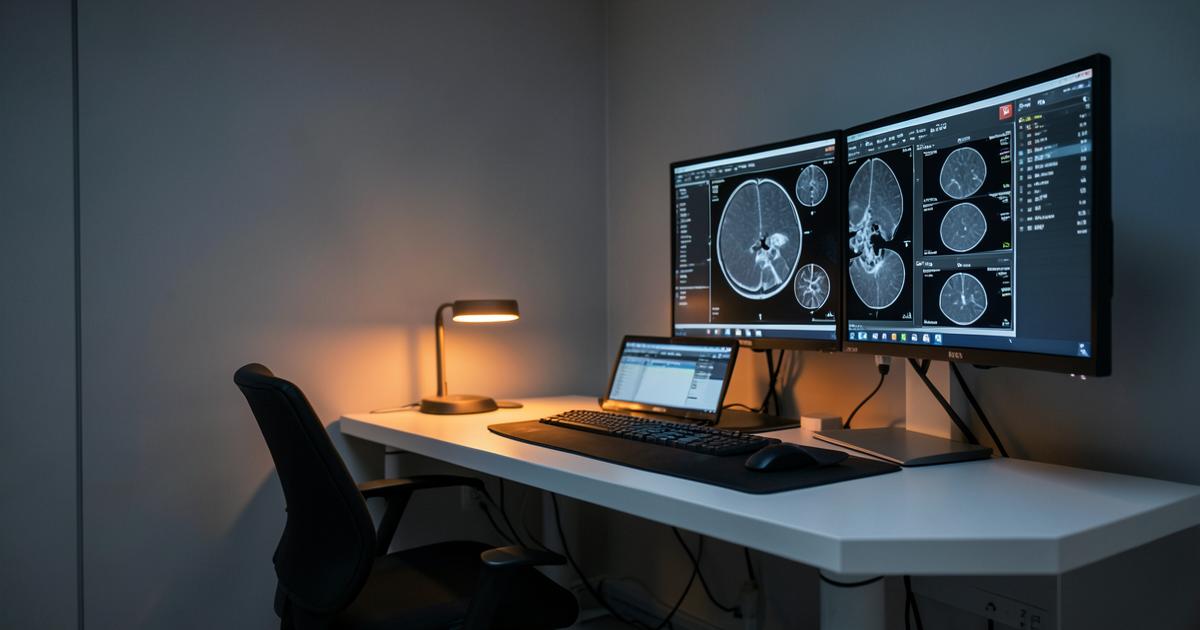
Most explanations of pre-reads stop at the definition — a rapid, non-final interpretation issued before a facility's own radiologist signs the final report — and leave the operational questions unanswered. This article is about those questions instead: what actually happens between the scan and the preliminary report landing in the worklist, how outsourced pre-reads are priced and what that pricing does when volume moves, how integration works without new software, and where the model genuinely fits versus where it does not. It is written for the person who has already decided the coverage gap is real and now needs to know how the mechanism works.
⚠️ Important scope note — please read before continuing
RAD365 provides offshore preliminary reads for human patients in the USA only — we do not provide final reads; your facility's own licensed radiologist completes every final interpretation. For veterinary and pet imaging there are no preliminary reads; veterinary studies are read as complete final reports by specialist veterinary radiology groups.
By Trisha Seal — September 4, 2026. RAD365 has operated offshore preliminary-read services for 12+ years across 20+ US client facilities, delivering non-final interpretations directly inside each facility's existing PACS worklist. Every final interpretation is completed and signed by the facility's own licensed radiologist.
Projected US physician shortfall by 2036 (AAMC), radiology among the hardest-hit specialties
of US academic radiology departments provide exclusively preliminary interpretations for at least some overnight hours (JACR)
of academic programs offer 24-hour real-time attending coverage (JACR)
Year the original outsourced overnight preliminary-read model was founded, creating the category
Why the Model Exists At All
The structural case is not subtle. The Association of American Medical Colleges projects a shortfall of up to 86,000 US physicians by 2036, with radiology among the hardest-hit specialties — a gap driven by capped residency output meeting steadily rising imaging utilization. That pressure lands unevenly: daytime shifts fill, and overnight, weekend and holiday slots absorb the shortfall.
The result is visible in how even the best-resourced institutions operate. A survey published in the Journal of the American College of Radiology found that 73% of US academic radiology departments provide exclusively preliminary interpretations for at least some overnight hours, and only about 25% of academic programs offer 24-hour real-time attending coverage. Preliminary interpretation is not a workaround at the margins of American radiology; it is how most of the country's teaching hospitals get through the night.
There is also a quality argument for keeping the overnight read explicitly non-final. A 2020 study published in Radiology (RSNA) found radiologists made more errors interpreting off-hours body CT during overnight assignments than during daytime assignments. That is not a criticism of overnight readers — it is a documented effect of circadian load and time pressure, and it applies to in-house night staff exactly as it applies to a remote team. A preliminary model responds to it directly by building a second, unhurried review into the workflow: the facility's own radiologist reads the study in full and signs the final report on the next shift, every time.
How It Actually Works: The Six Steps
1. Acquisition and routing
The study is acquired at the modality and pushed to your PACS in DICOM exactly as it is today. A routing rule you define — by time window, modality, location, or priority flag — makes qualifying studies visible to the pre-reads worklist. Nothing is duplicated into a second archive.
2. Worklist pickup with clinical context
A reading radiologist opens the study with its priors and the accompanying clinical history. Priors matter more than most integration checklists suggest: a preliminary read issued without them is a weaker read, and confirming prior availability is part of scoping the engagement, not an afterthought.
3. Interpretation against your protocol
The read is performed against the turnaround window and case definitions your facility set in writing before go-live. If your STAT definition is currently 'as fast as possible', that ambiguity has to be resolved first — it makes both in-house and outsourced performance unmeasurable.
4. Critical-finding escalation
Anything meeting your critical-finding definition is escalated by direct human contact at the moment it is identified, with the contact and its time logged. It is not left in the worklist to be discovered.
5. Preliminary report delivery
The report returns into the same PACS or RIS record, clearly labeled preliminary and non-final, timestamped, and attributed to a named reader. It appears where your radiologist already looks.
6. Final interpretation by your radiologist
Your own licensed radiologist reviews the study in full and signs the final report. That step is never delegated for human patients in the USA. Where the final differs materially from the preliminary, your protocol should require clinician notification and the discrepancy should be logged for review.
How Pre-Reads Are Priced — and What Each Model Does Under Load
Three pricing structures dominate the market, and they behave very differently when volume moves. Per-shift and flat-subscription models buy a block of availability: predictable, but paid in full whether the studies arrive or not. Per-study pricing tracks actual workload, which suits departments whose off-hours volume is irregular. RAD365 works per study, with no minimum volume commitment, and does not publish rate figures — pricing is scoped against modality mix and coverage window.
For general industry context on how per-study pricing scales, published third-party rates — an illustrative example from the wider market, explicitly not RAD365's own rate card — range from roughly $12 per study for plain X-ray up to $60–$99 per study for MRI and PET/CT, with CT and ultrasound in between. The practical lesson is that a blended average rate tells you almost nothing. A department whose overnight volume is mostly plain film has a completely different cost profile from one dominated by cross-sectional imaging, and any two quotes are only comparable once both are modelled against your own modality mix.
In-House Overnight Hire vs. Locum vs. Outsourced Pre-Reads
| Dimension | In-house overnight hire | Locum tenens | Outsourced pre-reads |
|---|---|---|---|
| Time to coverage | Months (search, credentialing, ramp) | Days to weeks, per gap | Days — scope, access, routing rules |
| Cost behavior | Fixed, fully loaded, regardless of volume | Premium rate per gap, short-notice pricing | Variable, per study, no minimum volume |
| Coverage continuity | Breaks on a single absence | Re-created each engagement | Team-based, unaffected by one absence |
| Scope of work | Full clinical scope including final reads | Full clinical scope including final reads | Preliminary, non-final interpretations only |
| Best fit | Sustained, predictable off-hours volume | Defined leave or vacancy cover | Overnight depth, overflow, backlog, surge |
These are not mutually exclusive, and most facilities that get this right use more than one. Locums cover work that must be local and final; pre-reads cover throughput in the hours where the roster is thinnest. Where the department's underlying problem turns out to be workflow rather than reading capacity, neither helps — see human radiology services for how the reading and operational layers fit together.
Nighthawk Teleradiology Services and Where Today's Pre-Reads Came From
The vocabulary people still use for this category comes from a specific origin. The overnight-coverage model — 'nighthawk' — was pioneered by the original teleradiology company founded in 2001, which built its business on outsourced overnight preliminary reads for US hospitals, later went public and was acquired in 2010. That company established the structure that nighthawk teleradiology services still follow: a remote team covers the hours the facility cannot staff, issues non-final preliminary interpretations that support immediate clinical decisions, and the facility's own radiologist completes and signs the final read afterwards.
What has changed in the two decades since is entirely operational. Coverage no longer requires dedicated hardware at either end — it runs PACS-native through the systems a facility already owns. Pricing has moved from large fixed contracts toward per-study models that small facilities can actually use. And the coverage window has widened beyond literal overnight hours into weekend depth, overflow relief and backlog clearance. The clinical structure, though, is identical to the one built in 2001, and for the same reason: it is the only structure in which remote reading capacity can be added without altering who owns the final diagnosis.
Getting From Decision to Live Coverage
The sequence that works is short. Define the coverage window and case definitions in writing, including your STAT threshold and critical-finding escalation protocol. Confirm PACS access, routing rules and prior availability with your imaging IT team. Sign the business associate agreement and provision named accounts under your own security model. Run a narrow trial — one window, one or two modalities — with success criteria agreed in advance: turnaround against protocol, escalation performance, and preliminary-to-final agreement rate. Then review that agreement data through your existing peer review and QA process and widen the scope from there.
Facilities that stall usually stall on the first step rather than the technical ones. If the department has never written down what STAT means, the contract cannot be measured and the trial cannot be judged.
Frequently Asked Questions About Outsourced Pre-Reads
How Pre-Reads Actually Work
What exactly happens between a scan being taken and a preliminary read landing in the worklist?
The study is acquired at the modality and pushed in DICOM format to the facility's PACS exactly as it always was. A routing rule — defined by the facility, usually by time window, modality, location or priority flag — copies or flags qualifying studies into a shared worklist the pre-reads team can see. A reading radiologist opens the study with its priors and the accompanying clinical history, interprets it, and returns a clearly labeled preliminary report into the same PACS or RIS record. Anything meeting the facility's critical-finding definition is escalated by direct human contact at the same time, not left in the queue to be discovered. Nothing about the acquisition, archive or clinician-facing workflow changes; the only new element is who is reading first.
How is a preliminary read different from an informal 'wet read' some facilities already do internally?
A wet read is typically a verbal or informal impression given to a clinician on the spot, often unrecorded or recorded loosely, and its quality depends entirely on who was available at that moment. A formal preliminary read is a documented, timestamped, structured report attributed to a named reader, stored in the same record as the final, and measurable against a turnaround standard. That documentation is the difference that matters for governance: it lets a medical director audit preliminary-to-final agreement, review discrepancies as a body of data, and evidence coverage during an audit, none of which is possible with informal reads.
What is explicitly documented on a preliminary read report versus a final report?
A preliminary report should state plainly that it is preliminary and non-final, carry the reader's identity and the exact time of issue, summarize the clinical question and the relevant findings, flag any critical or actionable finding along with the escalation made, and note any limitation — missing priors, incomplete clinical history, technical quality. The final report, produced and signed by the facility's own licensed radiologist, is the complete diagnostic interpretation of record: it carries the full findings, the impression, recommendations, and the signing physician's attestation. The preliminary report supports the immediate decision; only the final report is the diagnosis of record.
Does a pre-reads provider need its own separate viewer or environment to issue a preliminary interpretation?
No, and requiring one should be treated as a warning sign. RAD365 works inside the facility's existing PACS environment through secure access to the systems already in place, so studies are not duplicated into a second archive and reports are not written into a system your radiologists have to go and look up separately. A parallel viewer creates reconciliation work, a second copy of protected health information, and a gap between where the preliminary report lives and where the final gets signed. The integration goal is that the preliminary report appears where your radiologist already looks.
How is the historical 'nighthawk' coverage model related to today's outsourced pre-reads services?
They are the same lineage. The overnight-coverage category was pioneered by the original teleradiology company founded in 2001, which built its business on outsourced overnight preliminary reads for US hospitals, later went public and was acquired in 2010. That model established the core structure still in use: a remote team covers the hours the facility cannot staff, issues non-final preliminary interpretations to support immediate decisions, and the facility's own radiologist completes the final read on the next shift. What has changed since is the plumbing — PACS-native integration rather than dedicated hardware, per-study pricing rather than large fixed contracts, and coverage that extends past overnight into overflow and backlog rather than only 'nighthawk' hours.
Pricing and Contract Scope
Is outsourced pre-reads coverage priced per study, per shift, or as a flat subscription?
All three exist in the market and they behave very differently. Per-shift and flat-subscription pricing buys a block of availability, which is predictable but is paid in full whether the volume arrives or not. Per-study pricing tracks the actual workload, which suits departments whose off-hours volume is irregular — trauma nights, seasonal spikes, screening pushes. RAD365 works on a per-study model with no minimum volume commitment, so a quiet week costs less than a busy one. RAD365 does not publish rate figures; pricing is scoped against your modality mix and coverage window.
How does per-study pricing for outsourced radiology reads typically vary by modality industry-wide?
Per-study rates scale with the reading time and complexity of the modality. Published third-party industry pricing — an illustrative example from the wider market, not RAD365's own rate card — ranges from roughly $12 per study for plain X-ray up to $60–$99 per study for MRI and PET/CT, with CT and ultrasound falling between those poles. The practical implication for a facility is that a blended average rate is close to meaningless: a department whose off-hours volume is 80% X-ray has a completely different cost profile from one dominated by cross-sectional imaging. Model your own modality mix before comparing any two quotes.
Is there a minimum monthly study volume required to engage a pre-reads partner?
Many providers do impose one, because a minimum converts variable revenue into predictable revenue for them. RAD365 does not require a minimum volume commitment. That distinction matters most for the facilities that need the relief valve least often — a small imaging center with occasional overflow, or a hospital that only needs weekend and holiday depth. If a partner requires a floor, ask what happens in the months you fall under it, because that is where the real price of the contract shows up.
What's typically excluded from a pre-reads services contract?
Final signed interpretations for human patients are excluded by design — those remain with your own licensed radiologist, always. Beyond that, common exclusions to check in writing include: procedural or interventional support, direct patient consultation, billing and coding of the professional component, protocolling of studies before acquisition, and any modality or subspecialty outside the agreed scope. Also confirm what happens outside the contracted coverage window and how surge volume above the expected range is handled, because those two gaps cause more friction than the headline scope ever does.
Why the Model Exists
Why do so many facilities rely on preliminary interpretations for at least part of their overnight coverage?
Because near-universally, 24-hour attending-level coverage is not staffable. A survey published in the Journal of the American College of Radiology found that 73% of US academic radiology departments provide exclusively preliminary interpretations for at least some overnight hours, and only about 25% of academic programs offer 24-hour real-time attending coverage. If three quarters of academic centers — the best-resourced institutions in the country — run on preliminary interpretations for part of the night, a community hospital doing the same is following standard practice, not cutting a corner.
Is off-hours reading quality actually different from daytime reading, and how does a preliminary-read model address that?
There is published evidence that it can be. A 2020 study in Radiology (RSNA) found radiologists made more errors interpreting off-hours body CT during overnight assignments than during daytime assignments. That is not a criticism of overnight readers; it is a well-documented consequence of circadian load and reading under time pressure. It is also precisely the rationale for a preliminary model: the overnight interpretation is explicitly non-final and is always followed by a complete review and signature from the facility's own radiologist on the next shift, which builds a second look into the workflow by default rather than relying on any single read being perfect at 3am.
How large is the projected US physician shortfall, and how does radiology specifically fit into it?
The Association of American Medical Colleges projects a shortfall of up to 86,000 US physicians by 2036, with radiology among the hardest-hit specialties. Radiology is exposed on both sides of that equation: residency output is effectively capped while imaging utilization keeps rising, so even a growing supply loses ground to demand. The consequence for scheduling is structural rather than cyclical — off-hours slots are the last to fill and the first to reopen, and no amount of recruitment effort at a single facility changes the national arithmetic. Outsourced pre-reads exist because that gap is durable.
Scope, Compliance and Fit
Does using a pre-reads service change who is legally responsible for the final diagnosis?
No. The final interpretation, and the professional responsibility that attaches to it, remains entirely with the facility's own licensed radiologist who reviews the images in full and signs the report. A preliminary read is a documented, clearly labeled, non-final interpretation that supports an immediate clinical decision; it does not replace, shortcut or substitute for that final review. Any provider that implies otherwise for human patients in the USA is describing something RAD365 does not do.
Is the preliminary-vs-final distinction handled differently for veterinary imaging than for human patients?
Yes, and the difference is fundamental. Veterinary imaging has no preliminary stage at all — veterinary studies are read as complete final reports by specialist veterinary radiology groups, with a board-certified veterinary radiologist issuing the signed final report directly. The preliminary/final split described throughout this article applies only to human imaging in the USA. Facilities running both human and veterinary services should not assume the two workflows mirror each other.
Can a facility trial pre-reads coverage before committing to a long-term contract?
It should. The most reliable trial is narrow and measurable: one coverage window, one or two modalities, a defined turnaround target, and an agreed review of preliminary-to-final agreement at the end. Because RAD365 prices per study with no minimum volume, a limited trial does not require buying capacity that goes unused. What makes a trial worth running is deciding the success criteria before it starts — turnaround against your protocol, escalation performance on critical findings, and discrepancy rate — rather than judging it on impressions afterwards.
How does a pre-reads partner integrate with a facility's specific PACS without new software?
Through the standards your PACS already speaks. Studies route by DICOM within your existing environment, worklist visibility is controlled by rules you define, and reports return through the same PACS or RIS record your radiologists use. Access is granted under your security model with named accounts, audit logging and a signed business associate agreement. If your imaging IT estate needs work before that can happen cleanly — routing rules, network paths, archive performance — that is a separate infrastructure question, and it is the kind of thing a managed PACS support engagement addresses independently of reading coverage.
What happens if a preliminary read and the eventual final read disagree?
A discrepancy is expected occasionally, and the workflow should be built to catch it rather than to be embarrassed by it. The final report is authoritative; where it differs materially from the preliminary, the facility's protocol should require notification to the treating clinician so any decision made on the preliminary can be revisited. Every discrepancy should be logged and reviewed as a data set — rate, modality, severity, pattern — which is exactly the function of a structured peer review and QA program. A partner that cannot show you its discrepancy data is not measuring itself.
Is outsourced pre-reads coverage available for imaging centers as well as hospitals, or only emergency departments?
Both, and the use cases differ. Hospitals typically need overnight and weekend depth plus surge relief for trauma and emergency volume. Outpatient imaging centers more often need backlog and overflow support — a screening push, a scanner running extended hours, a radiologist on leave — where the pressure is throughput rather than the clock. The service model is the same in either setting: rapid non-final interpretations delivered into the existing worklist, with the facility's own radiologist completing the final read.
Talk through how pre-reads would fit your coverage window
A short scoping conversation with a RAD365 operations lead: your modality mix, your turnaround protocol, and what integration into your existing PACS would actually involve. No obligation.
Request a coverage review →Related Reading
- RAD365 preliminary reads: coverage, scope and integration
- Seven signs your facility needs an outsourced pre-reads partner
- What the term "pre-reads" actually means
- Offshore preliminary interpretations for US facilities
- Human radiology services overview
- Peer review and QA: measuring preliminary-to-final agreement
