6 Models Hospitals Use to Outsource Preliminary Reporting (and What Each One Actually Solves)
Six models hospitals use to outsource preliminary reporting services — overnight, overflow, subspecialty and hybrid — and the coverage gap each one actually closes.
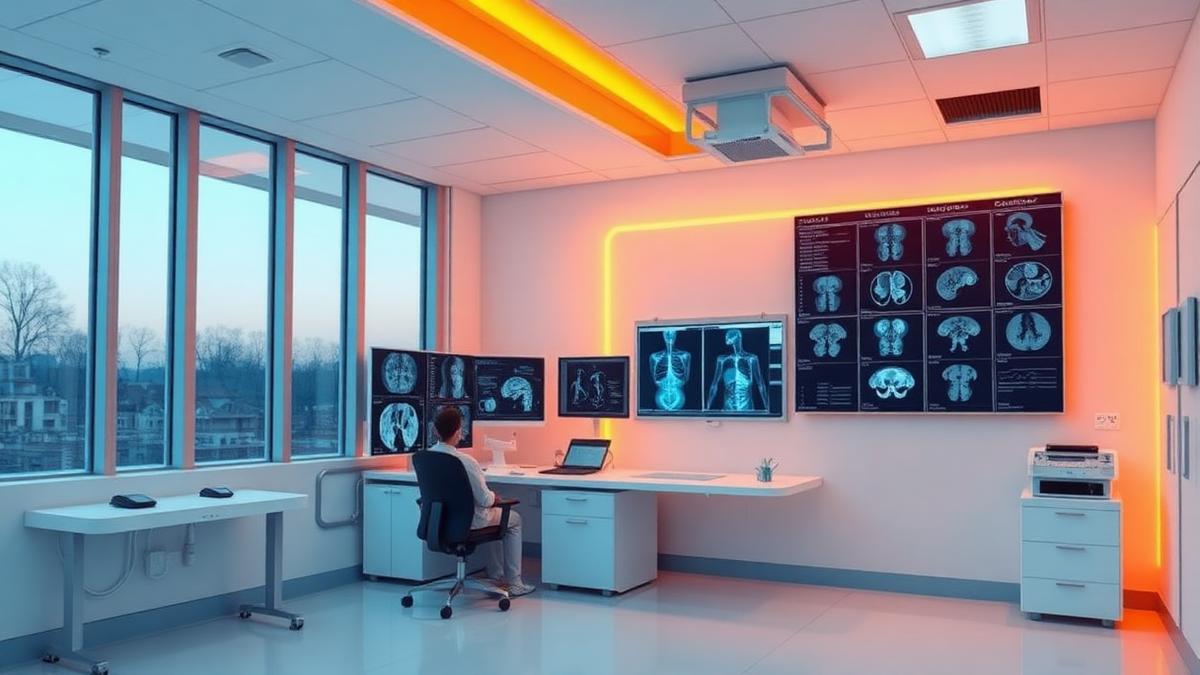
Hospitals that outsource preliminary reporting services rarely do it the same way as the hospital down the road. The phrase covers at least six distinct operating models, and they solve genuinely different problems: an overnight ED gap is not the same problem as a Monday-morning backlog, and neither is the same as a single vacant subspecialty seat. Choosing the wrong model produces a contract that looks fine on paper and fails on the specific nights it was bought for. The service itself is described in full on the preliminary reads page.
⚠️ Important scope note
For human patients at USA facilities, RAD365 provides preliminary reads only. Your facility's own licensed radiologist always completes and signs the final interpretation. RAD365 does not provide final reads for human patients.
For veterinary and pet imaging there are no preliminary reads — veterinary studies are read as complete final reports by specialist veterinary radiology groups.
of radiologists say their practice is understaffed (ACR/RBMA workforce survey, ACR Bulletin, Feb 2026)
projected physician shortfall across radiology, pathology and psychiatry by 2033 (AAMC)
US average radiologists per capita — as low as 9 in OK, MS, NV, WY (ACR Bulletin)
increase in radiologist attrition since 2020; ~32% of the workforce is 55+ (ACR Bulletin / JACR)
Why the outsourcing question keeps coming back
The workforce numbers are not ambiguous. The ACR/RBMA workforce survey reported in the ACR Bulletin in February 2026 found that 67% of radiologists describe their practice as understaffed, and that workforce shortage was named radiology's single biggest threat for the third consecutive year. The AAMC projects a shortfall of 17,000 to 42,000 physicians across radiology, pathology and psychiatry by 2033 — a range wide enough to argue about and narrow enough to plan around.
Distribution makes it worse than the headline. ACR Bulletin workforce data puts the US average at roughly 13 radiologists per 100,000 people, dropping to as few as 9 per 100,000 in states such as Oklahoma, Mississippi, Nevada and Wyoming. And the pipeline is leaking at the other end: attrition is up roughly 50% since 2020, with about 32% of the workforce aged 55 or over, meaning retirements are actively widening the gap rather than holding it steady. Those two facts together explain why an imaging department can be fully staffed on paper and still have no interpretation capacity at 3 a.m.
Outsourcing preliminary reporting is one response to that. It is not a hiring substitute and it does not change who signs the final report for a human patient — it moves the interpretation latency in a defined set of hours. The rest of this piece is about which version of that you should actually buy. Facilities evaluating the wider service line usually start with human radiology services for context before narrowing to a coverage model.
Model 1 — Overnight-only nighthawk coverage
What it solves: the classic gap — studies acquired between roughly 22:00 and 07:00 with no radiologist physically present or reachable inside the treatment window.
This is the model most facilities start with, and for good reason: the gap is well defined, the volume is predictable enough to price, and the clinical benefit is immediate. Studies route automatically at acquisition by modality, priority and time window; a structured preliminary interpretation returns into the existing reporting workflow; critical findings are phoned through before the document lands. In the morning, the facility's own licensed radiologist completes and signs the final report exactly as before.
Where it falls short: it does nothing for daytime pressure. Facilities that buy overnight-only coverage and then discover their real bottleneck is a 09:00–17:00 backlog have solved the wrong problem competently.
Model 2 — Daytime overflow and surge absorption
What it solves: a queue that grows faster than the on-site team can clear it, in normal working hours.
Overflow coverage sends studies above a defined threshold — a queue depth, a wait time, a specific modality's backlog — to an external preliminary reader while the on-site team keeps priority work. It is the model of choice after a scanner upgrade lifts throughput, during a seasonal surge, or when one FTE is out for six weeks and recruitment will take six months.
Where it falls short: it needs disciplined routing rules. Overflow that is triggered by a person deciding, case by case, that things feel busy will be triggered inconsistently and will not produce measurable relief. Encode the trigger or do not buy the model.
Model 3 — Weekend and holiday block coverage
What it solves: the rota problem that is really a retention problem.
Many groups do not have a coverage gap so much as a fairness gap: the same handful of radiologists absorb every holiday weekend, and attrition follows. Block coverage buys defined weekend and holiday windows outright, which is often cheaper than the locum arrangement it displaces and considerably cheaper than replacing a radiologist who leaves. Given attrition is up roughly 50% since 2020 per ACR Bulletin and JACR turnover data, treating rota load as a retention lever rather than a scheduling inconvenience is a reasonable read of the evidence.
Where it falls short: holiday volume is spikier than weekday volume, so surge behavior in the contract matters more here than anywhere else. Ask what happens on the worst day of the year, not the median one.
Model 4 — Modality-specific coverage
What it solves: one modality that is structurally under-covered while everything else is fine.
A facility may be perfectly comfortable on radiography and quietly drowning in CT, or the reverse. Modality-scoped preliminary reporting covers only the modality with the gap, which keeps the arrangement small, cheap and easy to evaluate. It is also the lowest-risk way to trial a provider: a narrow scope makes discrepancy tracking against your signed final reports simple and fast.
Where it falls short: it is a starting point, not an end state. Most facilities that begin here widen within a year, so make sure widening does not require a fresh contract each time.
Model 5 — Subspecialty gap cover
What it solves: a case mix your current roster does not comfortably cover overnight.
Neuro, paediatric and musculoskeletal cases arriving out of hours are where general coverage feels thinnest. Subspecialty-scoped preliminary reporting routes those specific case types to readers with the matching exposure, while general work stays on the existing pathway. This is the model where reader-level questions matter most: ask which named readers cover which case types in your hours, not whether the provider has subspecialty capability in general.
Where it falls short: it adds routing complexity. Rules keyed to body part and study description are more fragile than rules keyed to modality and time, so they need testing and periodic review.
Model 6 — Hybrid managed coverage
What it solves: a facility whose gaps are plural and moving.
The hybrid model combines two or more of the above under one agreement with one set of SLAs, one escalation protocol and one discrepancy report. Multi-site groups end up here almost inevitably, because site A's overnight gap and site B's daytime backlog are the same procurement conversation. The operational advantage is a single quality feedback loop instead of three separate ones that never get compared.
Where it falls short: breadth can hide weakness. A hybrid agreement should still report turnaround and discrepancy per model, per site and per modality — otherwise a strong overnight service will mask a mediocre overflow service in the averages.
| Model | Gap it closes | Best fit | Main risk |
|---|---|---|---|
| Overnight nighthawk | 22:00–07:00 interpretation latency | Rural / critical-access EDs | Ignores daytime bottlenecks |
| Daytime overflow | Queue depth in working hours | Post-upgrade or vacancy cover | Needs encoded triggers |
| Weekend / holiday blocks | Rota fairness and burnout | Small groups with heavy call | Spiky surge volume |
| Modality-specific | One under-covered modality | First-time outsourcers | Outgrown quickly |
| Subspecialty gap cover | Case types outside the roster | Mixed-acuity referral centers | Fragile routing rules |
| Hybrid managed | Multiple, shifting gaps | Multi-site networks | Averages hide weak segments |
How to choose between them in five steps
- Baseline before you shop. Ninety days of acquisition-to-interpretation intervals by modality, priority and hour of day, reported as median plus 90th and 95th percentile. The shape of that curve names your model for you.
- Separate the schedule from the scope. Decide the hours first, then the case types. Conflating the two is how facilities end up buying subspecialty coverage they use four times a month.
- Write the escalation protocol before the contract. Named contacts, fallback hierarchy, response timescale, acknowledgement logging. If a provider will not commit to yours, that is the answer.
- Check the integration path. Routing, identity matching and report return into your existing worklist should be rehearsed end to end before clinical volume flows.
- Review at ninety days against the same baseline, adding discrepancy rate measured against your radiologist's signed finals. An independent peer review and QA loop belongs in the arrangement from day one, not after a bad case.
Work out which coverage model fits your gap
Tell us your modality mix, your volume by hour and the windows you cannot cover. We will tell you which of these models would realistically change your numbers — and which would not.
Start the conversation →The boundary, stated plainly
None of the six models above involves RAD365 signing a final report for a human patient. For human patients at USA facilities the deliverable is the preliminary read and the documented escalation; the facility's own licensed radiologist completes and signs the final interpretation, every time. Veterinary imaging sits outside this entirely — there are no preliminary reads on the veterinary side, only complete final reports from specialist veterinary radiology groups, and practices can read more under veterinary radiology, with independent oversight covered under veterinary peer review and QA.
Be skeptical of any provider that blurs this line during a sales conversation. The blurring is almost always convenience rather than clinical or regulatory reality, and a clean boundary is far easier to audit — and to defend — than a flexible one.
Outsourcing Preliminary Reporting: Frequently Asked Questions
Scope & Disclaimer
What is the difference between a preliminary read and a final read in radiology?
A preliminary read is a fast, provisional interpretation issued so a treating clinician can act now — it describes findings, flags anything urgent and is explicitly labeled preliminary. A final read is the definitive signed diagnostic report that enters the permanent record and supports billing and downstream care. The two documents serve different jobs: one buys clinical time, the other closes the case. Outsourced preliminary reporting supplies the first without touching the second.
Does RAD365 provide final reads for human patients, or only preliminary reads?
Only preliminary reads. For human patients at USA facilities the deliverable is the preliminary report plus documented escalation of critical findings. The signed final interpretation is always completed by the facility's own licensed radiologist. This is a fixed boundary rather than a per-contract negotiation, and it is stated the same way on the preliminary reads service page.
How does reporting differ for veterinary versus human patients?
Veterinary imaging operates under a different professional and regulatory framework, so the scope is genuinely different: for pet imaging there are no preliminary reads, only complete final reports from specialist veterinary radiology groups. For human imaging in the USA the scope stops at preliminary. Facilities running both human and animal imaging should keep the two workflows, routing rules and report templates separated so the boundary is never ambiguous in the record.
What happens if the preliminary read and final read disagree?
The discrepancy is logged, classified by clinical significance and — where the difference is actionable — communicated to the facility straight away rather than at the next quarterly review. Variances are then trended by reader and case type and fed back into reading practice. A provider that cannot show you its discrepancy rate, how it categorizes variance and what it changed as a result is describing quality rather than measuring it.
Why Outsource
Why do hospitals outsource preliminary reporting instead of hiring more in-house radiologists?
Because the hiring market cannot supply the hours where the gap actually sits. The ACR/RBMA workforce survey reported in the ACR Bulletin (February 2026) found 67% of radiologists say their practice is understaffed, and workforce shortage was named radiology's biggest threat for the third year running. Even a successful recruitment cycle takes months and produces a daytime FTE; the uncovered hours are usually nights, weekends and surge periods. Outsourcing preliminary reporting buys coverage in those specific windows without competing for a scarce permanent hire.
Does outsourcing preliminary reads increase liability risk for a facility?
It should reduce documented risk rather than add to it, provided the arrangement is structured properly. Final interpretive responsibility does not move — the facility's own licensed radiologist signs. What changes is that an overnight decision that was previously made on an ED physician's own read of the images is now made on a documented, timestamped preliminary interpretation with a logged escalation trail. The risk to manage is a vague contract, not the model itself.
How do hospitals measure the ROI of outsourcing preliminary reads?
The credible measures are operational, not accounting abstractions: acquisition-to-interpretation interval at the 90th and 95th percentile, ED length of stay for imaged patients, avoidable transfers, on-call burden and locum spend displaced, and discrepancy rate against signed final reports. Baseline all of them for ninety days before starting, then compare against the same window. Anything that cannot be measured against a baseline is a claim, not a return.
Can a small or rural hospital afford outsourced preliminary reporting?
Usually yes, because per-study pricing scales down as well as up. A critical-access hospital with modest overnight volume pays for the studies it actually sends, which is often materially less than carrying locum coverage or an extended on-call rota for the same hours. The workforce data explains why small facilities feel the pressure first: the US averages roughly 13 radiologists per 100,000 people, falling to as few as 9 per 100,000 in states such as Oklahoma, Mississippi, Nevada and Wyoming, according to ACR Bulletin workforce data.
Operations & Speed
What is nighthawk radiology and how does it relate to preliminary reporting?
Nighthawk is the coverage pattern — overnight and after-hours reading — while preliminary reporting is the deliverable produced within it. In practice most nighthawk arrangements for human patients are preliminary-only by design, with the facility's radiologist finalising in the morning. Thinking of nighthawk as a schedule and preliminary reporting as a scope makes contracts much easier to evaluate, because you can then ask about the two separately.
How fast is a typical outsourced preliminary report turnaround?
Emergency-priority studies are typically targeted in minutes rather than hours, with routine overnight work in a longer defined window, and the exact commitments written per modality and priority class. The number that matters is not the median but the 90th and 95th percentile, because the tail is what an emergency department experiences on a bad night. Critical findings are phoned through immediately, ahead of the written report landing in the workflow.
Can preliminary reads be trusted for emergency clinical decisions?
They are designed precisely for that use: to give a treating clinician a described, documented interpretation to act on within the treatment window. What they are not is the final diagnostic record. The safe framing is that a preliminary read supports an immediate operational decision — treat, transfer, admit, observe — while the signed final report from the facility's radiologist closes the diagnostic loop a few hours later.
Is preliminary reporting only for overnight/weekend coverage, or can it cover daytime overflow too?
Daytime overflow is one of the fastest-growing uses. Coverage windows are configuration rather than identity, so the same routing can absorb a Monday-morning backlog, a seasonal surge, a scanner upgrade that lifts throughput, or a vacancy that leaves a daytime list uncovered. A sensible contract lets you widen or narrow the window without renegotiating the whole arrangement.
What imaging modalities can be covered under a preliminary reporting arrangement?
CT, MRI, plain radiography and ultrasound are all routinely covered, and most facilities begin with overnight CT and radiography because that is where after-hours volume concentrates. Coverage is defined explicitly per modality rather than assumed wholesale — some facilities deliberately keep MRI on a daytime pathway — and scope can be widened later without rebuilding the routing.
Integration & Compliance
Who reviews and finalizes the report after a preliminary read is issued?
For human patients, the facility's own licensed radiologist — the same person or group that held final responsibility before the arrangement existed. They review the study, may or may not concur with the preliminary interpretation, and produce the signed final report. Nothing about credentialing, privileges or the medical record changes; only the latency between acquisition and a usable interpretation does.
How does preliminary reporting integrate with our existing PACS/RIS?
Through a secure gateway and routing rules configured against your existing systems, not a replacement worklist your team has to learn. Studies leave the modality, route by modality, priority and time window, and the preliminary report returns into the reporting workflow already in use, attached to the correct accession and clearly labeled. Building and rehearsing that routing before any clinical volume flows is the single most important onboarding step.
What credentials do radiologists issuing preliminary reads hold?
Readers are qualified radiologists working inside a defined, documented scope, with credentials, subspecialty exposure and case-mix history made available for review during evaluation. The useful question is not simply whether readers are board-certified in the abstract but which named readers cover your modalities in your hours, and what happens when a paediatric or subspecialty case falls outside a given reader's routine mix.
How is patient data protected during outsourced preliminary reporting?
Encrypted transport, per-reader access control, full audit logging of who opened which study and when, and written retention rules. HIPAA obligations follow the data, so a business associate agreement and a documented breach-notification path are baseline requirements rather than upgrades. Ask specifically where images are stored, for how long, and how access is revoked the day a reader leaves the rota.
What does a preliminary reporting contract typically include (SLAs, pricing, escalation)?
At minimum: turnaround commitments per modality and priority expressed at percentile rather than average; a written critical-findings escalation protocol with named channels and acknowledgement logging; discrepancy reporting against your signed final reports; surge and holiday behavior; data handling and BAA terms; and a pricing structure — usually per-study — with the coverage window defined but adjustable. If surge behavior and percentile turnaround are absent, the contract has not addressed the nights that actually matter.
Related reading
- How RAD365 preliminary reads work — scope, turnaround and escalation in detail.
- Coverage windows and onboarding — what setting up a preliminary reporting arrangement involves.
- Human radiology services overview
- Independent peer review and QA
- Veterinary radiology services
- Veterinary peer review and QA
Written by Trisha Seal, RAD365 — 14 August 2026. Trisha writes from RAD365's operational experience running preliminary-read and after-hours coverage arrangements for emergency departments and imaging centers. RAD365 provides preliminary reads only for human patients at USA facilities; final interpretations are always completed and signed by the facility's own licensed radiologist. Veterinary imaging carries no preliminary stage; those studies are read as complete final reports by specialist veterinary radiology groups.
