Radiology Pre-Reads at 2 a.m.: What Happens When the On-Call Radiologist Is Hours Away
A grounded overnight ER story showing how radiology pre-reads close after-hours coverage gaps — with the facility's own radiologist signing the final report.
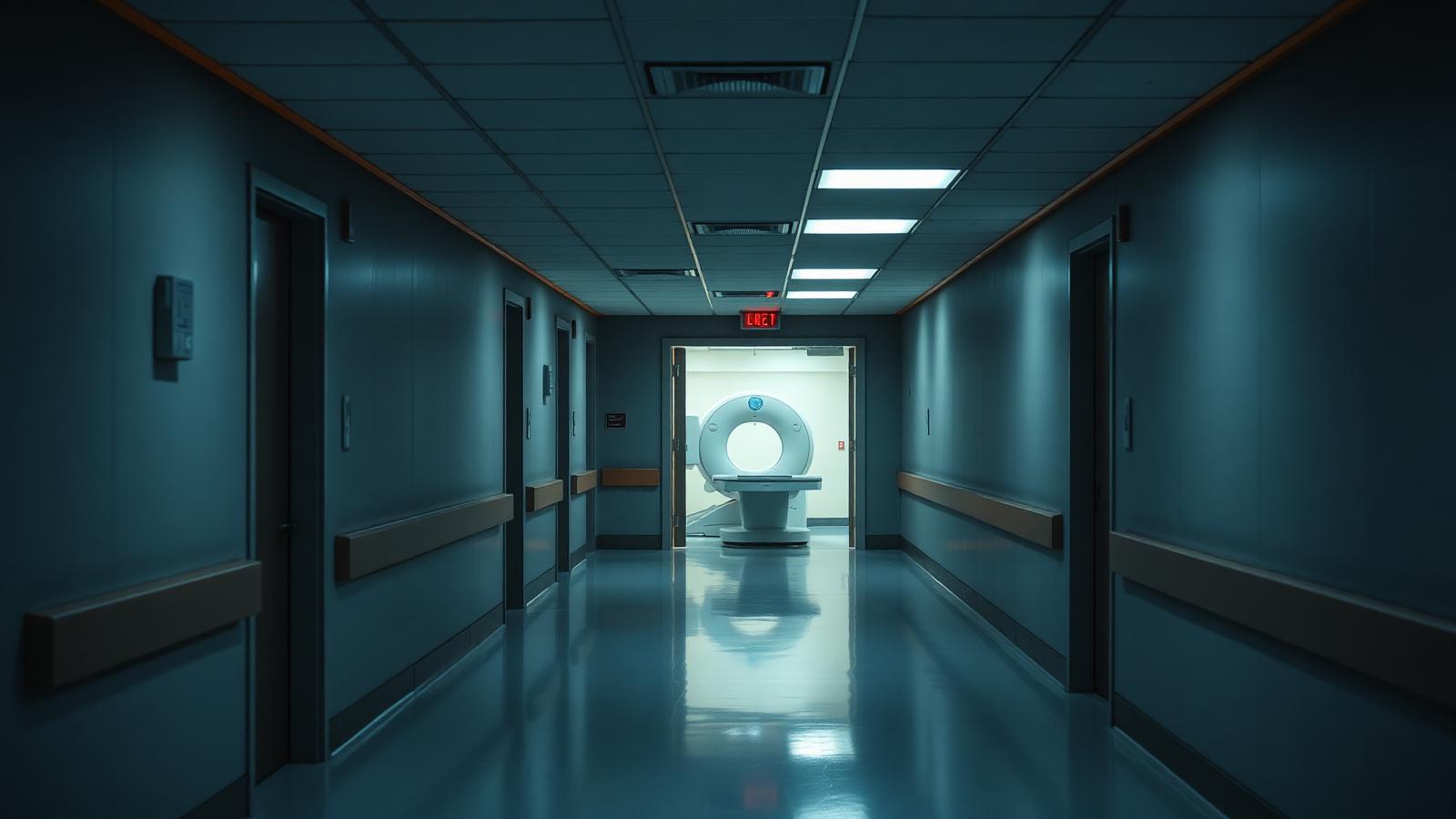
Radiology pre-reads exist because of a specific, ordinary problem: the hours when imaging happens and the hours when a radiologist is available are not the same hours. This is an illustrative composite — no real named patient or facility — of what that looks like at 2 a.m. in a small rural hospital, and of how a fast preliminary read changes the next twenty minutes. The service itself is described in full on the preliminary reads page.
⚠️ Important scope note
For human patients at USA facilities, RAD365 provides preliminary reads only. Your facility's own licensed radiologist always completes and signs the final interpretation. RAD365 does not provide final reads for human patients.
For veterinary and pet imaging there are no preliminary reads — veterinary studies are read as complete final reports by specialist veterinary radiology groups.
physician positions posted on the ACR Career Center (ACR Bulletin, 2026 HPI workforce update)
radiology job postings analyzed, March–May 2026 (AuntMinnie.com)
of 10,979 unique openings unfilled for more than two months (AuntMinnie.com, 2026)
fast-fill rate for emergency radiology — still slower than overnight coverage needs
02:07 — the ambulance call
A 46-bed critical-access hospital. The ED has two physicians on the schedule this week and one of them is on tonight. EMS calls ahead: a rollover on the county road, a man in his fifties, conscious, complaining of abdominal pain, a bad-looking mechanism of injury. Estimated arrival, eight minutes.
The on-call radiologist covers three facilities in the region and lives ninety minutes away by road. He will read this morning. He will not read it in the next twenty minutes, and everybody on shift already knows that without having to say it out loud.
02:22 — the scan completes
Trauma CT completes fifteen minutes after arrival. On the pathway this hospital ran two years ago, the timeline stalls right here. The ED physician scrolls the images herself, forms a working impression outside her own specialty, and decides whether to act on it or to start calling. Transfer to the level-one center is ninety minutes by ground. Making that call on a hunch is uncomfortable; not making it and being wrong is worse.
On the current pathway nobody makes a phone call to start anything. The study routes automatically at acquisition — modality, priority and time window are encoded as rules that were agreed during onboarding and tested before a single clinical case ran through them. That routing layer usually sits behind a DICOM gateway, and it is the least visible and most load-bearing component in the whole arrangement.
02:31 — the pre-read lands
Nine minutes after acquisition a structured preliminary interpretation is available in the reporting workflow the team already uses, attached to the correct accession and clearly labeled as preliminary. Free fluid described. A specific organ injury flagged. The reader has already spoken to the ED attending directly, because the critical-findings protocol requires a call before the document — the written record follows the conversation rather than substituting for it.
The transfer decision is now made on described findings at 02:31 instead of on an impression at 03:15. That is the whole of what a pre-read does. It does not diagnose on the facility's behalf and it does not replace anyone: it removes a wait state from the middle of the pathway. The detail of how that works in practice is on the preliminary reads service page.
07:40 — the final report
The facility's own licensed radiologist arrives, reviews the study, and completes and signs the final interpretation. That is where final responsibility sat before the pre-read arrangement existed and it is exactly where it sits now. Nothing about credentialing, clinical authority or the medical record changed; only the latency in the middle of the night did.
Why this gap is documented, not anecdotal
It would be easy to read the story above as one hospital's bad luck with geography. The workforce data says otherwise. The American College of Radiology reports more than 1,400 physician positions currently posted on the ACR Career Center — a figure highlighted in the ACR Bulletin's 2026 Harvey L. Neiman Health Policy Institute workforce update, and a blunt indicator of how much unmet demand is sitting in the market at any moment.
The hiring data sharpens the picture. A 2026 analysis of 20,775 radiology job postings from March to May 2026, reported by AuntMinnie.com, found that roughly 1,470 of 10,979 unique openings remained unfilled for more than two months. Emergency radiology fared comparatively well with a 78% fast-fill rate — but "fast" in a hiring cycle still means weeks, and an ED at 02:22 needs coverage measured in minutes. A subspecialty can be the easiest one to recruit into and still leave a rural night shift uncovered.
That is the actual gap pre-reads address. Not a shortage of competence at the facility, and not a substitute for the facility's radiologist, but a mismatch between when studies are acquired and when interpretation capacity is physically present.
| Step in the overnight pathway | Without pre-read coverage | With pre-read coverage |
|---|---|---|
| Study routed for interpretation | Phone call, if anyone is reachable | Automatic rule at acquisition |
| Imaging → interpretation | Unpredictable; tens of minutes to hours | Defined target, measured at 90th/95th percentile |
| Critical finding communicated | Ad hoc, often undocumented | Named channel, timescale, logged acknowledgement |
| Transfer / treatment decision | Made on the ED physician's own impression | Made on a described, documented preliminary read |
| Final signed report | Facility radiologist, next morning | Facility radiologist, next morning — unchanged |
How a small facility actually sets this up
- Baseline the segment you intend to change. Ninety days of acquisition-to-interpretation intervals by modality and priority, reported as median and 90th/95th percentile. Averages will flatter you and hide the nights that hurt.
- Define narrow routing rules first. Overnight CT and radiography is a sensible starting scope for most critical-access and rural EDs. Widen later.
- Write the escalation protocol down. Named contacts, fallback hierarchy, response timescale, acknowledgement logging. This is the part that saves a case at 03:00.
- Rehearse before clinical volume. Routing, patient identity matching, report return into the workflow, escalation call — all tested end to end, not assumed.
- Review at ninety days against the baseline. Same intervals, plus discrepancy rate measured against your radiologist's signed final reports.
Step five is the one that gets skipped and the one that matters most. Comparing every preliminary read against the signed final report is how accuracy stops being a claim and becomes a number, which is why an independent peer review and QA process belongs in the arrangement from day one rather than being bolted on after a bad case. The broader service context sits under human radiology services.
The boundary, stated plainly
Nothing in the account above involves RAD365 signing a final report for a human patient. For human patients at USA facilities the deliverable is the pre-read and the escalation, full stop — the facility's own licensed radiologist completes and signs the final interpretation, every time. For veterinary and pet imaging the scope is genuinely different: there are no preliminary reads at all — veterinary studies are read once as complete final reports by specialist veterinary radiology groups — and practices can read more about the animal-imaging side under veterinary radiology.
Facilities weighing up overnight coverage should be suspicious of any provider that blurs this line, because the blurring is usually a sales convenience rather than a clinical or regulatory reality. A clean boundary is easier to audit, easier to credential around, and easier to defend.
Talk through your overnight coverage gap
Tell us your modality mix, your volume and the hours you cannot cover. We will tell you what a pre-read arrangement would realistically change — and what it would not.
Start the conversation →Radiology Pre-Reads: Frequently Asked Questions
How Radiology Pre-Reads Work
What exactly is a "radiology pre-read" and how is it different from a final report?
A radiology pre-read is a structured, provisional interpretation of a study delivered quickly so a treating clinician can make an immediate decision. It describes what the reader sees, flags anything urgent, and is clearly labeled as preliminary. The final report is the definitive, signed diagnostic document that enters the permanent medical record and supports billing and downstream care. For human patients in the USA, RAD365 supplies only the pre-read; the facility's own licensed radiologist writes and signs the final report.
Who typically requests a pre-read in the middle of the night?
Most overnight requests originate from the emergency department — an attending physician or ED charge nurse acting on a trauma activation, stroke alert or acute abdomen. In practice, though, the request is usually not a phone call at all: routing rules agreed during onboarding send qualifying studies automatically at acquisition based on modality, priority and time of day, so the technologist finishing the scan is effectively the trigger. Hospitalists and intensivists also draw on pre-reads for overnight inpatient imaging.
How fast can a pre-read be turned around during an overnight emergency?
Emergency-priority studies are typically targeted in minutes rather than hours, with the exact commitment written into the agreement by modality and priority class. What matters more than the headline number is how it is measured: a median turnaround hides the outliers that actually hurt an ED, so ask for the 90th and 95th percentile as well. Critical findings are communicated by direct contact immediately, ahead of the written pre-read landing in the workflow.
What imaging modalities are eligible for pre-read services (CT, MRI, X-ray, ultrasound)?
CT, MRI, plain radiography and ultrasound are all routinely covered, and most facilities begin with overnight CT and radiography because that is where after-hours volume concentrates. Coverage is defined per modality in the agreement rather than assumed wholesale — some facilities deliberately keep MRI on a daytime pathway, others include it from day one. The scope is set during onboarding and can be widened later without rebuilding the routing.
Scope, Compliance & Who Signs Off
Does RAD365 provide the final report for human patients, or only the preliminary read?
Only the preliminary read. For human patients at USA facilities, RAD365's deliverable is a fast, documented, clearly labeled pre-read plus immediate escalation of critical findings. The signed final interpretation is always completed by the facility's own licensed radiologist. This boundary is stated on the service page and is not a case-by-case negotiation. For veterinary imaging the scope is different — there are no preliminary reads at all; veterinary studies are read as complete final reports by specialist veterinary radiology groups.
Who is legally responsible for the final interpretation on a human case?
The credentialed, licensed radiologist at the facility — or contracted directly to it — who signs the report. A pre-read does not transfer that responsibility, and no facility should accept an arrangement that implies otherwise. The pre-read provider is accountable for the accuracy, documentation, turnaround and escalation of its own preliminary product, which is a real and auditable obligation, but it is a distinct one from final interpretive responsibility.
Is the scope different for veterinary imaging than for human imaging?
Yes, and the difference is deliberate. Human/USA work is preliminary-only for the reasons above. Veterinary and pet imaging operates under a different professional and regulatory framework, and there no preliminary reads are issued — veterinary studies are read once as complete final reports by specialist veterinary radiology groups. Facilities that run both human and animal imaging should keep the two workflows and their documentation strictly separate so the scope boundary is never ambiguous in the record.
What credentials do the radiologists providing pre-reads hold?
Readers are qualified radiologists working within a defined, documented scope, with credentials, subspecialty exposure and case-mix experience made available to the facility during evaluation rather than described in the abstract. The right question to ask a prospective partner is not simply whether readers are board-certified but which specific readers cover your modalities in your hours, and how paediatric or subspecialty cases are handled when they fall outside a reader's routine mix.
Operations & Quality
How does a hospital route a study for a pre-read outside business hours?
Through automated rules rather than human decisions. Studies leave the modality, pass through a secure gateway, and are routed by modality, priority and time window to the reading queue — the same path every night, with no phone call required. Results return into the reporting workflow the team already uses, attached to the correct accession and labeled preliminary. Building and testing that routing before any clinical volume flows is the single most important onboarding step.
What happens if the pre-read and the final report disagree?
The discrepancy is logged, categorized by clinical significance, and — where the difference is clinically actionable — communicated to the facility immediately rather than at the next review cycle. Variances are trended by reader and case type and fed back into reading practice. A provider that cannot show you its discrepancy rate, its categorisation method and what it changed as a result is asserting quality rather than measuring it.
How is patient data protected during an overnight pre-read handoff?
Through encrypted transport, access controls scoped to the individual reader, full audit logging of who opened which study and when, and retention rules agreed in writing. HIPAA obligations follow the data, so a business associate agreement and a documented breach-notification path are baseline requirements, not extras. Ask specifically where images are stored, for how long, and how access is revoked when a reader leaves a rota.
Can a facility use pre-reads only for specific modalities or times of day (nights/weekends only)?
Yes — and most facilities should start that way. A common pattern is overnight CT and radiography only, extended later to weekends or to daytime overflow during staffing gaps or seasonal surges. Coverage windows are configuration, not identity, so a sensible contract lets you widen or narrow them without renegotiating the whole arrangement. If scaling a window requires a new agreement each time, the contract is too rigid for real imaging operations.
Choosing & Contracting
What should a hospital ask before contracting a pre-read service?
Ask for turnaround measured at the 90th and 95th percentile by modality and priority, not the average. Ask who exactly reads overnight and what their case mix is. Ask for the critical-findings escalation protocol in writing, including named channels and acknowledgement logging. Ask how discrepancies against your signed final reports are tracked and reported back. Finally, ask what happens on the worst night of the year, not the median one — surge behavior is where arrangements fail.
How is pricing typically structured for preliminary read services?
Usually per-study, sometimes with a committed minimum, and sometimes as a flat coverage fee for a defined window such as 22:00–07:00. Per-study pricing suits variable volume; window pricing suits predictable overnight coverage and makes budgeting simpler. What matters is that the structure is transparent and that surge volume does not trigger unpredictable surcharges. RAD365 does not publish rates publicly because they depend on modality mix, volume and coverage window.
Can pre-read volume scale up during flu season or mass-casualty events?
It should, and the mechanism should be written down before you need it. Ask how additional reader capacity is brought online, how long that takes, and what happens to turnaround targets under surge. A provider running a genuine multi-reader rota can absorb a seasonal step-change or a mass-casualty spike without a corresponding collapse in turnaround; one relying on a thin overnight bench cannot, however good the routine-night numbers look.
How does a facility measure whether its pre-read partner is actually helping ED throughput?
Baseline before you start: ninety days of acquisition-to-interpretation and imaging-to-disposition intervals by modality and priority, as medians and high percentiles. Then measure the same intervals at ninety days, alongside discrepancy rate against signed final reports, escalation response times, and ED length of stay for imaged patients. If the high-percentile intervals have not moved, the arrangement is not doing the job regardless of how good the average looks.
Related reading
- How RAD365 preliminary reads work — scope, turnaround and escalation in detail.
- Overnight and after-hours coverage options — coverage windows, modalities and onboarding.
- Human radiology services overview
- Independent peer review and QA
- Veterinary peer review and QA
- Speak to the RAD365 team
Written by Trisha Seal, RAD365 — 13 August 2026. Trisha writes from RAD365's operational experience running overnight preliminary-read and nighthawk coverage for emergency departments. RAD365 provides preliminary reads only for human patients at USA facilities; final interpretations are always completed and signed by the facility's own licensed radiologist.
