8 Red Flags Your Veterinary Practice Has Outgrown Its Vet PACS Support
Storage managed by deletion? Faults you find first? Eight red flags that your veterinary practice has outgrown its current vet PACS support arrangement.
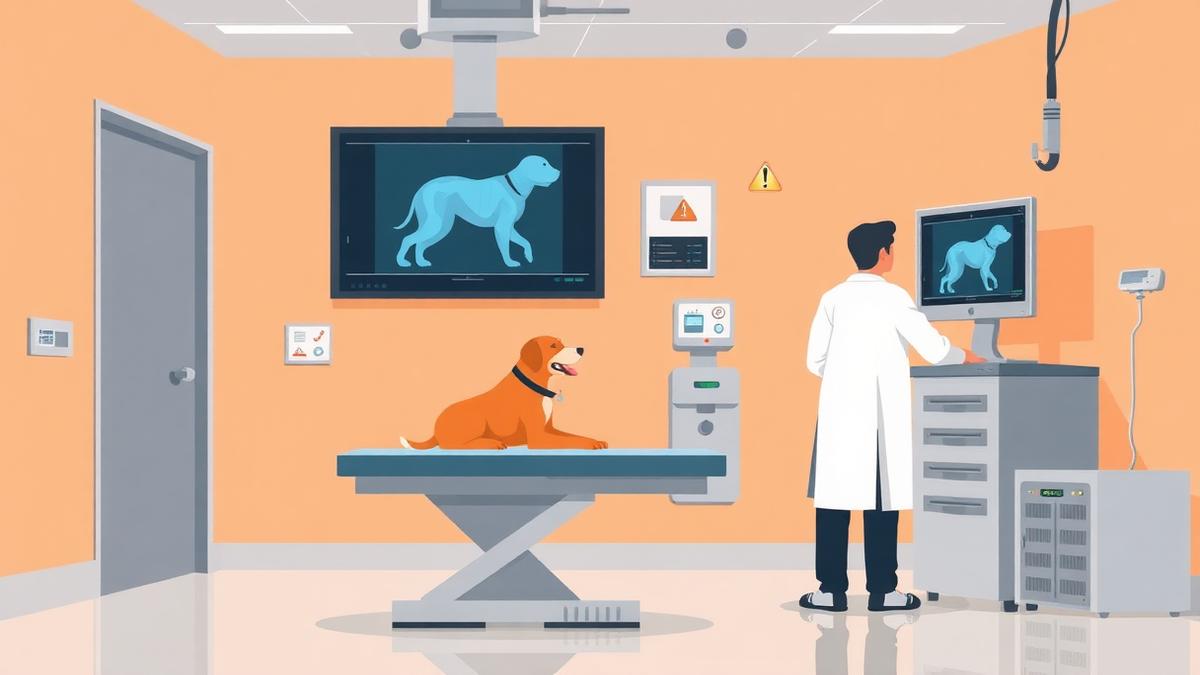
Vet PACS support tends to be bought once, at the point the archive is installed, and then left alone. That works while the practice is one site with one radiography room. It stops working somewhere between the second modality and the third location — and almost nobody notices the moment it stops, because veterinary imaging archives rarely fail outright. They degrade.
These are the eight red flags RAD365's engineers most often find when a practice finally asks for a review of its veterinary PACS support arrangement. Any two together generally mean the practice has outgrown what it is paying for.
the modality mix support must actually cover
integration target, not a hospital RIS
an untested restore is an assumption
support without replacing your archive
1. You manage storage by deleting things
The most common finding, and the most consequential. When someone in the practice periodically clears old studies to free space, the archive has stopped being an archive. Capacity should be forecast against study growth and a stated retention policy, with headroom procured before it is needed. Deletion-as-strategy also quietly destroys the prior images that make comparison possible.
2. You find the faults before your provider does
If every incident begins with a nurse discovering that images will not send, nothing is being monitored. Genuine vet PACS support watches queues, storage, interfaces and modality connectivity continuously and contacts you first. Discovery-by-user is break-fix with a support invoice attached.
3. Nobody has ever restored your backup
Practices routinely confirm that backups run. Far fewer can name a date when a restore was actually performed and a recovery time measured. Until that has happened, the backup is an assumption — and it is the assumption that fails hardest, because it fails at the exact moment there is no alternative.
4. Studies arrive without matching the patient record
Mismatched patient names, missing accession numbers, studies filed under the wrong species or owner. This is almost always a practice-management-system integration problem rather than an archive problem, and it compounds: every orphaned study is a prior image that will not be found later. PIMS integration belongs inside support scope, not in a project queue.
5. Your dental and ultrasound images live somewhere else
Dental sensors and some ultrasound units export in ways that make it easy to leave their output outside the main archive — a shared drive, a local machine, a vendor's own viewer. A practice with three parallel image stores does not have a PACS; it has a filing habit. Consolidation into a single veterinary PACS is usually the highest-value fix available.
6. Support ends when your clinic day doesn't
Veterinary practices image in the evening, at weekends and during emergency hours. A business-hours support contract leaves a large share of actual imaging volume uncovered. Compare your contracted coverage window against the timestamps on last month's studies — the gap is usually larger than anyone expects.
7. Every request outside break-fix becomes a quote
Adding a user, adjusting a worklist rule, correcting a study description, onboarding a new modality — this is routine administration and it belongs inside scope. When each of these produces a change request and a fee, the practice stops asking, and the environment drifts.
8. Growth keeps outrunning the arrangement
A second site, a new CT, a referral-image exchange with a specialist practice — each is normal growth, and each exposes whether the support model was scoped to scale. If every expansion triggers an emergency rather than a planned change, the contract was written for the practice you were, not the one you are.
What properly scoped veterinary PACS looks like instead
| Dimension | Outgrown arrangement | Properly scoped vet PACS support |
|---|---|---|
| Monitoring | None — users report faults | 24/7 on archive, storage and interfaces |
| Storage | Managed by deletion | Forecast against retention policy |
| Backups | Run, never restored | Tested restore with recorded recovery time |
| PIMS integration | Manual re-entry | In scope and monitored |
| Coverage | Business hours | Matched to clinic and emergency hours |
| Multi-site | Studies emailed between clinics | One logical archive, location-aware access |
A four-step review you can run this month
- Check the coverage overlay. Plot last month's study timestamps against your contracted support hours.
- Ask for the restore date. One question, one date, one measured recovery time — or you have no tested backup.
- Count your image stores. Anything outside the main archive is a consolidation target.
- Pull twelve months of tickets and sort by recurrence. Repeated incidents are unfixed root causes you are paying to rediscover.
Practices weighing whether the archive itself is the problem rather than the support around it should start with a review of veterinary PACS systems and support options before committing to a replacement — in most reviews we run, the archive is adequate and the operating layer is not.
Get a veterinary PACS support review
Tell us your modality mix, sites and current arrangement. We'll come back with where your imaging estate is exposed and what a scoped support model would cover — no obligation.
Talk to a vet PACS engineer →Vet PACS Support: Frequently Asked Questions
Setup & Compatibility
What is vet PACS support and how does it differ from human medical PACS support?
Vet PACS support is the operational management of a veterinary practice's imaging archive — monitoring, incident response, administration, storage planning and integration with the practice management system. The disciplines mirror the human side, but the environment is different in three ways that matter: veterinary practices rarely have dedicated imaging IT staff, so support absorbs work that a hospital PACS administrator would do; the modality mix skews toward digital radiography, ultrasound and dental with growing CT; and integration targets are practice information management systems rather than a hospital RIS or EHR. Support built purely for hospital estates tends to mis-scope all three.
Which companies specialize in PACS support services for veterinary practices?
The field is smaller than on the human side, because most PACS support providers treat veterinary work as an occasional variant rather than a service line. When shortlisting, test for veterinary-specific fluency: can they discuss PIMS integration, multi-species study descriptions, dental sensor workflows and referral-image exchange without translating from hospital terminology. RAD365 runs veterinary PACS support as a dedicated line with the same 24/7 monitoring and SLA structure as its hospital contracts.
How do I set up and maintain a PACS system in a small veterinary clinic?
Start by sizing storage against realistic study growth including a retention policy, not against last year's volume. Standardize study descriptions and modality naming before the archive fills with inconsistent data, because retrofitting that is painful. Establish an automated, tested off-site backup from day one. Integrate with your PIMS so patient and owner records reconcile rather than being typed twice. Then agree who is responsible when it breaks at 7pm on a Saturday — in most small clinics that question has no answer, which is where support contracts earn their fee.
What imaging formats and modalities should vet PACS support systems be compatible with?
At minimum DICOM digital radiography and computed radiography, ultrasound including cine loops, dental radiography from sensor systems that often use non-standard exports, CT and increasingly MRI in referral practice, plus fluoroscopy where present. Practical compatibility also means handling non-DICOM sources — JPEG dermatology and endoscopy images, PDF referral reports — attached to the correct patient study rather than living in a folder on someone's desktop.
Can vet PACS support work with our existing practice management software?
Yes. Integration with the PIMS is standard scope, whether via HL7, an API or a supported worklist bridge, and it is one of the highest-value parts of the work: it removes duplicate data entry, keeps owner and patient identifiers consistent, and stops studies being orphaned from records.
Cost & Contracts
How much does veterinary PACS support cost?
Pricing scales with study volume, archive size, the number of locations and whether coverage is business hours or 24/7. For a single-site clinic it typically lands well below the cost of any dedicated IT headcount, which is why most practices buy support rather than staff for it. The variable that moves the number most is not volume but the number of integrated systems — every additional PIMS, modality vendor and referral channel adds surface area.
Is a support contract worth it for a single-location practice?
It depends entirely on what an imaging outage costs you. If a failed archive means rescheduling a day of appointments and re-scanning sedated patients, the contract pays for itself in one incident. If imaging is occasional and non-urgent, business-hours cover may be sufficient. The honest test is whether anyone in the building can restore an archive without external help.
What should be in a veterinary PACS support agreement?
Defined coverage hours, severity levels with response targets, what routine administration is included versus chargeable, storage and backup responsibilities with a stated retention period, integration scope covering the PIMS and each modality, escalation contacts, and a transition-out clause. Get backup ownership in writing specifically — it is the most commonly assumed and least commonly documented item.
Do we need to replace our PACS to get proper support?
No, and you should be skeptical of anyone who says otherwise. Vendor-neutral support sits alongside the archive you already run. Replacement is a separate decision driven by end-of-life, capability gaps or unsustainable licensing — not by a support gap.
Multi-Location & Networks
How does vet PACS support work across multiple clinic locations?
The goal is one logical archive with location-aware access, so a patient imaged at one site is visible at another without anyone emailing a study. That requires centralised storage or replication, consistent patient identifiers across sites, network paths sized for the transfer volumes, and role-based access that reflects the group's structure. Support then monitors each site's connectivity and modality feeds individually while reporting centrally.
What happens to imaging data when a veterinary group acquires a practice?
The acquired practice's archive has to be inventoried, mapped and migrated into the group's environment — with identifier reconciliation, because two practices will have overlapping patient IDs and inconsistent study descriptions. Doing this as a planned migration with study-level validation avoids the common outcome, which is a legacy archive kept running for years purely because nobody trusted the transfer.
How is referral imaging shared between veterinary practices?
Through controlled sharing from the archive — a secure link or a DICOM route to the receiving practice — rather than by burning discs or emailing files. Support's job is making that path reliable and auditable, so referral images arrive attached to the correct patient rather than as loose attachments.
Can vet PACS support scale as our practice grows?
It should be scoped to. Ask specifically how storage growth, additional sites and new modalities are handled commercially — whether they trigger a re-scope, a tier change or simply absorb into the existing agreement. Growth-related surprise costs are the most common friction point in multi-site veterinary contracts.
Support & SLAs
How can vet PACS support improve diagnostic accuracy and workflow in an animal hospital?
Indirectly but measurably. Consistent study descriptions and correct patient matching mean prior images are actually found when a clinician looks for them, which is the single biggest driver of comparison-based accuracy. Reliable retrieval means nobody re-scans a sedated patient because the original study cannot be located. Working PIMS integration removes transcription errors between record and study. And stable viewing performance means clinicians examine the image properly instead of working around a slow system.
What response times should a veterinary practice expect from PACS support?
For a total imaging outage during clinic hours, expect a response measured in minutes with a defined workaround path. For non-urgent administrative requests, next-business-day is reasonable. What matters more than the numbers is that severity is defined by clinical impact — a practice unable to image a collapsed patient is not a routine ticket regardless of which component failed.
Who is responsible for veterinary imaging backups under a support contract?
Whoever the contract says — which is why it must say. A complete arrangement specifies backup frequency, retention period, off-site or cloud copy, encryption, and crucially a tested restore with a recorded date and measured recovery time. A backup that has never been restored is an assumption.
What are the signs a veterinary practice has outgrown its PACS support?
Recurring incidents with no root cause; storage managed by deletion; the practice discovering faults before the provider does; every request outside break-fix becoming chargeable; no support cover during evening and weekend clinic hours; and no documented, tested restore. Any two of those together usually mean the arrangement has been outgrown rather than that the archive has failed.
Related Resources
- Veterinary PACS support — coverage, integration and SLAs for animal hospitals
- Vet PACS support for multi-site groups — consolidation and referral-image exchange
- Veterinary PACS — archive options and deployment models
- Vet PACS support plans — what sits inside scope
- Veterinary IT support — the wider practice imaging estate
- PACS migration services — consolidating archives after an acquisition
Written by Trisha Seal, RAD365 — 11 August 2026. RAD365 operates managed and outsourced PACS support for veterinary practices and hospital imaging departments alike: 24/7 monitoring, SLA-backed incident response, PIMS and modality integration, storage and lifecycle management, and archive migrations.
