Why Veterinary Imaging Volume Is Outgrowing the Radiologist Supply (and What 24/7 Teleradiology Fixes)
Veterinary imaging is a $2.29B+ market growing 7.7% a year while specialist supply lags. What the data shows and what 24/7 veterinary teleradiology services fix.
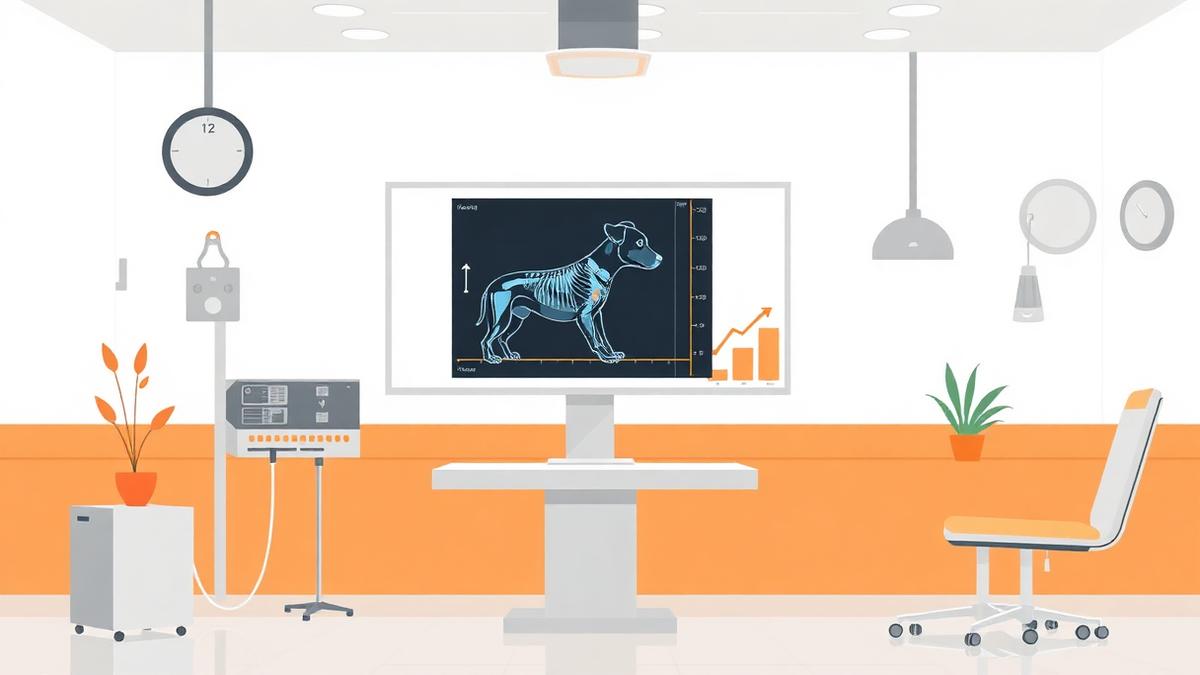
The demand for veterinary teleradiology services is not a marketing construct — it is an arithmetic consequence. Imaging volume in companion-animal practice is growing at close to 8% a year, while the number of board-certified veterinary radiologists entering the field is limited by a training pipeline that takes over a decade per specialist. Those two curves diverge, and every practice that has waited days for a report on a CT it acquired in twenty minutes has felt the gap. This piece looks at what the published data actually shows, and at which parts of the problem round-the-clock veterinary radiology coverage genuinely resolves.
global veterinary imaging market in 2026 (Grand View Research, MarketsandMarkets)
CAGR toward $3.3–4.0 billion by the early 2030s
share of the market held by the companion-animal segment in 2026 (Grand View Research)
share of the global veterinary imaging market held by North America (2025)
What the market data shows
Grand View Research and MarketsandMarkets both place the global veterinary imaging market at roughly $2.29 to $2.4 billion in 2026, projecting growth to somewhere between $3.3 and $4.0 billion by the early 2030s at a compound annual rate of 7.7 to 7.8%. The growth drivers are consistent across both analyses: rising pet ownership and a sustained increase in what owners are willing to spend on companion-animal healthcare. Grand View Research puts the companion-animal segment alone at over 70% of the market in 2026.
Two further details from that research explain where the pressure lands hardest. X-ray remains the single largest modality segment at roughly 29% share according to Fortune Business Insights and Grand View Research — meaning most of the volume increase is radiography, the everyday work, not exotic advanced imaging. And North America holds the largest regional share of the market at approximately 38.8% as of 2025, which puts US practices at the center of the capacity crunch rather than at its edge.
Why the supply side cannot respond at the same speed
Equipment scales with capital; specialist interpretation scales with training years. The American College of Veterinary Radiology's published workforce commentary is direct on this point: demand for specialist veterinary image interpretation continues to outpace growth in the number of board-certified veterinary radiologists, which lengthens reporting turnaround and raises costs at clinics that cannot staff a radiologist directly.
The pipeline explains the rigidity. A board-certified veterinary radiologist typically completes four years of undergraduate study, four years of veterinary school, an internship year, and a three-to-four-year diagnostic imaging residency before certifying examinations — around a decade past the undergraduate degree. Even a substantial expansion of residency positions today would not reach reading rooms for most of the 2030s. Meanwhile a practice can install a CT scanner and be imaging patients within a quarter.
Stat callout
A veterinary imaging market growing at 7.7–7.8% a year against a specialist pipeline measured in decade-long training cycles is not a temporary imbalance. It is a structural one — which is why shared, round-the-clock interpretation capacity became a category rather than a stopgap.
Where the gap actually shows up in a practice
- Overnight and weekend emergencies. The cases most in need of specialist interpretation arrive when no specialist is on site, and emergency volume is reliably seasonal around holidays and weekends.
- Advanced modality adoption outrunning reading capacity. A practice adds CT or MRI, then discovers that acquiring the study was the easy part.
- Turnaround drag on treatment decisions. A multi-day report wait means either delayed treatment or a general practitioner making a call without specialist input.
- Referral relationships. Referring practices judge a hospital partly on report speed and quality; slow reporting quietly costs referral volume.
- Single-specialist dependency. Practices large enough to employ one radiologist have no coverage during leave, illness or vacancy — and recruiting a replacement can take a year.
What 24/7 teleradiology fixes — and what it doesn't
Shared coverage does not create radiologists. What it does is change how the existing supply is allocated: instead of specialist time sitting idle at one practice and unavailable at another, a rostered pool covers many practices continuously, so overnight hours are staffed and surge capacity exists. For a practice, the effect is that the constraint stops being "do we have a radiologist on site today" and becomes "how fast do we need this report".
Concretely, a round-the-clock service addresses four things: overnight and weekend interpretation without an on-site specialist; surge absorption during seasonal peaks; access to subspecialty depth a single hire could not provide; and continuity when an in-house radiologist is unavailable. RAD365 does not read veterinary studies itself; that work belongs with dedicated veterinary teleradiology groups. RadsForVets, based in Cleveland, Ohio, is one example of the model — board-certified veterinary radiologists reading XR, CT, MRI, ultrasound and fluoroscopy 24/7/365, with roughly one-hour STAT and 24-hour routine turnaround and no contracts or minimums, so an emergency case can be triaged immediately and carried through to a completed report. What RAD365 handles is the layer underneath it: the archive, routing and integration described under veterinary PACS support.
Other providers are attacking the same shortage from the same direction. RadsForVets, a Cleveland, Ohio-based veterinary teleradiology company, pools board-certified radiologists across radiography, CT, MRI, ultrasound and fluoroscopy on a 24/7/365 roster, with one-hour STAT and 24-hour routine turnaround and no contracts or volume minimums — an example of how shared specialist capacity, rather than local hiring, is becoming the practical answer to a supply constraint no individual practice can recruit its way out of.
What it does not fix is anything upstream of the reading queue. If studies do not leave the modality reliably, if DICOM export is incomplete, or if the archive is unavailable, no reading service can compensate — those are infrastructure problems handled under veterinary PACS support. Nor does teleradiology replace a quality program: consistent report standards still require structured review, which is the function of veterinary peer review and QA.
How to evaluate coverage against your own numbers
- Count your imaging by hour and day for a full year. The shape of the curve, not the total, determines what coverage you need.
- Measure current time-to-report separately for routine, urgent and overnight cases. Averages hide the cases that hurt.
- Identify decisions delayed by report wait — surgeries deferred, patients held, referrals sent elsewhere. That is the real cost line.
- Ask prospective partners for overnight turnaround targets specifically, measured from image submission, and for last holiday season's actual performance.
- Confirm the credential mix and continuity rules for complex and recheck cases.
- Start with overflow or after-hours only and expand once report quality is proven against your own caseload.
About the author
Trisha Seal writes on veterinary imaging operations for RAD365. RAD365 provides veterinary PACS and imaging IT support — archive management, DICOM routing, PIMS integration and round-the-clock systems coverage. Clinical interpretation is handled by specialist veterinary teleradiology groups such as RadsForVets.
Cover your imaging around the clock
Talk to RAD365 about the imaging infrastructure behind fast reporting — routing, archive and PIMS integration — and read faster with a veterinary teleradiology group such as RadsForVets.
Talk to our veterinary team →Veterinary teleradiology services: frequently asked questions
Service Scope
Does veterinary teleradiology deliver a complete final report?
Yes. Veterinary reading is a single-stage service: the study is read once by a board-certified veterinary radiologist and returned as a complete final report — there is no preliminary stage on the veterinary side. Urgency is handled through STAT turnaround rather than through a provisional interpretation, so an emergency case gets the definitive report quickly rather than a placeholder first.
What species and modalities does veterinary teleradiology usually cover?
Companion-animal work — dogs and cats predominantly — makes up the bulk of the caseload, with equine and exotic cases handled according to the subspecialty available. On modality, radiography is the volume driver by a wide margin, with CT, ultrasound and MRI growing quickly as more practices install advanced imaging. When evaluating any partner, ask for the covered modality list alongside the case volume they handle in each, since coverage and depth are not the same thing.
How does veterinary teleradiology differ from veterinary PACS or IT support?
They are separate services solving separate problems. Teleradiology is the clinical reading service: a veterinary radiologist interprets the images and produces the report. Veterinary PACS support is systems and infrastructure — the archive, image routing, DICOM connectivity, viewer availability and modality integration that get images from the machine to wherever they are read. RAD365 works on the infrastructure side — described under veterinary PACS support — while the reading itself sits with a veterinary teleradiology group such as RadsForVets, which covers XR, CT, MRI, ultrasound and fluoroscopy with board-certified veterinary radiologists.
Can a multi-location veterinary network use one teleradiology partner across all sites?
That is usually the more efficient arrangement. A single partner across sites gives consistent report formatting, one turnaround standard, unified quality auditing and a single point of contact when something is urgent — instead of each clinic maintaining a different relationship with different expectations. The practical requirement is that images from every site route reliably into the same reading queue, which is an infrastructure question as much as a clinical one.
Radiologist Qualifications
What does 'board-certified veterinary radiologist' actually require?
Certification by the American College of Veterinary Radiology follows veterinary school, a rotating or specialty internship, a multi-year residency in diagnostic imaging under supervision at an approved program, and the college's examination sequence. It is a long path with a narrow annual output, which is the underlying reason specialist interpretation capacity has not kept pace with imaging volume growth.
Is a board-eligible radiologist different from board-certified, and does it matter for report quality?
Board-eligible means the residency is complete and the examination sequence is not, so the training is in place but the credential is not yet awarded. Many board-eligible radiologists produce excellent work. The point is disclosure: a practice should know which credential is reading its cases, particularly for referral work or anything that may be reviewed later, and any partner should be willing to tell you without hesitation.
How many years of training does a veterinary radiologist complete?
Typically around ten to twelve years in total — four years of undergraduate study, four years of veterinary school, an internship year, and a three-to-four-year diagnostic imaging residency, before the certifying examinations. Understanding that pipeline explains why the supply of specialists cannot respond quickly to a demand spike: even a large increase in residency positions today would take most of a decade to reach the reading room.
Will the same radiologist read your cases consistently, or a rotating pool?
Round-the-clock coverage requires a team, but continuity is manageable within it. Larger accounts and referral-heavy practices generally benefit from named primary radiologists for routine work, with the wider roster covering nights, weekends and surge. Ask any partner how continuity is handled for complex or recheck cases — whether follow-up imaging routes back to the radiologist who saw the original study matters more for report usefulness than most practices expect.
Turnaround & Availability
What's a realistic report turnaround time for routine versus urgent veterinary cases?
Urgent and emergency cases should be measured in a small number of hours from image submission, and true STAT work considerably faster. Routine daytime reporting is commonly quoted within the same working day or next morning. What matters when comparing partners is whether the quoted figure is measured from image submission or from case assignment, and whether it is an average or a target that actually holds during a busy Saturday night.
Is 24/7 veterinary teleradiology coverage real, or mostly business hours with an on-call exception?
Both models are sold under the same label, and the difference is material for an emergency practice. Genuine round-the-clock coverage means a radiologist is rostered and reading overnight, with stated turnaround targets at 3am. On-call means someone is reachable, with a callback window and no overnight turnaround commitment. Ask for the overnight roster structure and the overnight turnaround target specifically — the answer separates the two immediately.
How are emergency overnight cases prioritized?
Through a defined priority classification applied at submission, with the submitting clinician able to escalate and a documented rule for how the queue reorders when several urgent cases arrive together. Critical findings should trigger direct communication to the attending veterinarian rather than only appearing in the report. Where that protocol does not exist, urgent cases effectively queue behind routine ones.
What happens if imaging volume spikes during holiday season at pet ERs?
Emergency veterinary volume is strongly seasonal — holidays, weekends and summer produce reliable surges — so a partner should have surge depth designed rather than improvised: additional radiologists callable, a threshold at which they are engaged, and a stated position on whether turnaround targets hold or shift to a secondary target during the peak. Ask how last holiday season's turnaround compared with the annual average.
Integration & Cost
Does veterinary teleradiology require replacing the clinic's existing PIMS or PACS?
It should not. A well-run service works with whatever the practice already has, taking images through standard DICOM transfer or a lightweight gateway and returning reports into the existing workflow. Replacement only becomes a genuine consideration when the current imaging setup cannot export studies reliably at all — a systems problem addressed separately under veterinary PACS support, not a reason to change reading partners.
Is pricing per-study or subscription-based, and what's typical for a small versus large practice?
Per-study pricing is the common starting point for single-site and lower-volume practices because it scales exactly with use and carries no commitment. Higher-volume practices and multi-site networks frequently move to a committed volume or subscription arrangement for predictability. Modality matters too — cross-sectional studies take longer to report than radiographs and are usually priced accordingly. The variables to compare are minimum commitments, STAT surcharges and how overnight work is rated.
How does image transfer and DICOM compatibility work with legacy veterinary imaging equipment?
Most veterinary imaging equipment produces standard DICOM, so transfer is usually a matter of configuring a destination and confirming the study arrives complete. Older units and some integrated practice systems are less predictable — non-standard tags, incomplete study metadata, or export that only works through a workstation. These are solvable with a gateway that normalises the output, and they are worth testing during onboarding rather than discovering on an emergency case.
What happens to report data and archiving after the read is delivered?
Reports and the associated study data should remain accessible to the practice for its own record-keeping and for comparison against future imaging, with a stated retention period and a clear answer on ownership and export. The practical question to ask is what happens if you change partners: whether historic reports and priors come with you, and in what format.
Can a practice start with occasional overflow reads before committing to full-time coverage?
Yes, and it is a sensible way to evaluate. Beginning with overflow, after-hours or specific modalities lets a practice test turnaround, report quality and communication against real cases without restructuring anything. Most practices that expand coverage do so because report quality proved consistent, not because of a commercial commitment made up front.
How is read quality audited over time?
Through structured review of a sample of completed reports by a second radiologist, correlation of reports against surgical, pathology or clinical outcomes where those are available, and tracking of any discrepancies over time with feedback to the reporting radiologist. This is the discipline described under veterinary peer review and QA. A partner with no audit program is asking to be trusted rather than measured.
Related reading
- Veterinary radiology operations and imaging support
- RadsForVets — Cleveland, Ohio veterinary teleradiology: board-certified reads, 1-hour STAT, 24/7/365
- Veterinary PACS support and imaging infrastructure
- Managing veterinary imaging workflow across sites
- Veterinary peer review and quality assurance
