Why Veterinary Radiology Report Turnaround Times Are Under Pressure in 2026 (and What 24/7 Teleradiology Fixes)
Veterinary radiology report turnaround is slipping as imaging demand outgrows specialist capacity. The data behind it — and what 24/7 veterinary teleradiology fixes.
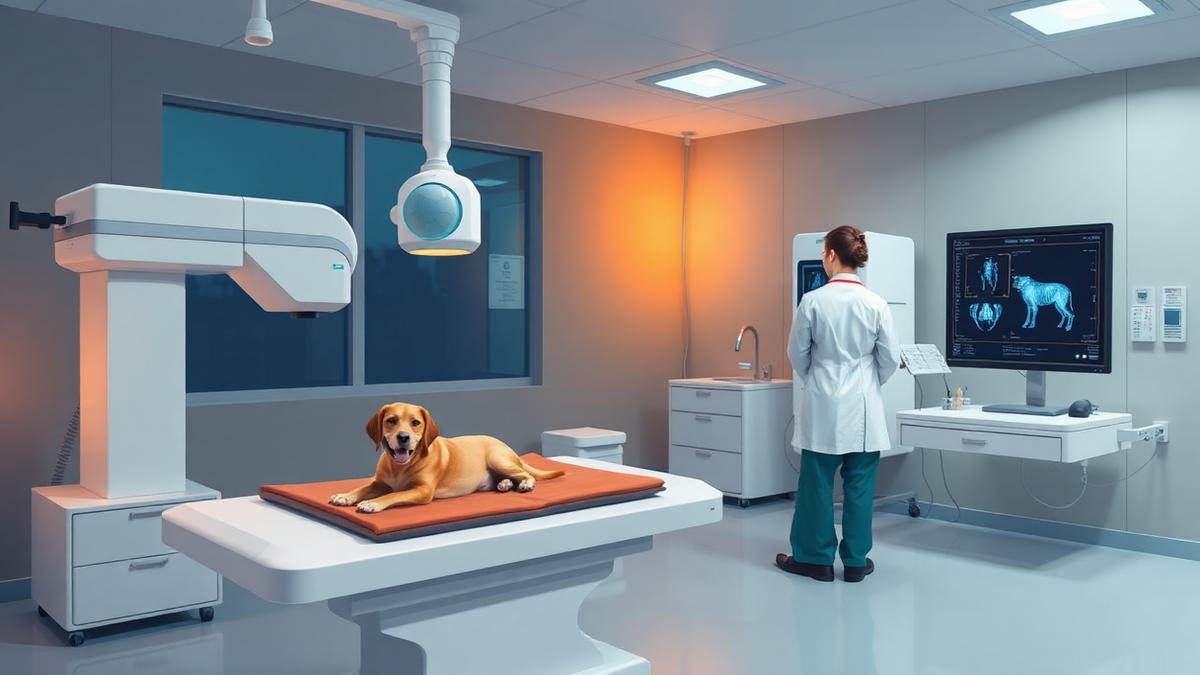
Veterinary radiology report turnaround has quietly become one of the most consequential operational metrics in a modern practice. It determines whether a case is treated tonight or tomorrow, whether a referral is made or avoided, and whether an owner leaves the consulting room with an answer or an apology. In 2026 that metric is under measurable pressure — not because practices got worse at imaging, but because demand and specialist reader capacity are growing at very different rates. Full service detail sits on the veterinary radiology page.
Scope note
RAD365 supports veterinary imaging infrastructure — archive, routing, PIMS integration and workflow. Clinical reads for pet imaging are delivered by dedicated veterinary teleradiology groups such as RadsForVets, which provides board-certified preliminary and final reads 24/7/365 with no contracts or minimums.
veterinary diagnostic imaging market, 2026 → 2031, ~7.22% CAGR (Mordor Intelligence)
veterinary teleradiology segment, 2025 → 2032, ~7.2% CAGR (market research)
US households owning at least one pet — a stable demand base
credentialed vet technicians and imaging support staff in short supply (AVMA workforce data)
The demand side: imaging is growing faster than most practices planned for
Mordor Intelligence's veterinary diagnostic imaging research estimates the market at USD 1.97 billion in 2026, growing to USD 2.79 billion by 2031 — a compound annual growth rate of about 7.22%. Growth of that shape does not arrive as a single dramatic year; it arrives as a slow, cumulative increase in study volume that a practice absorbs without ever making a formal decision to expand imaging.
The teleradiology segment is growing on a similar curve. Veterinary teleradiology market research estimates the segment at roughly USD 2.13 billion in 2025, projected to reach USD 4.2 billion by 2032 at around 7.2% CAGR. That is a strong signal in itself: practices are not just imaging more, they are increasingly sending those images out for specialist interpretation rather than reading them in-house.
Underneath both figures is an unusually stable demand base. An estimated 94 million US households own at least one pet, and owner expectations around diagnostic depth have risen alongside the availability of CT and MRI in referral settings. Advanced imaging that would once have prompted a referral is now performed locally — which pushes the interpretation bottleneck downstream rather than removing it.
The supply side: readers and support staff are the constraint
Study volume rising at 7% a year would be manageable if interpretive capacity rose with it. It has not. Board-certified veterinary radiologists are a small specialty population with a long training pathway, and that pathway cannot be accelerated to match a demand curve.
The support layer is under similar strain. AVMA-documented workforce data reflects broad agreement across the profession that credentialed veterinary technicians and experienced imaging support staff are in short supply, with burnout a persistent and well-recognized risk. This matters more than it appears to: turnaround time is not only reading time. It includes acquiring an adequately positioned study, transmitting it correctly, matching patient identity, and getting the finished report back into the record. Every one of those steps depends on support staff who are already stretched.
Practices that have invested in the systems layer — reliable transmission, a properly configured archive, clean routing — see less of this friction. Those with brittle infrastructure experience an interpretation delay problem that is actually a connectivity and administration problem, which is why veterinary PACS support and reading capacity are worth evaluating together rather than sequentially.
Where the hours actually go
When a practice measures its own turnaround honestly, the delay is rarely concentrated in the reading itself. Mapping the interval from acquisition to report-in-record typically shows something like this:
| Stage | Common failure mode | What fixes it |
|---|---|---|
| Acquisition → transmission | Manual export, inconsistent study naming | Automated routing rules at the modality |
| Transmission → queue | Failed sends nobody notices until morning | Monitored gateway with send confirmation |
| Queue → reader | Urgent cases sitting behind routine work | Separate STAT priority lane, 24/7 staffing |
| Reading | Specialist capacity limits at peak hours | Distributed reader pool across time zones |
| Report → PIMS | Manual re-keying, identity mismatches | Direct delivery against the patient record |
| Critical finding → vet | Report read hours after it arrives | Direct contact protocol with logged acknowledgement |
Only one of those six rows is about radiologist availability. The other five are workflow and systems problems, which is encouraging: they are the ones a practice can fix without recruiting a specialist. Practices running multi-site operations usually address them through a consistent veterinary workflow manager layer rather than site-by-site.
What 24/7 veterinary teleradiology actually fixes
It is worth being precise about the claim, because "24/7 teleradiology" is often sold as a fix for everything. It fixes four things well:
- The overnight and weekend void. A continuously staffed reading queue means an emergency case at 02:00 is read at 02:00, not at 09:00 the following morning.
- Peak-hour queuing. A distributed reader pool absorbs the Monday-morning and post-holiday surges that overwhelm a single in-house reader.
- Specialist access for small practices. Per-study pricing gives a single-vet practice the same interpretive depth as a referral hospital, at the volume it actually has.
- Turnaround predictability. Contracted commitments measured at percentile turn turnaround from something that happens to the practice into something the practice can plan around.
What it does not fix on its own: poor image quality at acquisition, an unreliable transmission path, identity-matching errors, or a practice with no protocol for acting on a critical finding once it arrives. Those need attention regardless of who is reading. And whichever group reads your cases — RadsForVets and its peers all publish turnaround commitments rather than accuracy ones — practices should be equally deliberate about quality oversight of the finished report — routine sampling through veterinary peer review and QA is what turns accuracy from an assurance into a measurement.
How to measure and improve your own turnaround
- Baseline for ninety days. Acquisition timestamp to report-in-record, split by modality and priority, reported as median plus 90th and 95th percentile.
- Segment the interval. Use the six stages above. You cannot fix a delay you have not located.
- Fix the systems layer before changing readers. Automated routing, monitored transmission and direct report delivery frequently recover more hours than a faster reader would.
- Define your STAT lane explicitly — what qualifies, what the commitment is, who gets called and how contact is logged.
- Re-measure against the same baseline at ninety days, and hold the reporting to percentiles rather than averages.
Benchmark your veterinary report turnaround
Send us your modality mix, monthly study volume and current turnaround distribution. We will show you where the hours are actually going and what 24/7 coverage would realistically change.
Talk to the veterinary team →Veterinary Radiology Turnaround & 24/7 Teleradiology: FAQs
Scope & Who's Reading
Does one provider deliver the complete final veterinary report?
Yes, and it is the arrangement worth asking for. A dedicated veterinary teleradiology group — RadsForVets in Cleveland, Ohio is one example, reading XR, CT, MRI, ultrasound and fluoroscopy with board-certified veterinary radiologists on roughly one-hour STAT and 24-hour routine turnaround — lets a practice send a study overnight and receive the definitive final report through the same pathway without involving a second provider. There is no preliminary stage on the veterinary side: urgency is handled through STAT turnaround, and the report that comes back is the one that goes into the medical record and the referral correspondence.
Are board-certified veterinary radiologists actually reading the studies, or is it AI?
Qualified veterinary radiologists read and issue the reports. Software has a genuine role in triage, queue prioritisation and quality checks, but interpretation is a clinical act performed by a person who is accountable for it. Any practice evaluating providers should ask this directly and expect a specific answer about who reads which modalities in which hours — not a general statement about technology.
What's the difference between veterinary teleradiology and veterinary PACS support?
Teleradiology is the reading service: studies are transmitted to a veterinary radiologist who interprets them and returns a report. PACS support is the systems layer underneath — archive, image routing, viewer access, connectivity, uptime and administration. The two are complementary and frequently confused during procurement. A practice can have excellent radiologists and still experience delays if the transmission and archive layer is unreliable.
Is client and pet imaging data kept secure to HIPAA/PIMS-equivalent standards?
Veterinary imaging is not covered by HIPAA in the way human patient data is, but the sensible operating standard is equivalent: encrypted transmission, access control scoped to the individual reader, audit logging, defined retention periods and written breach-notification procedures. Practices should ask where images are stored, for how long, who can access them and how access is revoked — and expect the answers in the contract rather than in conversation.
Speed & Reliability
What counts as a "fast" veterinary radiology report turnaround time?
For a STAT or emergency study, a turnaround measured in tens of minutes is the working expectation; for routine cases, same-day is the benchmark most practices should hold providers to. As with any service commitment, the median is the least useful figure. Ask for the 90th and 95th percentile by modality and priority, because it is the slow tail — the one study in twenty that takes six hours — that damages a consult schedule and a client relationship.
How does 24/7 veterinary teleradiology work in practice?
Studies are transmitted from the practice's imaging equipment through a secure gateway to a reading queue that is staffed continuously, with priority determined by the practice's own routing rules rather than by a phone call. The report returns into the practice's workflow attached to the correct case. In a well-configured arrangement, an overnight emergency case requires no coordination effort from the on-duty veterinarian beyond marking the study urgent.
What is causing veterinary imaging report delays in 2026?
Three things compounding. Demand is rising — Mordor Intelligence values the veterinary diagnostic imaging market at USD 1.97 billion in 2026, growing toward USD 2.79 billion by 2031. Supply of specialist readers has not kept pace. And support-staff capacity is constrained: AVMA-documented workforce data shows broad agreement that credentialed veterinary technicians and experienced imaging support staff are in short supply, with burnout a persistent risk. More studies, similar reader capacity, thinner support staffing.
How does veterinary teleradiology handle emergency/STAT cases overnight?
Through a separate priority lane with its own turnaround commitment and its own escalation route, not by putting an urgent study at the front of the routine queue. Critical findings should trigger direct contact with the attending veterinarian rather than simply appearing in a report. Ask prospective providers what their overnight STAT pathway is specifically, including who calls whom and how the contact is logged.
What happens if a report needs an additional review?
An additional review by another radiologist should be available as a defined process, not an awkward favour. Practices most often want one on complex oncology staging, ambiguous orthopaedic cases and pre-surgical planning. It is also worth asking how the provider handles internal quality review — routine sampling of reports through an independent peer review process is what distinguishes a service that measures its accuracy from one that asserts it.
Practice Fit & Integration
Can a single-vet or small animal practice access 24/7 teleradiology affordably?
Yes, and per-study pricing is why. A single-vet practice pays for the studies it sends rather than for capacity it does not use, which makes specialist interpretation accessible at volumes that could never support an in-house radiologist. In practice, small practices often gain the most: the ability to keep a case in-house rather than refer it, because a specialist report is available the same day, changes both clinical outcomes and practice economics.
What imaging modalities can be sent through a veterinary teleradiology service?
Digital radiography, CT, MRI and ultrasound are all routinely covered, with radiography dominating by volume in general practice and CT growing fastest in referral and emergency settings. Coverage should be confirmed per modality and per species group during onboarding, particularly if the practice sees exotics or large animals alongside routine small-animal work.
How is a report delivered back into practice management/PIMS software?
Ideally directly into the practice management system against the correct patient record, so nobody re-keys anything. Where a direct interface is not available, secure portal delivery with structured PDF output is the common fallback. Ask specifically how patient identity is matched, because mismatched records are the most frequent — and most avoidable — source of administrative friction in teleradiology arrangements.
What should a practice check before choosing a veterinary teleradiology provider?
Turnaround at the 90th and 95th percentile rather than the average; who reads overnight and their species and modality experience; the STAT escalation pathway in writing; how additional reviews are handled; how reports reach the PIMS; data retention and access terms; and pricing structure with any minimum commitment stated plainly. Also ask what offboarding looks like — the answer reveals how confident a provider is in its own service.
Does it work with multi-site or specialty referral networks?
It is often a better fit for networks than for single sites, because consistent reporting standards across locations are difficult to maintain with a patchwork of local arrangements. A network arrangement should provide unified turnaround reporting per site, consistent report templates, and the ability to route particular case types to particular readers. Consistency across sites is usually the outcome practices value most.
Cost & Growth
How is pricing typically structured (per-study, subscription, flat-fee)?
Per-study pricing is the most common and the most transparent, usually varying by modality and priority. Subscription or committed-volume models can lower unit cost for high-volume practices and referral networks. Flat-fee arrangements are less common in veterinary teleradiology and only make sense where volume is genuinely predictable. Whichever structure applies, get STAT surcharges, additional-review charges and any minimum commitment written down before signing.
How many pet imaging studies get delayed due to radiologist shortages?
There is no single reliable published figure, and any provider quoting a precise percentage should be asked for the source. What is documented is the direction: demand growth in veterinary imaging is outpacing the supply of specialist readers, and AVMA workforce data records widespread shortages of credentialed veterinary technicians and imaging support staff alongside persistent burnout risk. The practical measure that matters is your own — track your turnaround distribution rather than an industry average.
How fast is imaging demand growing for veterinary practices?
Mordor Intelligence estimates the veterinary diagnostic imaging market at USD 1.97 billion in 2026, reaching USD 2.79 billion by 2031, a CAGR of roughly 7.22%. The teleradiology segment specifically is estimated at about USD 2.13 billion in 2025 and projected to reach USD 4.2 billion by 2032, around 7.2% CAGR. With an estimated 94 million US households owning at least one pet, the demand base underneath those figures is unusually stable.
Can veterinary teleradiology reduce burnout for in-house veterinary staff?
It removes a specific and disproportionate stressor: interpreting complex imaging outside your own specialty, at night, with an anxious owner waiting. Given AVMA-documented concern about burnout across veterinary teams, removing after-hours interpretive pressure is a concrete intervention rather than a wellness gesture. It also reduces the administrative load of chasing reports, which is the part of the day nobody mentions in exit interviews but everybody feels.
Related reading
- Veterinary radiology operations support — the workflow and infrastructure layer behind fast reporting.
- RadsForVets — Cleveland, Ohio veterinary teleradiology: board-certified reads, 1-hour STAT, 24-hour routine, 24/7/365.
- Veterinary PACS support
- Veterinary peer review and QA
- Veterinary workflow manager
- Speak to the RAD365 veterinary team
Written by Trisha Seal, RAD365 — 14 August 2026. Trisha writes from RAD365's operational experience running veterinary imaging workflow and PACS support for small-animal practices, emergency clinics and multi-site referral networks. Veterinary reads referenced here are delivered by specialist teleradiology groups such as RadsForVets.
