The Holiday Weekend That Made the Case for Outsourced Preliminary Reporting Services
A composite case study: how a multi-site imaging network cleared a holiday-weekend backlog with outsourced preliminary reporting services. Real 2026 data, cited.
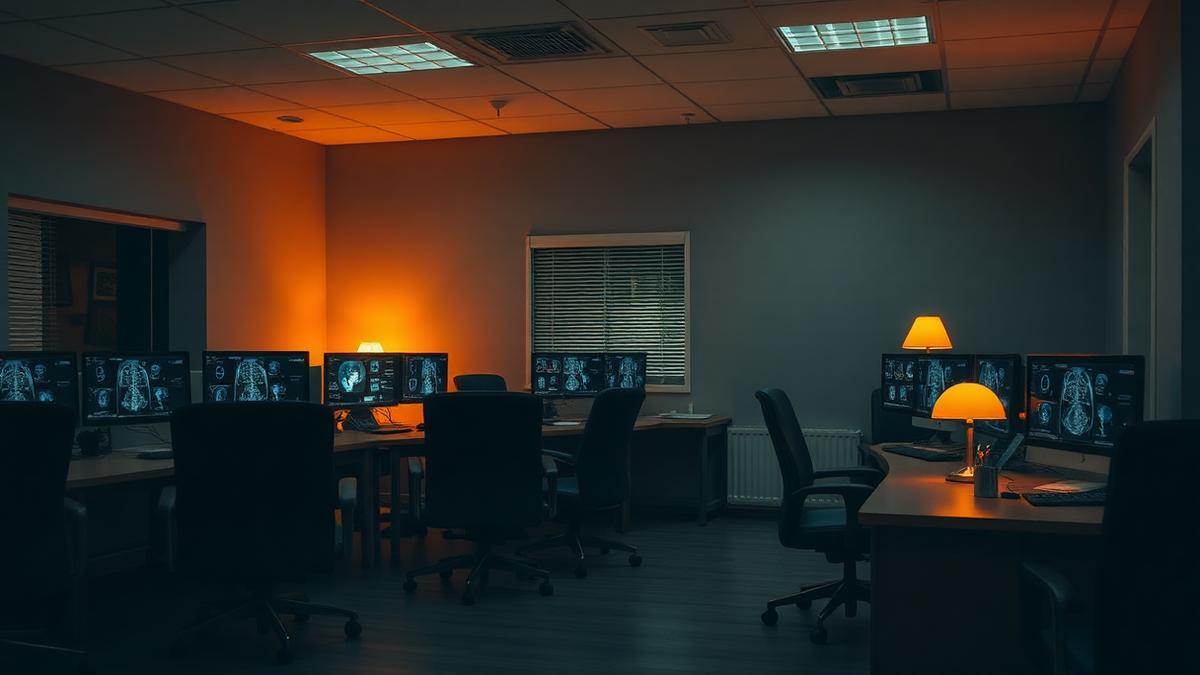
It is 6:40 PM on the Friday before a three-day holiday weekend at Meadowbrook Imaging Network, and the imaging director is doing arithmetic she does not like. Two of five weekend-rotation radiologists are out. Saturday's booked list is already heavier than a normal Saturday, and urgent-care referrals have not read the calendar. By Tuesday morning, on the current trajectory, the unread queue will be more than forty studies deep. This is the situation that sends imaging directors looking for outsource preliminary reporting services — not a strategic transformation program, just a weekend that will not fit inside the rota. Meadowbrook is a composite scenario built from patterns common across multi-site outpatient imaging networks, not a specific client engagement.
⚠️ Important scope note — please read before continuing
RAD365 provides offshore preliminary reads for human patients in the USA only — we do not provide final reads; your facility's own licensed radiologist completes every final interpretation. For veterinary and pet imaging there are no preliminary reads; veterinary studies are read as complete final reports by specialist veterinary radiology groups.
By Trisha Seal — September 2, 2026. RAD365 has run offshore preliminary-read operations for 12+ years across 20+ clients, delivering non-final interpretations inside each facility's existing PACS worklist. Final interpretations are always completed and signed by the facility's own licensed radiologist.
Preliminary-test studies' share of the $1.44B US teleradiology market in 2025, projected to $2.15B by 2035 (Precedence Research, 2026)
Annual US imaging exam volume growth vs. radiologist supply growth (Healthcare IT Today, March 2026)
Radiologists calling remote reading support beneficial / citing workload and backlog reduction (Everlight Radiology, via Healthcare IT Today)
Added emergency department length of stay per patient from delayed reads (Healthcare IT Today, March 2026)
What a Backlog Actually Looks Like on the Ground
A backlog does not announce itself. On Saturday morning Meadowbrook's remaining weekend readers are keeping pace — just. By early afternoon the three outpatient sites have fed in their routine musculoskeletal and chest work, one site has an unplanned run of urgent-care referrals, and the queue stops shrinking between studies. It never spikes dramatically. It simply stops going down, which is the moment a busy day quietly becomes a backlog.
By Sunday evening the director can see the shape of Tuesday. Forty-plus unread studies, several of them aged past the window in which the referring physician expected an answer, and a full normal Tuesday list arriving on top. The five-person weekend rota was never designed with slack; it was designed on the assumption that all five people would be there.
The structural version of this story is well documented. Healthcare IT Today, reporting on time-motion workforce research in March 2026, describes US imaging exam volume growing roughly 3–5% annually while radiologist supply grows closer to 1% a year. That gap does not show up as a crisis in a normal week. It shows up exactly here — in the absence of slack, on the weekend when two people are out, in a rota that has no margin left to absorb a variance it used to absorb easily. Meadowbrook's problem is not that it is badly run. It is that it is running a 2019 staffing model against 2026 volume.
The Decision: Outsourced Preliminary Reporting, Not Overtime
The director's first instinct is the familiar one: call people in. She prices it out on Friday night and stops. Holiday-weekend overtime for the two remaining staff radiologists carries a premium, locum coverage at 24 hours' notice over a holiday carries a larger one, and neither option can be arranged fast enough to touch Saturday. Both also spend the network's most constrained resource — the attention of radiologists who will be needed on Tuesday — on the studies that are easiest to move.
The alternative she takes is narrower and less dramatic: engage an outsourced preliminary reporting partner for the weekend overflow specifically. Rapid, documented, explicitly non-final interpretations issued on eligible backlog studies over Saturday and Sunday, so that clinical decisions that cannot wait are supported, and so that Tuesday's queue is a reading task rather than an emergency.
This is a bigger category than most imaging directors realize. Precedence Research's 2026 US teleradiology market databook reports that preliminary-test studies made up 64% of the $1.44 billion US market in 2025, with the segment projected to reach $2.15 billion by 2035. Nearly two-thirds of the market is the preliminary layer — because the constraint most facilities hit first is off-hours and overflow reading capacity, not final-interpretation capability. Meadowbrook already has that capability; it sits inside the network's own human radiology operation.
Which is the part worth stating plainly before going further: Meadowbrook's own licensed radiologists still complete and sign every final interpretation, including on every backlog study that carried a preliminary read over the weekend. The preliminary layer moves the decision-support step earlier. It does not move the diagnosis of record anywhere.
What Counts as "Outsourced Preliminary Reporting" vs. Just Outsourcing More Staff
The two get conflated constantly, and the difference matters when scoping a contract under time pressure. "Outsourcing radiology" or bringing in locum coverage adds general reading capacity: another pair of hands, working broadly the way an in-house radiologist works, usually with credentialing, scheduling and onboarding attached.
Outsourced preliminary reporting is a defined operational scope, not extra headcount. It has three specific properties: the deliverable is a rapid non-final interpretation, explicitly time-stamped and labeled as preliminary; critical findings follow a written escalation protocol agreed with the facility, with the relay logged for audit; and the work happens inside the facility's existing PACS worklist rather than in a separate viewer or a temporary environment. Narrow scope is the feature — it is what allows the service to activate in a shift instead of a quarter.
Radiologists themselves are broadly positive about the arrangement when it is scoped this way. An Everlight Radiology study reported by Healthcare IT Today in March 2026 found 98% of surveyed radiologists considered remote reading support beneficial to their workflow, with 72% specifically citing workload and backlog reduction as the benefit. The value they describe is not being replaced. It is arriving on Tuesday to a queue that has already been triaged.
Weekend overtime vs. outsourced preliminary reporting
| Attribute | Weekend overtime / locum coverage | Outsourced preliminary reporting service |
|---|---|---|
| Cost structure | Premium hourly and holiday rates, plus agency fees on short notice | Per-study or flat scoped fee, priced to the volume actually read |
| Activation time | Days to weeks — availability, credentialing and scheduling | Typically within a shift or two once scope and escalation are agreed |
| What gets delivered | General reading capacity, broadly scoped | Rapid non-final interpretations with documented escalation, inside the existing worklist |
| Who signs the final | The facility's own licensed radiologist | The facility's own licensed radiologist |
| Best fit | Sustained, predictable volume that justifies ongoing clinical cover | Irregular backlog, holiday spikes and unplanned absence |
How the Weekend Actually Unfolds, Step by Step
- Thursday — scoping. The director defines which study types are eligible for preliminary reading, confirms the escalation contact for each site and each shift, and agrees the triage rule for ordering the queue by clinical urgency. Nothing about this step is technical; it is all boundary-setting.
- Friday — routing. Eligible backlog studies route to a preliminary worklist inside the PACS Meadowbrook already runs, through the existing DICOM pathway. No new viewer, no parallel archive, no change to how technologists submit. This is the step that fails when a vendor needs its own environment first.
- Saturday and Sunday — rolling preliminary interpretations. Studies are read on a rolling basis rather than in a single batch, so the queue depth is visibly falling through the weekend instead of resolving in one Monday-night push.
- Throughout — critical findings escalate immediately. Anything meeting the facility's urgent-finding definition triggers direct contact with the on-shift provider per the written protocol, with the relay time and method logged. This step is why a defined protocol beats good intentions: Healthcare IT Today, citing time-motion studies, reports that delayed reads have been shown to extend emergency department length of stay by 30 to 60 minutes per patient. Escalation latency is the variable with the most direct downstream clinical effect.
- Tuesday — Meadowbrook's radiologists sign every final. Returning staff complete and sign each final interpretation with priors and full clinical context. The preliminary read is context they arrive with, not a substitute for the work they do.
- The following week — QA sampling. Preliminary-versus-final pairs from the surge are sampled and compared, at a higher rate than routine because volume spikes are exactly when drift would appear. Structured peer review and QA turns "the weekend went fine" into a number someone can defend at a quality meeting.
Deciding Whether This Fits Your Facility, Not Just Your Worst Weekend
One bad holiday weekend is not by itself an argument for a standing contract. The useful question is frequency. Over three or four quarters, count how many times a backlog actually formed, and total what was spent on premium overtime and short-notice locum cover to prevent or clear those events. If surges are genuinely exceptional, an occasional-use arrangement scoped in advance is the right shape. If they recur every quarter — holiday weekends, flu season, a predictable summer absence pattern — standing coverage almost always costs less than repeatedly buying emergency capacity at the worst possible moment.
Either way, the questions to ask a partner should be asked before a backlog, not during one. How long from signed scope to first read, realistically? What exactly is the escalation protocol for a critical finding, and who logs it? Can you show integration with our specific PACS without new software? And how does pricing behave for a two-day surge versus steady weekly volume? A vendor that answers those four crisply in a calm week is the one worth having on file for the week that is not calm.
Scoping backlog or overflow coverage before you need it?
RAD365 has run offshore preliminary-read operations for 12+ years across 20+ clients — inside the facility's existing PACS, with the facility's own radiologist signing every final interpretation.
Talk to our preliminary reads team →Outsourced Preliminary Reporting and Imaging Backlogs: Frequently Asked Questions
The Backlog Scenario
What actually counts as an imaging backlog, versus a normal busy day?
A busy day is volume fluctuation that the rota absorbs by the end of the shift. A backlog is a queue growing faster than throughput for long enough that studies start aging past a clinically meaningful reporting window — the distinction is queue depth over time, not how hectic a single afternoon felt.
Why do backlogs cluster around holidays and long weekends specifically?
Two curves move in opposite directions at once. Reading capacity drops because the rota is deliberately thinner, while urgent-care and walk-in referral volume stays flat or rises. A three-day weekend compresses three days of arriving studies into a rota built for less than one normal day of reading capacity.
Can a well-staffed weekday practice still get caught by a weekend backlog?
Yes, and it is the common case. Weekend rotas are thinner by design, so a single unplanned absence removes a much larger share of available reading capacity than the same absence would on a Tuesday. Weekday staffing depth says very little about weekend resilience.
Scope: Preliminary Reporting vs. Final Reads
Does clearing a backlog with outsourced preliminary reporting change who signs the final report?
No. RAD365 provides offshore preliminary reads for human patients in the USA only and does not provide final reads. The facility's own licensed radiologist completes and signs every final interpretation, including on studies that carried a preliminary read during the backlog.
Are backlog-cleared preliminary reads held to a different clinical standard than a routine overnight preliminary read?
No. The escalation protocol, documentation requirements and time-stamping are identical regardless of why the volume built up. A surge changes the throughput expectation, not the standard each individual read is issued against.
Does this apply to veterinary imaging backlogs the same way?
No. Veterinary imaging has no preliminary stage at all — veterinary studies are read as complete final reports by specialist veterinary radiology groups. A veterinary backlog is cleared by adding final-report reading capacity, not by inserting a preliminary layer.
Is a preliminary reporting partner allowed to decide which backlog studies get read first?
Ordering follows clinical urgency against a facility-approved triage protocol agreed before the engagement starts, not an arbitrary or first-in-first-out queue chosen by the partner. The facility defines what counts as urgent; the partner applies that definition consistently.
How the Service Actually Works
How quickly can an outsourced preliminary reporting service absorb a sudden backlog?
Once scope and escalation are agreed, activation is usually measured in a shift or two rather than weeks, because the service reads from the facility's existing PACS worklist instead of requiring a new environment to be stood up first.
Does bringing in backlog help require new software, a new viewer, or a temporary PACS setup?
No. Eligible studies route through the existing DICOM pathway to a preliminary worklist inside the PACS the facility already runs. Technologists change nothing about how they submit studies, and no parallel archive is created.
What happens to backlog studies once the preliminary read is issued?
They remain queued for the facility's own radiologist, who completes and signs the final interpretation with priors and full clinical context once staffing normalises. The preliminary read supports the decision that cannot wait; it never closes the study.
How are critical or urgent findings handled differently in a backlog situation versus routine overnight coverage?
They are not handled differently. The same direct-contact escalation protocol applies, with the relay time and communication method logged. High volume is never a reason to relax the urgent-finding standard — if anything the escalation path is rehearsed more carefully before a surge engagement starts.
How is quality tracked on studies that were preliminary-read during a backlog event specifically?
Through sampled comparison of preliminary reads against the signed finals, often at a deliberately higher sampling rate in the weeks immediately following a surge, so that any drift introduced by the volume spike shows up as a measured number rather than an assumption.
Deciding If It's Right for Your Facility
Is outsourced preliminary reporting only useful for emergencies, or can it run as a standing service?
Both. Some facilities engage it only for holiday weekends and unplanned absences; others phase it in as standing coverage for nights and weekends and expand to daytime overflow later. The operational model is the same in either case — only the scope and schedule differ.
How should a facility decide between an occasional-use backlog arrangement and a standing preliminary reporting contract?
Track two numbers over three or four quarters: how often a backlog actually forms, and what premium overtime or locum coverage cost to prevent or clear it. If surges are recurring rather than exceptional, a standing arrangement usually costs less and activates faster than repeated emergency scoping.
What should a facility ask a preliminary reporting vendor before a backlog happens, not during one?
Four things: realistic activation time from signed scope to first read, the exact escalation protocol for critical findings, documented proof of integration with the facility's specific PACS without new software, and how pricing behaves for a short surge versus steady volume.
Does using outsourced preliminary reporting for backlogs change how a facility staffs its own weekend rotation going forward?
It typically reduces reliance on premium overtime and locum cover as the default answer to a thin rota, but it does not replace core radiologist staffing. The facility still needs its own radiologists — they are the ones completing and signing every final interpretation.
Is there a minimum volume required to bring in an outsourced preliminary reporting partner for a one-time backlog event?
In a well-scoped per-study model there is no strict minimum, which is what makes one-off backlog engagements practical. Minimums and surge terms vary by vendor, though, so confirm in writing before the weekend you actually need it.
