How Hanging Protocols Quietly Save Radiologists Hours Every Month
Real research on how PACS hanging protocols change radiologist image access time, and why small per-study friction adds up to real hours across a month.
By Trisha Seal — September 29, 2026. Trisha writes about radiology operations, case intake, routing, and scheduling, drawn from RAD365's work on the Radiology Workflow Manager. RAD365 supports PACS infrastructure and workflow operations.
Hanging protocols in radiology rarely come up in budget meetings. They are a PACS setting, configured once and then forgotten. Yet research shows that how images are arranged on screen measurably changes how long a study takes to read, and small per-study friction adds up across a month. This guide looks at what the evidence says and where hanging protocols sit within the wider operational layer around the radiologist.
What a Hanging Protocol Is, and Why It Seems Trivial
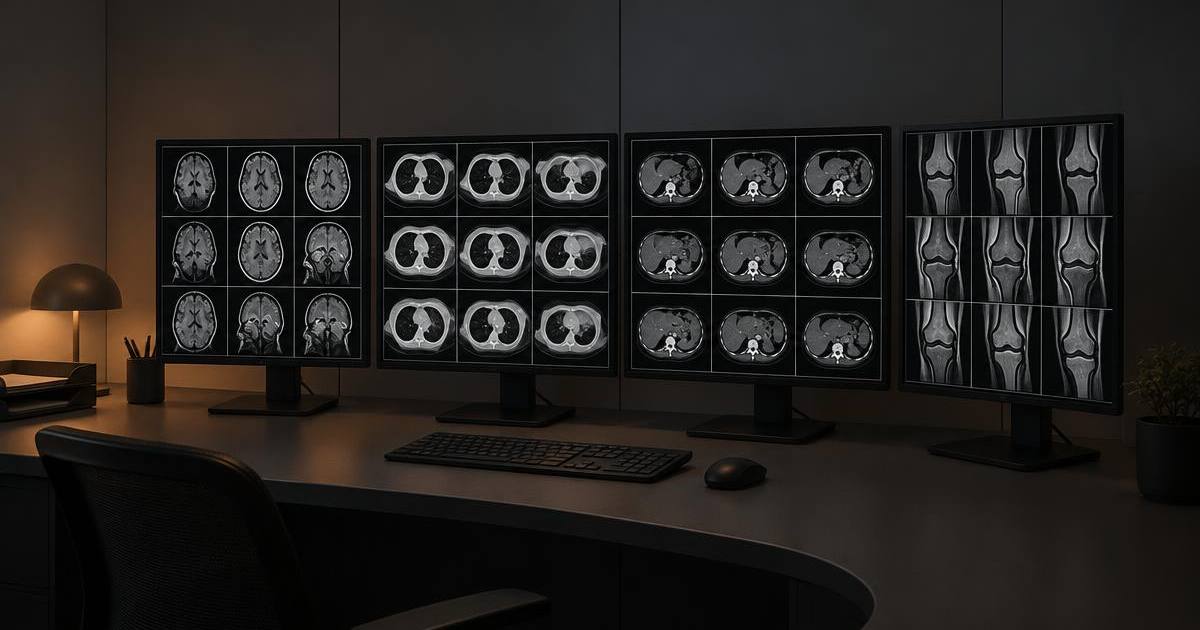
A hanging protocol tells the PACS how to arrange a study automatically: which series go where, in what orientation, and which comparison priors load beside the current exam. The term dates back to film, when technologists hung films on light boxes in a set order. Today, the PACS matches a study to a stored layout using modality, body part, laterality, view codes, and orientation data.
Because a working protocol is invisible, it feels trivial. Its value only shows when it fails.
What Poor Configuration Looks Like in Practice
Wrong orientation or order
Images open flipped, rotated, or in an unexpected sequence, and the radiologist rearranges them before starting.
No auto-loaded comparison priors
The current exam appears alone, and prior studies must be searched for and dragged into place manually.
Inconsistent metadata
When view codes or body part labels vary between modalities or sites, the PACS cannot match the study to the right layout and falls back to a generic default.
Well-configured vs. poorly configured at a glance
| Area | Well-configured hanging protocol | Poorly configured hanging protocol | Operational effect |
|---|---|---|---|
| Layout | Opens in the radiologist's preferred arrangement | Generic default layout | Manual rearranging before every read |
| Orientation | Correct laterality and orientation | Images flipped or rotated | Seconds lost per study, plus distraction |
| Priors | Relevant comparisons auto-load | Priors searched manually | Longer setup, risk of skipped comparisons |
| Consistency across sites | Same behavior regardless of origin | Varies by site or PACS | Unpredictable setup time across the worklist |
| Visibility to leadership | Nothing to notice | Hidden in individual seconds | Cost invisible until multiplied by volume |
What the Research Shows About Time Savings
A study in the European Journal of Radiology, "Reversal of the hanging protocol of Contrast Enhanced Mammography leads to similar diagnostic performance yet decreased image access times" (PubMed 31307654), tested a single change: reversing the standard hanging order in contrast-enhanced mammography. Across 27 breast radiologists image access 30 cases, image access time fell by 31% (p=.04), with similar diagnostic performance under both layouts.
The researchers used eye-tracking to understand why. Under the reversed protocol, radiologists searched the images more efficiently and located abnormalities faster. The takeaway is not that every protocol should be reversed; it is that image order and orientation measurably change image access speed. The exact percentage will differ by modality and setup.
Why Small Per-Study Friction Becomes Real Hours
A separate study, "Workflow Interruptions and Effect on Study clinical documentation Efficiency," published in Current Problems in Diagnostic Radiology and available via ScienceDirect, observed radiologists across 61 hours. They spent only 52% of that time manage studies, with 29% going to active interruptions and 18% to passive interruptions. Interruptions added roughly 1 minute per radiograph, 2 minutes per ultrasound, 6 minutes per CT, and 10 minutes per MRI, and total interruption time nearly equaled total clinical documentation time.
A misconfigured hanging protocol is not the same thing as an interruption, but it draws on the same limited image access time. Consider some simple arithmetic.
Illustrative estimate (recalculate for your own volume): if a department case activity roughly 60 to 80 studies a day and loses even 30 to 60 seconds per study to manual image adjustment, that is about 30 to 80 minutes a day, or roughly 10 to 25 hours a month. This is an illustrative calculation, not a RAD365-reported statistic.
For additional context only: an industry analysis from Medicai estimates administrative setup overhead, including manual image reordering, at roughly 15% to 25% of total image access time in environments without well-configured protocols. That figure is an industry estimate, not peer-reviewed research.
These seconds rarely appear in departmental productivity comparisons, yet they help explain why similar teams post different numbers.
How the Cost Compounds in Multi-Site Networks
The per-study cost of a poor protocol is fixed, so it scales with volume. A department image access twice as many studies loses roughly twice as much time. In networks that grew through mergers or acquisitions, the problem multiplies: sites may run different PACS platforms, and protocol configuration was often never standardized. A radiologist covering several sites may get a well-hung study from one location and a generic default from the next.
That inconsistency matters most when cases are distributed across sites and shifts, such as with time-zone-based radiologist scheduling, where the same reader sees studies from many origins in one session.
Where Hanging Protocols Fit in the Wider Operational Layer
Hanging protocols govern what happens after a case opens. Before that, other operational steps decide how fast the right case reaches the right radiologist: intake from referral sources, routing by modality and body part, scheduling, and SLA tracking. Friction on either side of that handoff consumes image access time.
RAD365's Radiology Workflow Manager addresses the surrounding layer: automated case intake into one queue, routing by modality and body part, time-zone-based scheduling, and automated SLA tracking. RAD365 supports PACS infrastructure and workflow operations. Hanging protocol setup remains with the PACS administrator and the radiology team.
Practical Next Steps
- Ask radiologists which study types most often need manual rearranging.
- Check whether comparison priors auto-load for the highest-volume exams.
- Review whether view codes and body part labels are consistent across sites.
- Recalculate the illustrative arithmetic above using your own daily volume.
RAD365 is an operations and workflow partner providing PACS Support and the Radiology Workflow Manager only. RAD365 supports PACS infrastructure and workflow operations.
Remove Friction Before the Case Opens
Automated intake, routing, scheduling, and SLA tracking in one workflow layer.
Explore the Radiology Workflow Manager →Frequently Asked Questions
Hanging Protocol Basics
What is a hanging protocol in radiology?
A hanging protocol is a PACS configuration that automatically arranges a study's images in a radiologist's preferred layout, orientation, and sequence, without manual adjustment for anatomy, laterality, or comparison priors.
Why are hanging protocols called that?
The term comes from film-based radiology, when technologists physically hung X-ray films on light boxes in a set order. PACS systems automated that same idea digitally.
What information does a hanging protocol need to work correctly?
Anatomic region, laterality, view or projection codes, modality, body part, and patient orientation data, which let the PACS match a study to the correct stored layout automatically.
Can hanging protocols be personalized per radiologist?
Yes. Most PACS platforms let each radiologist save individual layout preferences by modality and body part, alongside department-wide defaults.
The Research on Time Savings
Is there research showing hanging protocols actually save image access time?
Yes. A study published in the European Journal of Radiology found that reversing the standard hanging order in contrast-enhanced mammography reduced image access time by 31%, with no loss of diagnostic accuracy, across 27 breast radiologists image access 30 cases (PubMed 31307654).
Did the hanging protocol change in that study affect diagnostic accuracy?
No. The study found similar diagnostic performance between the two hanging orders, meaning the time saved did not come at the cost of missed findings.
How did researchers measure the time savings from the hanging protocol change?
Using eye-tracking technology, which showed radiologists visually searched more efficiently and located abnormalities faster under the reversed protocol.
Does one study generalize to every hanging protocol decision?
Not directly. The mammography study measured one specific layout reversal. The broader principle it demonstrates, that image order and orientation measurably change image access speed, applies across modalities even though the exact percentage will differ by study type and setup.
The Cost of Poor Configuration
How much of a radiologist's day is lost to administrative tasks like manual image adjustment?
Separate research on workflow interruptions found radiologists spent only 52% of observed shift time actually manage studies, with 29% lost to active interruptions and 18% to passive interruptions.
Do interruptions and manual workflow friction add up across a shift?
Yes. The same research found interruptions added measurable time per study — roughly 1 minute for radiographs, 2 minutes for ultrasound, 6 minutes for CT, and 10 minutes for MRI — and that total interruption time nearly equaled total clinical documentation time.
Is a poorly configured hanging protocol the same thing as a workflow interruption?
Not identical, but related. Both are administrative friction: an interruption pulls attention away from a case, while a bad hanging protocol forces manual flipping, rotating, or reordering of images before clinical documentation can even begin. Both consume the same limited image access time.
Why do hanging protocol problems often go unnoticed by administrators?
Because each individual adjustment takes only seconds. The cost is invisible study by study and only becomes visible when multiplied across a full worklist and a full month.
Hanging Protocols in a Broader Workflow System
Do hanging protocols matter more or less as case volume grows?
More. The per-study cost of a misconfigured protocol is fixed, so it compounds linearly with volume — a department image access twice as many studies loses roughly twice as much time to the same friction.
Can hanging protocol quality vary across a multi-site radiology network?
Yes, especially when sites run different PACS platforms or configurations were never standardized after a merger or acquisition. Consistent case routing and scheduling depend on every radiologist getting a correctly hung study regardless of which site it came from.
How does case routing by modality and body part relate to hanging protocol efficiency?
Routing determines which radiologist gets a case; hanging protocol quality determines how quickly that radiologist can start manage once it arrives. A workflow system that gets both right removes friction on both sides of the handoff.
Where does hanging protocol configuration fit inside a radiology workflow platform like RAD365's Radiology Workflow Manager?
It sits alongside intake, routing, and scheduling as another piece of the operational layer that determines how much of a radiologist's day goes to actual clinical documentation versus setup and administrative friction. RAD365 does not configure or read PACS studies itself; it consolidates intake, routing, scheduling, and SLA tracking around the imaging environment.
Related Services and image access
- Intake, routing, and SLA tracking in one system
- Radiology administrative support
- How subspecialty case routing works
- Scheduling radiologists across time zones
- Why productivity varies between departments
Sources
- European Journal of Radiology, Reversal of the hanging protocol of Contrast Enhanced Mammography leads to similar diagnostic performance yet decreased image access times (PubMed 31307654)
- Current Problems in Diagnostic Radiology, Workflow Interruptions and Effect on Study clinical documentation Efficiency (2022)
