Legacy PACS Support for Multi-Site Imaging Networks
Standardize legacy PACS support across multiple imaging sites with shared inventory, monitoring, escalation, and change control.
By Trisha Seal — October 1, 2026. Practical guidance for hospital imaging operations.
Multi-site networks rarely inherit one clean PACS environment. They inherit different versions, local gateways, naming conventions, interface rules, and support histories. Legacy PACS support must standardize ownership without erasing legitimate site differences.
Start With a Site-by-Site Inventory
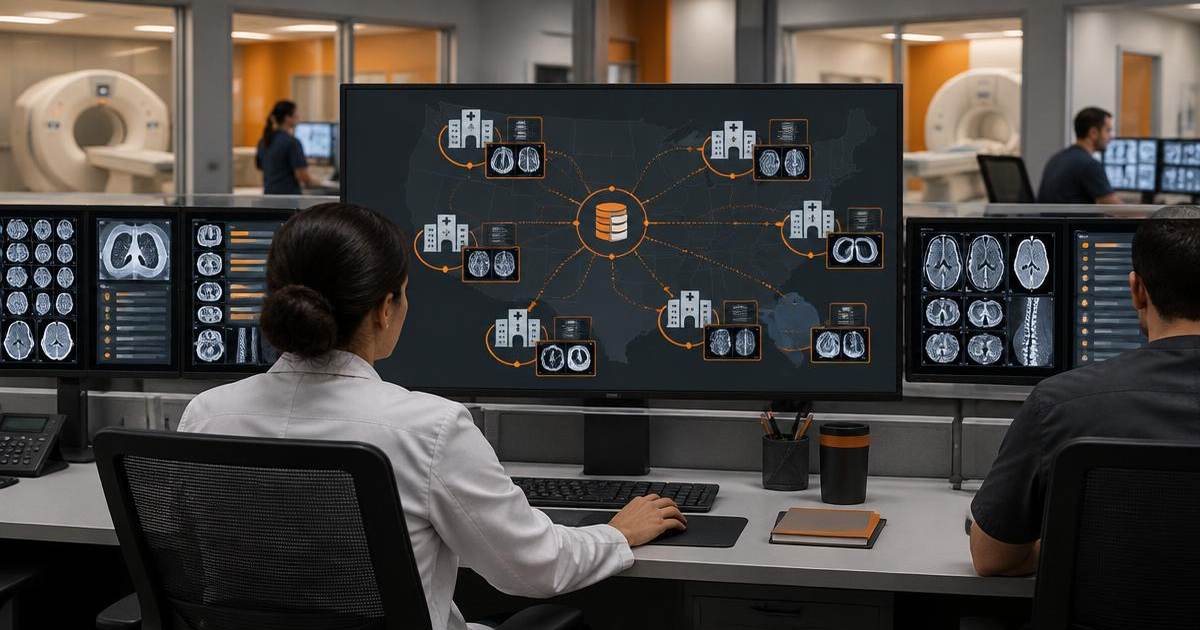
Record application versions, servers, storage, modalities, interfaces, network dependencies, support status, and local contacts. A central diagram should show how images and orders cross site boundaries.
Normalize Incident Language
One site's “urgent” should mean the same thing at every location. Use shared severity definitions, response targets, and escalation channels through a PACS support framework.
Centralize Monitoring, Preserve Local Context
Monitor queues, interfaces, capacity, and availability centrally, but keep runbooks for local gateways, network paths, and operating hours. A shared console without local knowledge simply centralizes confusion.
Control Configuration Drift
Review routing rules, AE Titles, ports, and interface changes through one process. Document exceptions and owners. The managed PACS model should expose patterns across sites before isolated failures become network-wide problems.
Plan Consolidation in Phases
Rank sites by risk and readiness instead of forcing one cutover date. Use staged migration support to validate each location while the legacy estate remains observable.
RAD365 can provide PACS Support across mixed environments and coordinate workflow operations through the Radiology Workflow Manager. RAD365 supports PACS infrastructure and workflow operations.
Source
NIST SP 1800-24, PACS architecture and security guidance
Related Resources
Frequently Asked Questions
Common Questions
Why is multi-site legacy PACS support difficult?
Sites often differ in versions, interfaces, network paths, local rules, and support history even when they share an organization.
Should every site use the same runbook?
Use common severity and escalation standards, then add site-specific dependencies and recovery steps.
What should centralized monitoring cover?
Cover application availability, queues, interfaces, storage, latency, and recurring site-specific failure patterns.
How can networks reduce configuration drift?
Route changes through one documented review process and maintain an authoritative inventory of approved exceptions.
Should all sites migrate at once?
A phased approach often reduces risk because each site can be validated and stabilized before the next transition.
