6 Managed PACS Support Models Compared: Which One Actually Cuts Downtime
Break-fix, in-house, hybrid, co-managed, fully managed or vendor support? Six PACS support models compared on downtime, cost and escalation depth.
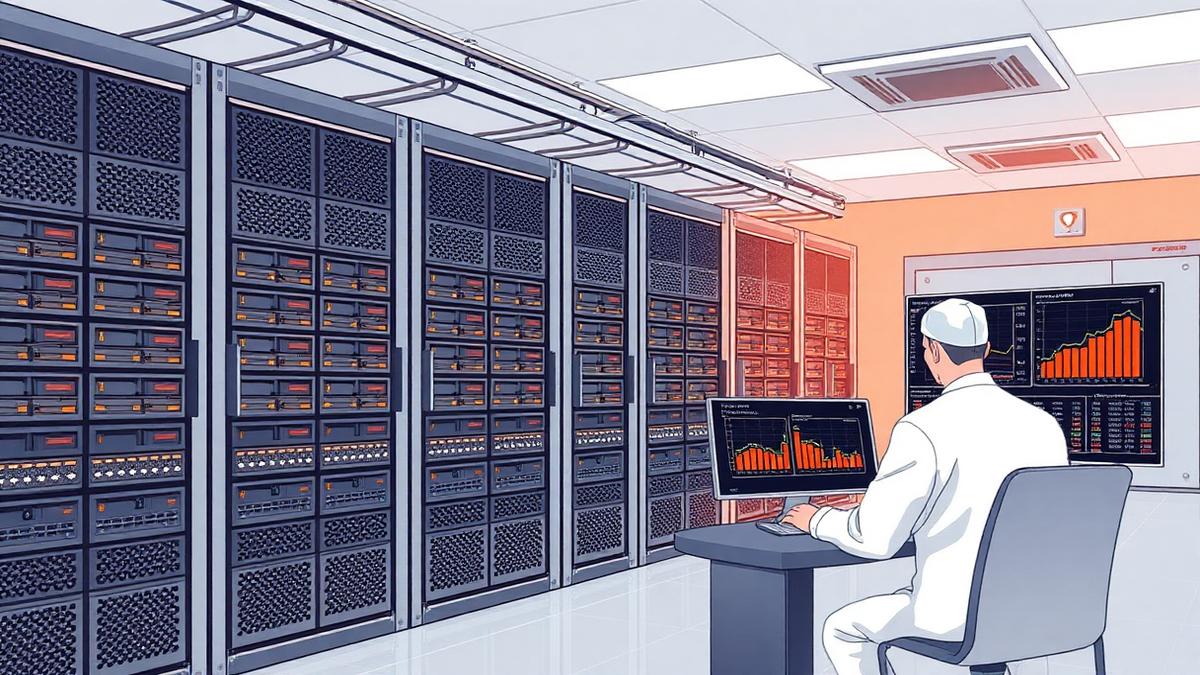
Every hospital shopping for PACS providers discovers the same awkward thing: the phrase "managed PACS support" describes at least six materially different operating models, and the differences only surface during an incident. This is a comparison of those six models against the one metric that pays for the contract — unplanned downtime — and what each realistically does to it. The full service scope sits on the managed PACS services page.
estimated imaging downtime cost, 200-bed US hospital (AuntMinnie / Sectra Medical research)
annualised, at a mean 4.8 events/year × median 3.5 hours
per minute — broader healthcare IT downtime cost (NETSCOUT analysis)
accredited US radiologic technology programs, enrollment flat for over a decade
The number every model has to be measured against
Imaging-uptime research published via AuntMinnie and Sectra Medical estimates that imaging downtime costs a medium-sized 200-bed US hospital approximately $22,075 per hour — roughly $371,000 a year, derived from a mean of 4.8 downtime events annually at a median duration of 3.5 hours each. NETSCOUT's healthcare downtime cost analysis frames it more broadly, putting healthcare IT downtime somewhere between $5,300 and $9,000 per minute across the industry.
Those numbers do two useful things. They give you a defensible denominator when a support contract goes to finance, and they reframe the buying question: you are not purchasing tickets, you are purchasing fewer downtime hours and shorter ones. A model that halves incident duration is worth more than a model that shaves a line item, and the comparison below is written on that basis.
There is a staffing dimension too. The imaging technologist pipeline is structurally constrained — recent healthcare workforce research notes that the roughly 600 accredited radiologic technology programs in the US have not meaningfully expanded enrollment in more than a decade, even as imaging demand has climbed. Departments cannot simply hire their way out of coverage gaps, which is precisely why the support model matters.
Model 1 — Break-fix / time-and-materials
Downtime effect: negative to neutral. You call when something breaks and pay by the hour. There is no monitoring, so detection depends on a technologist noticing; there is no runbook, so every incident is solved from first principles; and the commercial incentive quietly rewards incidents rather than preventing them. Break-fix is defensible only for a very small, very simple, very stable estate — and imaging estates are rarely any of those three for long.
Model 2 — In-house PACS administrator only
Downtime effect: good in hours, poor out of hours. A skilled administrator who knows the workflows, the technologists and the quirks of your environment is genuinely valuable, and nothing in a managed contract replaces that relationship. The exposure is structural: one person cannot cover nights, weekends and annual leave, deep integration faults may sit outside their skill set, and their resignation is a single point of failure for institutional knowledge. Facilities in this position often bridge the gap with interim PACS support rather than leaving the seat empty during recruitment.
Model 3 — PACS vendor's own support contract
Downtime effect: strong inside the product, weak between products. Vendor support knows its own software better than anyone and is the right escalation path for genuine product defects. What it does not own is the space between systems — the modality that stopped sending, the HL7 feed dropping orders, the network path, the storage tier, the third-party viewer. Most imaging incidents live in exactly that space, which is why vendor support alone tends to produce long tickets with "not our component" outcomes.
Model 4 — Co-managed (in-house plus external escalation)
Downtime effect: strong, and usually the best value. The administrator keeps first-line and clinical relationship work; an external team provides monitoring, out-of-hours cover, deep integration expertise and vendor escalation. Continuity risk drops sharply because the environment is documented by two parties instead of living in one head. The requirement is a clean split of responsibility — who owns which alert, at what hour, with what escalation trigger — written down rather than assumed.
Model 5 — Fully managed PACS support
Downtime effect: strongest, when the scope is right. The provider owns monitoring, first-line through third-line response, administration, patching, capacity planning, interface support and vendor escalation, under written SLAs with reporting. This is the model for facilities with no PACS administrator, multi-site estates, or departments where imaging IT has been absorbing time that clinical staff cannot spare. The two things to insist on are percentile-based SLA reporting and genuine root-cause analysis — without those, a fully managed contract can become a very tidy way of logging the same incident every month.
Model 6 — Project-based / transitional support
Downtime effect: high during the window it covers, zero after. Scoped to a defined piece of work: a PACS migration, a vendor exit, a data-center move, a merger integration. These are the periods with the highest concentration of risk in an imaging system's life, and they justify dedicated expertise even at facilities that otherwise run comfortably in-house. Treat it as a supplement to whichever ongoing model you run, never as a replacement for one.
| Model | Detection | Out-of-hours | Integration depth | Cost shape |
|---|---|---|---|---|
| Break-fix | Human notices | None | Ad hoc | Unpredictable |
| In-house admin | Partial | Best-efforts | Varies by person | Fixed salary |
| Vendor support | Product-scoped | Contracted tiers | Own product only | Annual license-linked |
| Co-managed | Monitored | Covered | Deep | Salary + fixed fee |
| Fully managed | Monitored + trended | 24/7/365 | Deep, documented | Predictable fixed fee |
| Project-based | Scoped to project | Project window | Very deep, temporary | One-off |
PACS system healthcare context: why the model choice keeps escalating
A PACS is no longer a departmental application; in most facilities it is one of the two or three systems that can stop clinical activity outright when it fails. A modern PACS system healthcare estate typically spans an archive, a diagnostic viewer, an enterprise viewer, a VNA or long-term store, DICOM routing, HL7 or FHIR interfaces to the RIS and EHR, modality worklist services, and a cybersecurity and backup regime wrapped around all of it. Each of those is a distinct failure domain with its own alerting and its own escalation path.
That is why the model choice has escalated from an IT preference to a clinical-continuity decision. A break-fix arrangement that was adequate when PACS meant one server and one viewer is simply mismatched to an estate with eight moving parts and an EHR dependency. Facilities that want the underlying architecture explained rather than assumed usually start with PACS radiology, and those wanting the response discipline itself with the PACS support framework.
Choosing your model in five steps
- Count your incidents honestly. Twelve months of imaging-related incidents with duration and clinical impact. Multiply the hours by the AuntMinnie/Sectra figure to get your real annual exposure.
- Map your failure domains. Archive, viewer, routing, interfaces, network, storage, modality worklist. Mark which ones your current arrangement genuinely covers.
- Identify the single points of failure — one administrator, one undocumented interface, one legacy component nobody wants to touch.
- Match the model to the gaps, not to the budget line. Most facilities land on co-managed or fully managed once the exposure number is on the table.
- Write the measurement rules into the contract. Percentile SLA reporting, response measured from alert, mandatory root-cause analysis on every P1, and a monthly report you would be willing to show a board.
Step two is where most evaluations go wrong. Departments underestimate how much of their incident volume is interface and routing rather than the PACS application itself, which is why DICOM gateway and connectivity coverage deserves explicit attention in the scope, and why day-to-day radiology IT support capability matters as much as headline SLAs.
Compare your current PACS support against these six models
Send us your incident history, your estate map and your current coverage window. We will show you which model your environment actually needs and where the exposure sits today.
Talk to a PACS engineer →Managed PACS Support Models: Frequently Asked Questions
What's Included & How It Works
What exactly is included in a managed PACS support contract?
A complete contract covers proactive monitoring of the PACS, archive and imaging network; incident response under named priority classes with written response and restoration targets; PACS administration work such as user and worklist management, hanging protocols and modality configuration; DICOM and interface support; patching, upgrades and capacity planning; vendor escalation on your behalf; and documented reporting on uptime, incidents and root causes. Anything left as 'best efforts' in the schedule is effectively not covered.
How does managed PACS support reduce unplanned downtime in an imaging department?
Mostly by catching the precursors. A large share of imaging outages announce themselves first as queue depth, failed sends, storage pressure or an interface silently dropping messages. Continuous monitoring with thresholds tuned to your environment converts those into tickets before they become an outage. The rest of the reduction comes from faster, better-rehearsed restoration when something does break — a known runbook and a named escalation path shorten a three-hour event into a forty-minute one.
How does a managed PACS provider handle legacy or vendor-deprecated PACS systems?
By stabilising it and buying you a decision window rather than forcing an emergency replacement. That means documenting the environment properly, isolating and hardening unsupported components, establishing what the failure modes actually are, keeping a tested recovery path, and building a realistic migration option in parallel. A deprecated PACS is a risk to be managed on a timeline, not a crisis to be panicked into.
What happens during a PACS migration if something goes wrong mid-transfer?
In a properly run migration nothing is switched off until the new environment is validated, so a mid-transfer problem is a pause rather than a disaster. Studies are migrated in reconciled batches with counts verified at each stage, the source archive stays authoritative until sign-off, and there is a documented rollback point. The real risk in migrations is not transfer failure but silent data loss — missing series, broken accession links, mismatched patient identity — which is why reconciliation reporting matters more than raw transfer speed.
How is DICOM connectivity and HL7/FHIR interfacing handled?
Through a managed gateway layer with documented AE titles, routing rules and interface mappings, plus monitoring of the message flow itself rather than just the servers. Most 'PACS is broken' calls are actually interface calls: an order that never arrived, a study that will not reconcile, a modality worklist query failing after a firmware update. Support that can read the message traffic resolves those in minutes; support that cannot escalates them for days.
Who actually staffs a managed PACS support desk — engineers, IT generalists, or imaging specialists?
This is worth asking directly, because the answer varies enormously between providers. Effective imaging support needs people who know DICOM, HL7 and modality behavior, not only general infrastructure skills. A tiered structure is normal — first-line triage with imaging-specific runbooks, escalating to engineers with deep PACS and integration experience — but the first tier should still speak the language of an imaging department rather than image access from a generic script.
Choosing/Evaluating a Provider
What's the difference between managed PACS support and an in-house PACS administrator?
Coverage depth versus institutional knowledge. An in-house administrator knows your workflows and your people, but is one person with holidays, sick days and a single skill set, and represents a serious continuity risk when they leave. A managed service brings 24/7 coverage, multiple specialisms and documented process, but has to be deliberately taught your environment. The strongest arrangement is usually not either/or: the administrator keeps the clinical relationship while the managed service carries out-of-hours cover, escalation depth and continuity.
What questions should a hospital ask before signing with a PACS support provider?
Ask for response and restoration targets by priority class in writing, with the measurement method stated. Ask who answers at 03:00 on a Sunday and what their imaging background is. Ask for a sample monthly report — not a marketing summary, an actual one. Ask how vendor escalation works when the fault is in the PACS product itself. Ask what the offboarding process is. A provider that cannot answer the last question comfortably is relying on switching friction.
Can a provider work across multiple PACS vendors (GE, Philips, Siemens, Sectra, etc.)?
A capable managed service should be vendor-agnostic in principle and specific in practice: general DICOM and integration expertise plus demonstrated hands-on experience with your particular platform and version. Ask for that specifically. Multi-vendor capability matters most in mixed estates and after mergers, where one site's archive, another's RIS and a third's viewer all have to coexist without a rip-and-replace.
What certifications or compliance standards should a PACS support company hold (HIPAA, SOC 2, HITRUST)?
HIPAA compliance and a signed business associate agreement are the floor, not a differentiator. Beyond that, look for evidence of controls in operation: access management scoped per engineer, audit logging of who touched which system and when, documented change control, tested backup and recovery, and a defined breach-notification path. Ask for the evidence rather than the logo — an attestation with no operational detail behind it tells you very little.
What red flags suggest a hospital has outgrown its current PACS support provider?
Repeat incidents with no root-cause analysis; tickets that get closed rather than resolved; escalation that depends on knowing someone's mobile number; monthly reports that report activity rather than outcomes; a provider that cannot answer questions about your interface layer; and upgrade or migration advice that always happens to point at their own preferred product. Any two of those together usually mean the relationship has stopped scaling with the department.
Cost & Contracts
How much does managed PACS support typically cost for a mid-sized hospital or imaging center?
Cost is driven by environment complexity rather than bed count alone: number of sites, modalities, PACS versions, interfaces, archive size and the coverage window. The more useful exercise is to price it against what you already spend — internal on-call hours, vendor incident fees, locum-style stopgaps, and the operational cost of downtime — because the comparison, not the sticker, determines whether a contract makes sense. RAD365 scopes this per environment rather than quoting a headline figure.
What's the real dollar cost of PACS downtime for a typical hospital?
Imaging-uptime research published via AuntMinnie and Sectra Medical estimates that imaging downtime costs a medium-sized 200-bed US hospital roughly $22,075 per hour, or about $371,000 per year, based on a mean of 4.8 downtime events annually at a median of 3.5 hours each. NETSCOUT's healthcare downtime analysis puts broader healthcare IT downtime at $5,300 to $9,000 per minute industry-wide. Those figures are the honest denominator for any support contract discussion.
How does a flat-fee PACS support model compare to hourly/break-fix support?
Break-fix appears cheaper because you only see the invoices, not the incidents that preventive work would have avoided. It also creates an incentive misalignment: the provider earns more when things break. A flat-fee managed model puts prevention and rapid restoration on the provider's side of the ledger and makes the budget predictable. The trade is that flat-fee contracts need a clearly bounded scope, or both parties end up arguing about what counted.
Coverage & Reliability
What SLAs should hospitals expect for critical (P1) incident response?
A P1 — imaging stopped, archive unreachable, studies not reaching the worklist — should carry a response commitment in minutes, a named escalation chain with times attached, and a defined restoration target with a communication cadence during the incident. Insist that measurement is defined too: response measured from alert rather than from ticket triage, and reported at percentile rather than as a monthly average that hides the bad events.
Do providers offer coverage nights, weekends, and holidays?
Genuine 24/7/365 coverage should include nights, weekends and public holidays with the same response commitments as a Tuesday afternoon, and the contract should say so explicitly. Read the small print for holiday exclusions and 'reduced cover' language. Imaging does not observe holidays, and the highest-impact incidents disproportionately land when the fewest people are around to notice them.
How quickly can a hospital switch PACS support providers without disrupting operations?
A well-run transition typically runs over a few weeks and overlaps deliberately: environment discovery and documentation, monitoring and access set up in parallel with the incumbent still live, runbooks written and rehearsed, then a scheduled cutover of first-line responsibility with the incumbent available during a defined stabilisation window. The risk in switching is almost never technical — it is undocumented tribal knowledge, which is why discovery is the phase worth over-investing in.
Is managed PACS support only for large hospital networks, or can small imaging centers use it too?
Small centers are often the better fit, because they rarely have the volume to justify a full-time PACS administrator but still run the same DICOM, interface and archive complexity as a large site. Scope scales down cleanly: fewer modalities, fewer interfaces, a narrower coverage window if that is what the budget supports. What should not scale down is the discipline — monitoring, documented escalation and root-cause analysis matter just as much at three modalities as at thirty.
Related resources
- RAD365 managed PACS services — scope, SLAs and coverage explained.
- What a fully managed PACS contract covers
- The RAD365 PACS support framework
- Interim PACS support and administrator cover
- PACS migration services
- PACS in radiology: architecture overview
Written by Trisha Seal, RAD365 — 14 August 2026. Trisha writes from RAD365's operational experience delivering managed PACS support, archive administration, DICOM connectivity and migration work for hospitals, imaging centers and veterinary networks.
