The Day the PACS Administrator Left: What PACS Support Looks Like Without One
A mid-size hospital's only PACS administrator resigns. What happens to imaging operations next, what it costs, and how managed PACS support closes the gap.
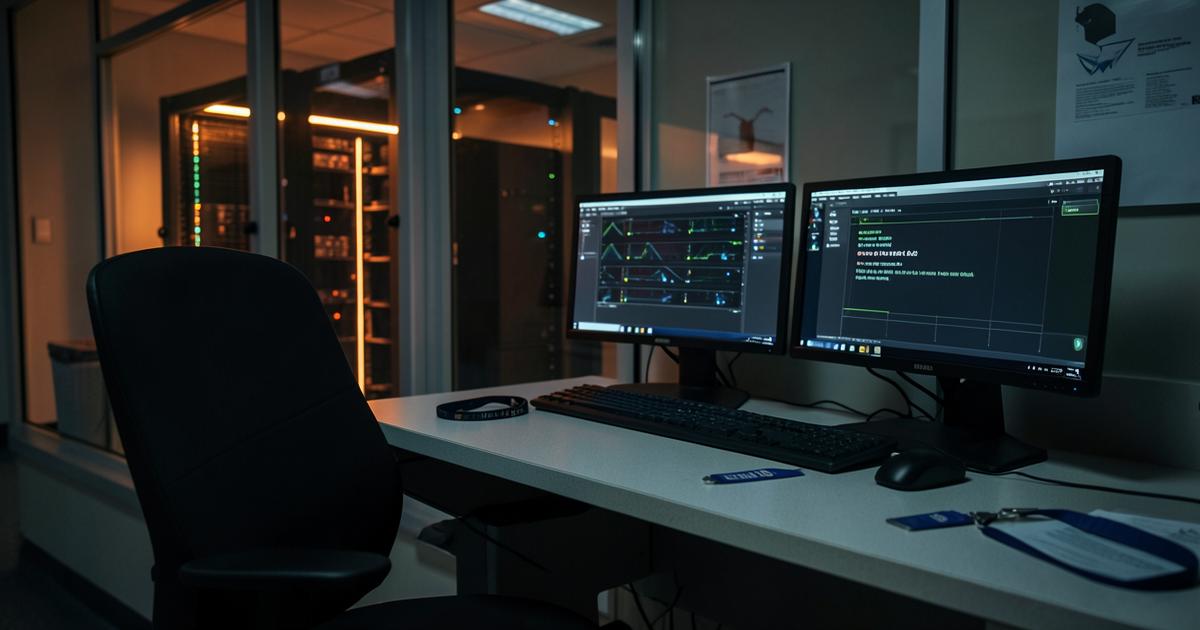
The resignation letter arrived on a Tuesday. The hospital in this story is a composite — a 240-bed community facility with a radiology department, a cardiology imaging suite, three outpatient sites and one PACS administrator, who had been in post for nine years and had just accepted a role with a health-technology company at a salary the hospital could not match. Two weeks' notice. This is what PACS support looked like in the months that followed, and why the ending turned out differently from the beginning.
By Trisha Seal — September 10, 2026. RAD365 provides vendor-agnostic 24/7 managed PACS support — monitoring, incident response, system administration, DICOM and network troubleshooting, migrations and vendor coordination — with engineers on shift nights, weekends and holidays across multi-vendor imaging estates.
Average cost per minute of unplanned healthcare IT downtime (Censinet, 2025)
Approximate hourly downtime loss for a medium-sized hospital (Censinet, 2025)
Hourly downtime loss for large hospitals, upper range (Censinet, 2025)
Chief Healthcare Executive and Staffing Industry Analysts continue to report persistent difficulty filling hospital IT and imaging-informatics roles
Week One: The Handover That Was Never Written Down
The departing administrator did what conscientious people do. She wrote a twelve-page handover document, exported a list of user accounts, and walked the IT director through the server room. What the document could not contain was nine years of configuration held in her head: which modality at the third outpatient site needed its AE title re-registered after every firmware update, which hanging protocol the neuroradiologist had customised and would notice within an hour if it changed, which HL7 message type failed silently into the RIS every quarter and how she cleared it.
The IT director assigned a capable systems engineer to "cover PACS" alongside his existing responsibilities. He had never opened a DICOM association log. By Friday, three tickets were open that the previous week would have been closed in ten minutes each.
Week Three: The Saturday Nobody Was Watching
At 1:40 a.m. on a Saturday the primary archive's storage volume crossed 95% utilization. The monitoring alert went to a mailbox the departed administrator had owned. At 4:15 a.m. the archive stopped accepting new studies. The emergency department's CT scanner queued images locally; technologists did not notice for forty minutes because the console showed the study as sent. When the on-call radiologist could not open a trauma CT, the escalation went to the general IT on-call, who escalated to the PACS vendor, whose support line opened a ticket for the morning shift.
Imaging was fully restored at 9:20 a.m. Using Censinet's 2025 analysis of healthcare IT downtime — an average of $7,500 per minute, with medium-sized hospitals losing roughly $1.7 million per hour — the five hours of degraded and then absent imaging represented a cost the finance team preferred not to put in a slide. The clinical risk was the number nobody could calculate: several CT studies read from the scanner console, and one patient transferred to another facility because a prior could not be retrieved.
Why Hospitals Are Struggling to Hire and Keep PACS Administrators
The recruiter's first call was not encouraging. The PACS administrator role requires a combination few candidates train for deliberately: clinical imaging workflow, DICOM and HL7 integration, server and storage administration, and the diplomatic skill to sit between radiologists, technologists, IT and a vendor. Reporting in 2026 from Chief Healthcare Executive and Staffing Industry Analysts describes persistent, widely reported difficulty filling hospital IT and imaging-informatics roles — long time-to-fill for specialized positions, and steady competition from non-hospital employers who can pay more and do not ask candidates to carry an on-call phone alone.
"pacs administrator" is one of the most searched imaging-IT terms in the country, and the majority of those searches are job-seekers. The hospital in this story discovered that the volume of interest did not translate into candidates who could walk into a multi-vendor estate and run it on day one. The realistic time-to-hire quoted back to them was measured in months. That is the structural reason single-administrator hospitals are increasingly turning to an interim PACS support arrangement first and deciding on the long-term model second.
Week Five: Stabilising First, Deciding Second
The imaging director made the call that changed the trajectory. Rather than wait for a hire, the hospital engaged RAD365 for immediate interim coverage, with a defined brief: get monitoring back under control, document the estate as it actually was, and take the on-call phone. The sequence over the following weeks was deliberately unglamorous.
1. Discovery and documentation
Every server, archive, interface, routing rule, modality AE title and viewer configuration across the four sites was inventoried and written down — including the undocumented ones the departed administrator had carried in memory.
2. Monitoring re-pointed to people who were awake
Storage, database, interface and service health alerts were routed to an on-shift engineering team with severity tiers and escalation paths, so a 1:40 a.m. warning became a 1:45 a.m. action.
3. A PACS helpdesk that could actually fix things
Radiologists and technologists were given a direct line to imaging-literate support around the clock. Hanging protocols, worklist gaps, failed sends and access requests stopped queuing behind general IT tickets.
4. Maintenance put back on a schedule
Patches, storage housekeeping, interface checks and vendor coordination were scheduled instead of deferred — the work that prevents incidents rather than reacting to them.
5. The exit plan for the legacy archive
The archive that had failed in week three was approaching end of vendor support. The stabilised estate, now fully documented, became the starting point for a planned PACS migration rather than a second emergency.
What a Managed PACS Helpdesk Actually Covers
Most facilities underestimate how much of their imaging friction is helpdesk-shaped: a study that will not open, a modality missing from a worklist, a hanging protocol that changed after an upgrade, a send to an outside destination that failed without anyone noticing. A general IT helpdesk logs these for the morning. A PACS helpdesk staffed by people who understand DICOM and the specific viewer product resolves most of them on the call. In this hospital, first-contact resolution for imaging tickets moved from an ad-hoc figure nobody tracked to a number that appeared in a monthly report — which is itself the point. What was invisible when one person carried it in her head became measurable when a team carried it in a system.
In-House Only vs. Interim vs. Managed PACS Support
| Dimension | Single in-house administrator | Interim coverage | Managed PACS support |
|---|---|---|---|
| Hours covered | Business hours plus one person's on-call phone | Agreed window, often 24/7 for the gap period | 24/7/365 by an on-shift team |
| Exposure to one departure | Total — knowledge and coverage leave together | Low during the engagement | Low — team-based, fully documented |
| Monitoring | Depends on the individual's setup and inbox | Re-pointed to the interim team | Continuous, severity-tiered, reported monthly |
| Vendor scope | Whatever the individual has learned | Multi-vendor | Vendor-agnostic across the whole estate |
| Documentation | Often partial and personal | Built as part of discovery | Maintained as a contractual deliverable |
| Best fit | Small, single-vendor, low-change estates | Vacancy, leave, or pre-migration stabilisation | Multi-site, multi-vendor, or any estate that cannot tolerate a single point of failure |
Month Four: The Decision
The hospital did eventually receive a strong application for the administrator role — and hired the candidate. What changed was the job. Instead of one person carrying monitoring, on-call, helpdesk, administration and vendor management alone, the new administrator became the hospital's internal owner of imaging systems strategy, working with RAD365's managed PACS support team handling continuous monitoring, the helpdesk, off-hours incident response and the migration project. The on-call phone went to the team. The hire stayed.
The imaging director's summary to the board was short. The department had not lacked a PACS administrator; it had lacked a PACS support model, and had been relying on one exceptional person to be a model on her own. Facilities looking at the wider imaging-IT picture — network, storage, integration and the systems around PACS — will find the same logic applies across radiology IT support as a whole: coverage that depends on a single individual is not coverage, it is luck with a start date.
Frequently Asked Questions About PACS Support and PACS Administration
What Managed PACS Support Actually Covers
What's included in a managed PACS support contract beyond basic help-desk tickets?
A genuine managed PACS support contract covers the work a facility's own PACS administrator would do if there were three of them and none ever slept: proactive monitoring of archive, database, storage and interface health; incident response with defined severity levels and response times; routine administration such as user and role management, worklist and hanging-protocol maintenance, modality and destination configuration; DICOM routing and HL7 interface troubleshooting; patch and upgrade coordination with the PACS vendor; capacity and performance reporting; and planning support for migrations and vendor transitions. Ticket handling is the visible surface; the monitoring and administration underneath are what prevent most tickets from being raised at all.
How does managed PACS support reduce unplanned downtime compared to an in-house-only team?
Three ways. Coverage is continuous, so a degrading archive at 2 a.m. on a Saturday is caught while it is still a warning rather than an outage on Monday. Knowledge is distributed across a team and documented, so a fault does not wait for the one person who knows the system to be reachable. And routine maintenance — patches, storage housekeeping, interface checks — is scheduled rather than deferred behind the day's tickets. An in-house administrator can do all of this in principle; what they cannot do is be awake, available and un-distracted 168 hours a week.
Can a managed PACS partner work across multiple imaging modalities and multiple PACS vendors at once?
Yes, provided the partner is genuinely vendor-agnostic. Most hospital imaging estates are already multi-vendor — one PACS for radiology, another for cardiology, a separate VNA, a dozen modality manufacturers, and a mix of viewer products — and the support model has to reflect that reality. RAD365 supports mixed estates from a single engagement, which means one escalation path and one accountable team regardless of whose logo is on the failing component.
Do managed PACS support companies handle DICOM routing and legacy/deprecated system support?
They should, and it is a fair test of depth. DICOM routing — modality to archive, archive to viewer, site to site, and outbound to external destinations — is where a large share of imaging incidents actually live, and it requires engineers who can read a DICOM association log rather than raise a ticket with the vendor. Legacy and end-of-life systems are the other half: a PACS a vendor no longer supports still has to run until it is migrated, and a managed partner keeps it running while planning the exit. RAD365 covers both.
The PACS Administrator Staffing Question
What does a PACS administrator actually do day to day?
Far more than the job title suggests. A typical day mixes user and access requests, hanging-protocol and worklist fixes for radiologists, modality connectivity issues from technologists, monitoring storage and archive health, chasing an interface message that failed to cross into the RIS or EHR, coordinating with the vendor on a patch window, documenting configuration changes, and — when something breaks — being the single point of contact between clinical staff, IT and the vendor until it is fixed. In many mid-size hospitals one person carries all of it, plus the on-call phone.
Why are hospitals struggling to hire and retain PACS administrators right now?
Because the role sits at an awkward intersection that few candidates train for: clinical imaging workflow, DICOM and HL7 integration, server and storage administration, and vendor management. Reporting in 2026 from publications such as Chief Healthcare Executive and Staffing Industry Analysts describes persistent, widely reported difficulty filling hospital IT and imaging-informatics roles, with competition from better-paying non-hospital employers and long time-to-fill for specialized positions. Add on-call burden and a single-person team with no backup, and retention becomes as hard as recruitment.
What happens to PACS support when a hospital's only PACS administrator leaves or is out sick?
In the short term, the department runs on whatever was documented and whatever the general IT team can improvise. Routine requests queue up, monitoring effectively stops, and any incident escalates directly to the vendor's support line with nobody on site who can manage the answer. Over weeks, undocumented configuration — routing rules, hanging protocols, interface mappings — becomes a liability every time something changes. The realistic options are an interim PACS support arrangement to stabilise operations immediately, followed by either a new hire, a managed support model, or a hybrid of the two.
Is outsourcing PACS administration different from outsourcing the entire IT department?
Yes, and the distinction matters for governance. Managed PACS support is a specialized layer that sits alongside the hospital's IT department, not in place of it. The hospital retains ownership of its network, identity, security policy and change control; the managed PACS partner operates inside those controls to keep the imaging systems specifically healthy. Most engagements are scoped so that general IT handles the infrastructure it already owns and the PACS partner handles the imaging-specific stack — archive, viewers, routing, interfaces, vendor coordination — with a clear boundary written into the contract.
Choosing & Evaluating a Managed PACS Partner
What is the real difference between a managed PACS support company and traditional in-house IT?
Specialization and coverage. A hospital IT department is generalist by necessity — it runs the EHR, the network, the endpoints, security and everything else — and PACS is one system among hundreds. A managed PACS support company works only on imaging systems, across many facilities and many vendors, so it has seen the failure mode you are experiencing before. It also covers the hours in-house IT does not, and it does so with imaging-literate engineers rather than a generic overnight helpdesk that opens a ticket for the morning.
How do I evaluate a managed PACS support company before signing a contract?
Ask to see how they work rather than what they promise. Request a sample monthly performance report from an existing client. Ask which PACS, VNA and viewer products their engineers currently support in production. Ask how a Severity 1 incident at 3 a.m. is actually handled — who is paged, how fast, and what they can do without waking the vendor. Ask how configuration is documented and handed back if the contract ends. And ask for references at facilities of a similar size and vendor mix to yours. A partner who can answer all five quickly has done this before.
What certifications or compliance standards should a PACS support vendor hold?
At minimum, the partner should operate under a signed business associate agreement, demonstrate HIPAA-aligned controls for access, audit logging and encryption, and be able to describe its security program in the terms your own information-security team uses. Individual engineers should have documented training on the specific PACS, VNA and viewer platforms in your estate and on DICOM and HL7 fundamentals. Facilities should run the same third-party security review they apply to any vendor with access to protected health information.
How much does managed PACS support typically cost compared to hiring a full-time PACS administrator?
Directionally, a managed engagement is priced as a recurring service scoped to the size and complexity of the imaging estate, while a full-time hire is a fixed, fully loaded cost — salary, benefits, recruitment, training and on-call — that covers one person's working hours and disappears the day they resign. The comparison most facilities find useful is not the headline monthly figure but cost per hour of actual coverage, and cost of the downtime a single-person team cannot prevent. RAD365 does not publish pricing; engagements are scoped against the specific estate.
What does a managed PACS helpdesk actually cover?
A managed PACS helpdesk is the front door for clinical users — radiologists, technologists, referring clinicians — to reach imaging-literate support around the clock. It handles the high-volume, time-sensitive requests: a study that will not open, a worklist missing a modality, a hanging protocol that changed, a send that failed to an outside destination, a user who needs access now. The difference from a general IT helpdesk is that the person answering can actually resolve the issue rather than log it, and the difference from an in-house administrator is that the helpdesk does not go home.
SLAs, Uptime & Multi-Site Support
What SLAs should a managed PACS support company guarantee for uptime and incident response?
Look for severity-tiered response and restoration commitments — for example, an immediate acknowledgement and engineer engagement window for a system-down Severity 1, with progressively longer windows for degraded-service and routine-request tiers — and a monthly report that shows performance against each. Uptime commitments should be stated for the components the partner actually controls and should be honest about dependencies on the vendor and the hospital's own infrastructure. Be wary of a single headline uptime percentage with no definition of what counts as down.
How does a managed PACS provider handle nights, weekends, and holiday coverage?
With engineers on shift, not a pager that rings a sleeping administrator. Monitoring runs continuously, alerts route to the on-shift team, and Severity 1 incidents are worked immediately regardless of the hour. Holiday coverage is planned as part of the roster rather than negotiated case by case. For a facility that previously relied on one person's phone, this is usually the single largest operational change a managed model introduces.
What does PACS migration or vendor transition look like under a managed support model?
It becomes a planned project inside an existing relationship rather than a crisis. The managed partner already knows the current estate, the routing, the interfaces and the data volumes, so the migration plan starts from documented reality. During the transition, the partner keeps the legacy system stable, manages data migration and validation, coordinates cut-over with the incoming vendor, and supports the new environment afterward — with the same team throughout, which is the main reason migrations under managed support tend to go more smoothly than migrations run by a stretched in-house team alongside their day job.
Can a managed PACS partner support a multi-site hospital network from one contract?
Yes, and it is often where the model delivers the most value. A network with several hospitals and outpatient sites typically has inconsistent PACS configurations, several vendors, uneven local expertise and cross-site routing that nobody fully owns. A single managed engagement standardizes monitoring, documentation and escalation across every site, provides one accountable team for cross-site issues, and gives leadership one performance report instead of a different story from each facility.
Find out what your imaging estate depends on one person to know
A RAD365 PACS engineer will walk through your current coverage, monitoring, documentation and vendor mix, and show you where a single departure would hurt. No obligation.
Request a PACS support review →