8 Things Real 24/7 PACS Support Should Include (And What Most Hospitals Never Check For)
A checklist of eight capabilities genuine 24/7 PACS support must cover — and the questions hospitals skip when evaluating a managed PACS support contract.
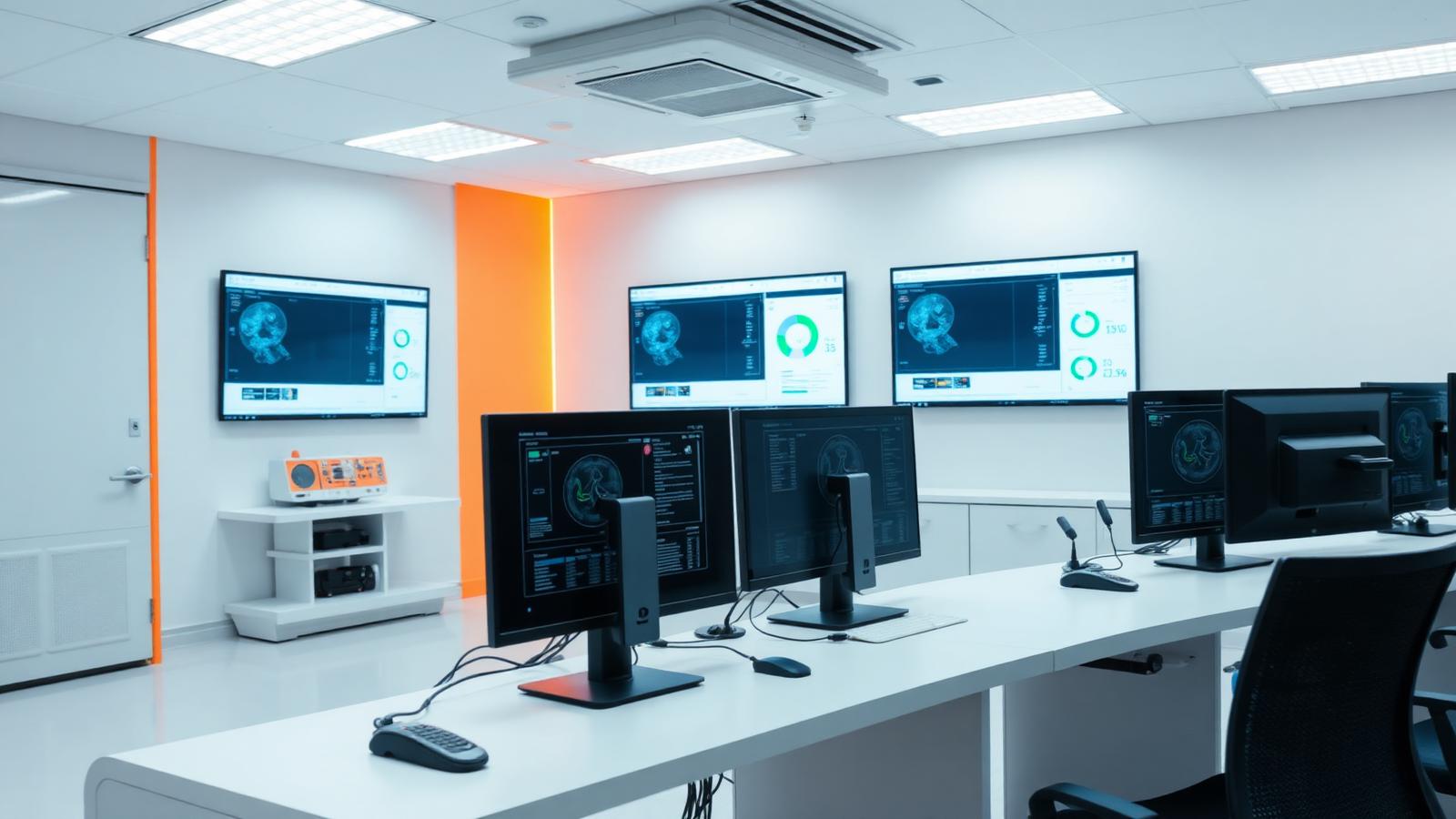
PACS support is one of those line items that looks identical on every proposal and behaves completely differently at 3 a.m. Nearly every contract claims round-the-clock cover; far fewer put a qualified engineer on a routing fault before the morning list starts. This is a checklist of eight things genuine 24/7 support should include, and the questions most hospitals never think to ask. The service side of this sits under managed PACS services.
hospital downtime cost per minute by facility size (industry reporting, 2026)
average healthcare downtime cost (Uptime Institute research)
estimated healthcare-sector losses from the 2024 CrowdStrike outage
Specialty PACS market, 2026 to 2031 at 6.64% CAGR (Mordor Intelligence)
Why the arithmetic matters before the checklist
Hospital-specific downtime costs run roughly $5,300 to $9,000 per minute depending on facility size — about $318,000 to $540,000 per hour — and the Uptime Institute's research puts the average healthcare downtime cost at around $25,000 per minute. Those are not abstract numbers: they are canceled studies, diverted patients, repeated acquisitions, idle staff and the recovery work that follows.
The 2024 CrowdStrike global IT outage put a figure on the tail risk, with an estimated $1.94 billion in healthcare-sector losses from a single event that no individual hospital caused or could have prevented. And the category itself keeps growing: Mordor Intelligence values the Specialty PACS market at $2.95 billion in 2026, growing at a 6.64% CAGR toward $4.07 billion by 2031. More imaging systems, more interfaces, more surface area to fail.
Against that backdrop, the difference between a support contract that says 24/7 and one that means it is not a procurement nicety. Here is what to check.
1. A named human who can act, not a queue that opens at 09:00
The first question is deceptively simple: at 02:00 on a Sunday, who answers, and what are they authorised and qualified to do? Plenty of contracts provide overnight availability that amounts to logging a ticket for the engineer who starts at nine. Ask for last quarter's out-of-hours resolution times, not the availability promise. If the provider cannot produce them, they are not measuring the thing you are buying.
2. Severity definitions written by clinical impact
A P1 should mean imaging work has stopped for a group of users — archive unreachable, studies not routing, worklist empty, viewer down for the image access team. If severity is defined by system state rather than clinical effect, you will spend outages arguing about classification. Get the definitions into the contract, and get them agreed with the imaging leads rather than only with procurement. This is one of the core principles behind the RAD365 PACS support framework.
3. DICOM and HL7/FHIR interface troubleshooting in scope
Most incidents clinicians actually notice are interface problems, not server problems: a failed association, a mismatched accession, an empty modality worklist query, an ORU that will not parse. Support that stops at the infrastructure boundary leaves the most common failure class unowned. Ask the provider to walk through the last three interface faults they diagnosed. The specificity of the answer tells you everything.
4. Genuine vendor neutrality across the whole estate
Hospitals that have merged or acquired rarely run one PACS. Multi-vendor estates fail at the seams — routing between archives, inconsistent conformance, duplicate identifiers, viewer differences between sites. An OEM contract can only ever cover its own product; a vendor-agnostic partner treats the imaging chain as one system. This is also why hospitals researching the market often start with a comparison of the best PACS providers before shortlisting.
5. Proactive monitoring that watches the clinical path
Green dashboards and frustrated radiologists is the single most common failure pattern in imaging IT. Monitoring the server tells you the server is up; monitoring study flow, routing success, queue depth and viewer response tells you whether the clinical work is actually happening. Ask what is monitored, what thresholds trigger an alert, and how many incidents last quarter were detected by monitoring rather than reported by a user.
6. A migration and deprecation plan you can start early
When an OEM sunsets your version, nothing breaks immediately — you simply lose patches, expertise and escalation, so the next incident becomes a crisis. Good support keeps an end-of-life platform stable and monitored while a replacement is planned calmly. That is the whole logic behind interim PACS support and structured PACS migration services: buy back the time to make a good decision.
7. Routing and gateway ownership
Studies reaching the right worklist, at the right priority, with the right identifiers is not a background detail — it is the imaging workflow. Somebody has to own the routing rules, the gateway configuration and the conformance mismatches between modalities and archive. If your contract does not name that owner, the answer in practice is nobody. This is the layer a DICOM gateway handles, and it deserves an explicit line in scope.
8. Reporting you did not have to ask for
Monthly reporting on measured response and resolution percentiles, incident trends, recurring root causes and change activity should arrive automatically. Self-assessed performance summaries written after the fact are not reporting. The test is whether you could walk into a board meeting with last month's report and defend the imaging estate's performance without doing any additional work yourself. Broader operational cover is described under radiology IT support.
| Capability | What most contracts say | What to verify |
|---|---|---|
| 24/7 coverage | "Available 24/7/365" | Out-of-hours resolution percentiles, last quarter |
| Severity model | "P1–P4 supported" | Definitions written by clinical impact |
| Interfaces | "Integration support" | DICOM + HL7/FHIR fault diagnosis named in scope |
| Vendor coverage | "Multi-vendor experience" | Your exact platforms and versions listed |
| Monitoring | "Proactive monitoring" | % of incidents detected before user report |
| Reporting | "Regular reviews" | Automatic monthly measured percentiles |
A short evaluation process that works
- Inventory the estate honestly. Every PACS, version, archive, gateway, interface and site — including the ones nobody wants to admit are still running.
- Baseline current performance. Ninety days of incident volume, response and resolution times, and recurring root causes.
- Score providers against the eight items above, using evidence rather than proposal language.
- Test the out-of-hours claim in reference calls with existing customers who run comparable hours.
- Write the SLA with remedies, then review measured performance at ninety days against your own baseline.
Hospitals that run this sequence tend to end up with a smaller, sharper contract than the one they were originally sold, and materially better nights. The full service scope is on the managed PACS services page, and the underlying platform coverage under PACS radiology support.
Pressure-test your current PACS support
Send us your estate inventory and your last ninety days of incident data. We will tell you where the real gaps are — including the ones that are not worth paying to fix.
Request a support review →24/7 PACS Support: Frequently Asked Questions
What PACS Support Actually Covers
What's the difference between PACS support and general hospital IT support?
General hospital IT owns the estate: networks, endpoints, identity, the service desk. PACS support owns the imaging chain specifically — modality connectivity, DICOM conformance, study routing, worklist behavior, archive integrity, viewer performance and the interfaces that connect imaging to the EHR. The distinction shows up under pressure: a generalist team can confirm the server is up and the network is healthy while studies are still not reaching the worklist, because the failure is in a DICOM association or a routing rule, not in the infrastructure.
Does PACS support include DICOM and HL7/FHIR interface troubleshooting?
It should, and a contract that excludes it is not really PACS support. Most imaging incidents that clinicians actually notice are interface problems: an ORM or ORU message failing to parse, a mismatched accession number, an MWL query returning nothing, a modality sending a SOP class the archive rejects. Ask a prospective provider to describe the last three interface faults they resolved and how they diagnosed them — the answer separates people who read logs from people who escalate them.
What counts as a "critical" PACS incident versus a routine ticket?
A critical (P1) incident is anything that stops clinical imaging work for a group of users: the archive is unreachable, studies are not routing, the worklist is empty, the viewer will not launch for the image access team. A routine ticket affects one user or is cosmetic, deferrable or scheduled. The important thing is that severity is defined in the contract by clinical impact rather than by the provider's convenience, and that the definition is written before the first outage rather than argued during one.
Does PACS support cover legacy or end-of-life PACS platforms?
Vendor-agnostic providers generally do, and this is one of the main reasons hospitals engage them. When an OEM sunsets a version, the software keeps running but expertise and patch support evaporate. Independent support can keep an end-of-life platform stable, safe and monitored while a replacement or migration is planned properly rather than under emergency conditions. Confirm explicitly that your specific version is in scope, in writing.
Cost & ROI
How much does outsourced PACS support typically cost compared to an in-house administrator?
The honest comparison is not salary versus invoice. A single in-house PACS administrator costs salary plus benefits plus training plus recruitment, and still cannot cover nights, weekends, holidays, annual leave or resignation. Outsourced support is priced against coverage and scope rather than headcount, which is why it typically compares favourably once you cost the hours a single post cannot physically cover. RAD365 does not publish rates because they depend on estate size, PACS count and coverage window — the shape of the estate drives the number.
What does an hour of PACS downtime actually cost a hospital?
Published industry figures put hospital-specific downtime at roughly $5,300 to $9,000 per minute depending on facility size — approximately $318,000 to $540,000 per hour — while the Uptime Institute's research puts average healthcare downtime cost at about $25,000 per minute. Those figures include canceled and repeated studies, diverted patients, extended length of stay, staff idle time and the recovery work afterwards. Against that arithmetic, the marginal cost of genuine 24/7 coverage is small.
Is managed PACS support cheaper than hiring a full-time PACS administrator?
Usually, once coverage is compared like for like. One administrator provides roughly forty hours a week of single-person capability with no redundancy; managed support provides a rota, escalation depth and multi-vendor experience across all 168 hours. Many hospitals run a hybrid — a strong internal owner for clinical configuration and governance, with an external team providing depth, out-of-hours cover and vendor-agnostic expertise. That combination usually beats either extreme.
What's included in a flat-fee PACS support contract versus billed hourly?
A flat fee should cover monitoring, incident response within the agreed SLA, interface and routing troubleshooting, patching windows, configuration changes and reporting — with a clearly listed set of exclusions such as major migrations or new-site builds. Hourly billing suits project work but creates a perverse incentive during incidents and makes budgeting unpredictable. The practical test is whether calling for help ever feels expensive; if it does, the pricing model is discouraging the behavior you want.
Vendor Neutrality & Coverage
Can one PACS support provider manage multiple PACS vendors at once?
Yes — and for any hospital that has merged, acquired or inherited systems, that capability is the whole point. Multi-vendor estates fail at the seams: routing between archives, differing DICOM conformance, duplicate patient identifiers, viewer inconsistency between sites. A vendor-agnostic provider treats the estate as one imaging chain rather than as several products, which is exactly what an OEM support contract by definition cannot do.
What happens if our PACS vendor discontinues support for our version?
The software does not stop working, but you lose patches, expertise and any meaningful escalation path — which converts every subsequent incident into an emergency. Independent support fills that gap: monitoring, hardening, documented workarounds and stability while migration is planned on a sensible timeline. Deprecation is a scheduling problem if you act early and a crisis if you wait, and hospitals that plan the replacement calmly consistently get better outcomes and better pricing.
Does PACS support include nights, weekends, and holiday coverage?
It must, because imaging does not observe office hours and the highest-consequence failures cluster outside them. Read the definition carefully, though: some contracts describe 24/7 availability but only staff a phone line overnight, with the engineer who can actually fix a routing fault arriving at 09:00. Genuine cover means qualified hands on the problem at 02:00, and the way to verify it is to ask for out-of-hours resolution times from the last quarter.
How fast is a typical response time for a P1 (system-down) PACS issue?
Serious agreements commit to acknowledgement within minutes and active engineering work within roughly fifteen to thirty minutes for a P1, at any hour. Response time is not resolution time, and a contract that only promises the former is promising very little. Ask for both, ask for them as measured percentiles rather than targets, and ask what the credit or remedy is when they are missed — an SLA without a consequence is a marketing statement.
Switching & Evaluating Providers
What questions should we ask before switching PACS support providers?
Ask who answers at 02:00 and what they are qualified to do. Ask for last quarter's actual response and resolution percentiles, not targets. Ask how many PACS platforms they support in production and name yours. Ask how interface faults are diagnosed and by whom. Ask what the transition plan looks like week by week, and what happens to your documentation and configuration knowledge if you later leave. Vague answers to any of these are the answer.
How long does a PACS support transition or migration usually take?
A support transition — handing over monitoring, documentation, access and escalation for an existing estate — typically runs four to eight weeks for a single-site hospital and longer for a multi-site or multi-vendor estate. A data migration between archives is a different and larger project measured in months, driven by study volume, priors depth and validation requirements. Conflating the two is a common and expensive planning error.
What SLAs should a hospital require in a PACS support contract?
Severity levels defined by clinical impact; response and resolution commitments per severity, at all hours; named escalation contacts with a hierarchy and timescales; monthly reporting on measured performance rather than self-assessment; a defined change and patching process; and a remedy when commitments are missed. Also require a documented exit clause covering knowledge transfer — the contract you can leave cleanly is the one you are least likely to want to leave.
How do we know if our current PACS support is actually underperforming?
Look for recurring tickets that close without a root cause, radiologists who stop reporting problems because nothing changes, monitoring dashboards that show green while clinicians describe slowness, escalations that need a manager to move, and outages that are explained after the fact rather than detected in advance. Those five patterns are more diagnostic than any uptime percentage, because uptime is usually measured on the server rather than on the clinician's experience.
Related resources
- Managed PACS services from RAD365 — scope, coverage and SLA structure.
- What outsourced PACS support includes — the full operational picture.
- The RAD365 PACS support framework
- Interim cover during vendor transition
- Planning a PACS migration
- Comparing PACS support companies
Written by Trisha Seal, RAD365 — 13 August 2026. Trisha writes from RAD365's day-to-day experience running vendor-agnostic managed PACS support across multi-site hospital imaging estates, including out-of-hours incident response, interface troubleshooting and migration cover.
