Why Critical Access Hospitals Can't Solve PACS Support by Hiring Locally
Rural Critical Access Hospitals often have no local PACS administrator to hire. Here is what outsourced 24/7 PACS support covers instead, and what it costs.
By Trisha Seal — September 17, 2026. Trisha works on RAD365's PACS support delivery model, where a two-tier L1/L2 team runs imaging operations for hospitals that have no PACS administrator of their own. RAD365 supports PACS infrastructure and workflow operations.
The Job Posting That Nobody Answers
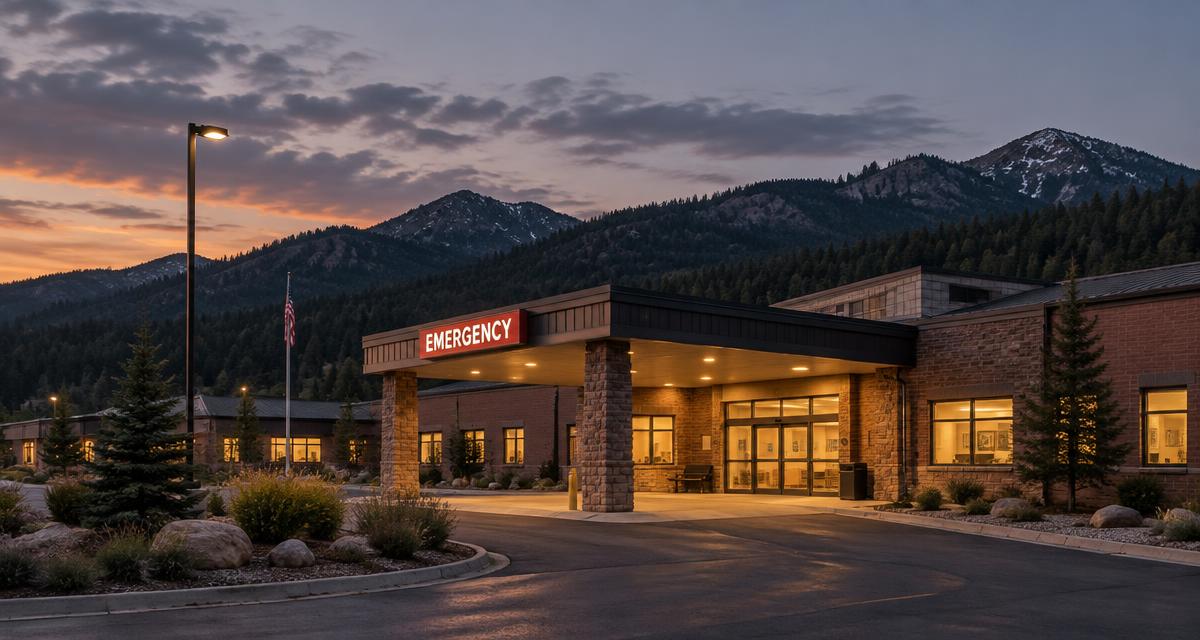
Picture a 22-bed Critical Access Hospital in a rural Mountain West county. It runs a CT scanner, two X-ray rooms, and an ultrasound unit, feeds a small emergency department, and transfers anything complex to a referral center two hours away. Imaging IT belongs to one person — an IT generalist who also owns the network, the endpoints and the phone system. When that generalist gives notice, the hospital does the obvious thing and posts for a PACS administrator. Three months later, the posting has produced no qualified local applicants, because there were none to produce.
This is not a hiring failure. It is a structural feature of rural markets, and it is the reason "just hire someone" is rarely an available strategy for a small hospital.
Step One: What the Hospital Was Actually Trying to Buy
The role description looked reasonable on paper. Administer the PACS. Manage user access. Keep the modalities talking to the archive. Troubleshoot the HL7 feed from the RIS. Escalate to the vendor when something breaks. Be reachable when the ED gets a trauma at 1 a.m.
Re-image access that list reveals it is not a single job. It encompasses application administration, identity management, clinical user support, interface engineering, infrastructure monitoring, and 24/7 on-call — the scope that RAD365's two-tier PACS support framework deliberately splits across an L1 and an L2 team. Asking one rural hire to hold all of it is how small hospitals end up with an imaging environment that works right up until the moment it does not.
Step Two: Why the Local Labor Market Comes Up Empty
PACS administration is a specialized discipline, and specialists cluster where the volume is. A 22-bed hospital is competing for those people against urban health systems and multi-site imaging networks, in a county where the candidate would have to relocate. The practical result is the one RAD365 sees repeatedly in rural and critical access markets: there is no local PACS administrator to hire.
That changes the nature of the decision. For a large system, outsourcing is a cost-and-coverage comparison. For a Critical Access Hospital, it is frequently a question of whether the imaging environment has a competent owner at all.
Step Three: The Cost Comparison, Honestly Run
When the hospital did eventually compare models, the two sides did not line up the way the budget sheet first suggested.
| Criterion | Hiring locally | Outsourced PACS support |
|---|---|---|
| Availability of candidates | No local PACS-trained talent pool | Team already staffed and trained |
| Coverage hours | One person, roughly a business-hours week | 24/7 coverage without a 24/7 payroll |
| Cost model | Salary, benefits, training, overtime, turnover | Flat monthly fee for a full operations team |
| Response commitment | Best effort, dependent on availability | Severity-based SLAs written into the contract |
| Single-person dependency | Total — one resignation leaves PACS unowned | None; knowledge sits with the team |
| Time to value | 2–3 months to recruit and onboard one hire | 2–4 weeks standard; under 1 week in an emergency |
The decisive factor is coverage hours. Imaging at a Critical Access Hospital cannot pause simply because the sole individual who manages the PACS is on vacation — CT keeps running, the ED keeps ordering, and transfers keep needing images to move. Round-the-clock coverage was the requirement; a single salary line could never have funded it. This is the same calculation behind managed PACS services at larger sites, just with the hiring option removed from the table.
Step Four: What Coverage Looks Like in Practice
Under the framework, L1 takes application administration, access and identity, and clinical user support — the calls a technologist makes when a study will not land on the worklist. L2 takes infrastructure and performance, network and interface work, DICOM engineering, and backup and disaster recovery. Incidents follow an ITIL-compliant lifecycle: logging, root cause analysis, categorization and priority, vendor escalation, escalation management, then resolution and closure. The hospital reaches the team by email, phone, secure remote desktop or the ticketing portal, whichever suits the moment.
Response times are contractual rather than aspirational. Severity 1 — system down with clinical impact — carries a 15-minute response and continuous work until resolution. Severity 2, degraded service, is one hour. Severity 3, a single-user or non-urgent issue, is four business hours. Severity 4, a request or change, is next business day. Because support is vendor-agnostic, the hospital's main PACS and the older archive it inherited from an affiliation both sit under the same agreement, which is the kind of mixed estate consolidation and migration work eventually tidies up.
Step Five: Onboarding Without a Gap
The sequence is deliberately unglamorous. Discovery documents the environment, vendors, interfaces and current escalation paths. Access and monitoring are established. The incoming team runs alongside whoever is still covering, so nothing is dropped mid-transition. Then support cuts over fully with severity tiers in force. Most environments are under operational ownership within two to four weeks; when an administrator has already walked out the door, emergency onboarding compresses that to under a week.
Where Clinical Quality Fits — and Where It Doesn't
One boundary is worth stating plainly, because small hospitals are pitched blended offerings constantly. RAD365 supports PACS infrastructure and workflow operations. clinical documentation stays with the hospital's own radiologists. For groups that want a quality program alongside their imaging operations, peer review and QA is available as an optional add-on layer, kept separate from core PACS support by design.
No PACS Administrator to Hire? Start With the Framework
Bring your PACS vendor, modality list and current escalation path, and we will map them onto the L1/L2 model and give you an honest monthly comparison. Systems and infrastructure support only.
See the PACS support framework →Frequently Asked Questions
Why Critical Access Hospitals Can't Hire Locally
What makes a hospital a Critical Access Hospital?
Critical Access Hospital is a federal designation for small rural hospitals that serve communities with limited alternatives for emergency and inpatient care. The designation caps inpatient bed count and length of stay and exists to keep essential services available in areas where a larger facility is a long drive away. Operationally, the label usually means a very small department structure: a handful of imaging modalities, a lean IT function and no room for single-purpose specialist roles.
Why are Critical Access Hospitals often unable to recruit a PACS administrator locally?
Because the candidates are not there. PACS administration is a specialized discipline, and the people who hold that skill set concentrate around larger urban health systems and imaging networks. A rural county frequently has no local PACS administrator to hire at any salary, which means the choice is not between a cheaper hire and a more expensive service — it is between coverage and no coverage.
Are Critical Access Hospitals mostly located in rural areas?
Yes. By federal definition, Critical Access Hospital status requires a facility to be located in a rural area (or designated as rural by state law) and positioned at a specified distance from other hospitals. That rural setting is exactly what makes specialist imaging IT recruitment so difficult: the labor pool for PACS, DICOM and HL7 expertise is thin or nonexistent within a reasonable commute.
What happens when a Critical Access Hospital's only IT generalist also has to cover PACS?
The generalist ends up owning a scope that would occupy a full specialist elsewhere: application administration, user access, modality connectivity, interface troubleshooting and vendor escalation, on top of the network and endpoint work they were actually hired for. PACS issues then queue behind everything else, and when that person is unavailable, the imaging environment has no owner at all.
What Outsourced PACS Support Actually Solves
Does outsourced PACS support make sense for a hospital with only one or two imaging modalities?
It often makes more sense there than at a large site. A small modality count does not reduce the skill required to keep DICOM routing, worklists, archive storage and interfaces healthy — it only reduces the volume of work, which is precisely why a full-time specialist hire is hard to justify. An outsourced team supplies the expertise without requiring the facility to fund a whole role to get it.
Can a small Critical Access Hospital realistically afford 24/7 PACS coverage?
Yes, because the cost structure is different from payroll. RAD365 provides round-the-clock coverage on a flat monthly fee that delivers a full PACS operations team, rather than requiring the hospital to carry a 24/7 payroll burden. The comparison a small facility should run is that monthly fee against salary, benefits, training, overtime, turnover and the recruiting cost of a specialist they may never find locally.
What does RAD365's PACS support framework include for a Critical Access Hospital?
The same framework used at larger sites, scoped to the environment: a two-tier L1 and L2 operating model, an ITIL-compliant incident lifecycle, omnichannel access through email, phone, secure remote desktop and a ticketing portal, vendor-agnostic support across PACS platforms, and severity-based response commitments written into the contract. Nothing is stripped out because the facility is small.
How does the two-tier L1/L2 model apply to a small imaging department?
L1 handles the day-to-day: application administration, access and identity management, and direct support for clinical users. L2 handles the deeper layer: infrastructure and performance, network and interface work, DICOM engineering, and backup and disaster recovery. A small hospital gets both tiers from the same contract, which is the part a single local hire can rarely deliver on their own.
What SLA response times can a Critical Access Hospital expect?
The standard tiers apply regardless of facility size. Severity 1, meaning system down with clinical impact, gets a 15-minute response with continuous work until it is resolved. Severity 2, degraded service, gets a 1-hour response. Severity 3, a single-user or non-urgent issue, gets a 4-business-hour response. Severity 4, a request or change, is handled by the next business day.
Staffing, Continuity & Risk
What happens to PACS support when a Critical Access Hospital's sole IT contact leaves or takes leave?
In an in-house arrangement, the environment is effectively unowned until that person returns or a replacement is found — and in a rural market, replacement can take months. In an outsourced model there is no single-person dependency: documentation, access paths and escalation routes sit with the team, so a departure or a vacation does not change the response commitment.
Is peer review and QA available for a Critical Access Hospital's radiology group?
Yes, as an optional add-on for human radiology groups rather than as part of core PACS support. It sits in a separate layer because clinical quality review and imaging operations are different disciplines, and a small hospital should be able to buy one without being required to buy the other.
Can outsourced PACS support cover multiple vendor platforms at a small facility?
Yes. RAD365 supports PACS environments vendor-agnostically, which matters at small hospitals more than people expect — rural facilities often run a main PACS alongside an older archive, a modality-specific viewer or a system inherited from an affiliation, and all of it has to keep working together.
Do rural hospitals face higher PACS downtime risk than large urban systems?
The exposure is different rather than universally higher. A large system has redundancy in both infrastructure and staffing; a Critical Access Hospital typically has one imaging environment and one person who understands it. That concentration is the risk. An outage in a small department also has nowhere to overflow to, because the next facility may be an hour or more away.
How does RAD365 coordinate with a Critical Access Hospital's existing, often part-time, IT staff?
By drawing a clear boundary and documenting it up front. Local IT generally keeps the network, endpoints and enterprise systems; RAD365 takes the imaging layer — PACS administration, DICOM and HL7 interfaces, modality connectivity, archive management and vendor escalation. Escalation paths are agreed upon in advance, ensuring no issues fall into the gap between the two teams.
Getting Started
How long does onboarding take for a Critical Access Hospital?
Most environments are brought under operational ownership within two to four weeks, which covers discovery, documentation, access establishment and monitoring setup. Where a hospital is already exposed — an administrator has resigned, or a vendor contract has lapsed — emergency onboarding can be completed in under a week.
Does RAD365 replace the hospital's existing PACS, or operate what they already own?
We operate what you already own. There is no product being sold underneath the service and no incentive to recommend a replacement, which is why the model is vendor-agnostic. If a migration or consolidation is genuinely needed later, that is a separate, scoped piece of work with your approval.
Does outsourcing PACS support to RAD365 mean RAD365 case activity or manage studies?
No. RAD365 supports PACS infrastructure and workflow operations. We are an operations partner for the systems and infrastructure layer: PACS administration, interfaces, connectivity, archive and incident response. Clinical clinical documentation stays entirely with your own radiologists.
What information should a Critical Access Hospital bring to get an accurate cost comparison?
Bring your PACS vendor and version, the list of connected modalities, your current archive arrangement, the interfaces in use, how after-hours issues are handled today, and who currently owns imaging IT and how much of their week it consumes. That is enough to scope a flat monthly fee and compare it honestly against the loaded cost of a local hire.
